
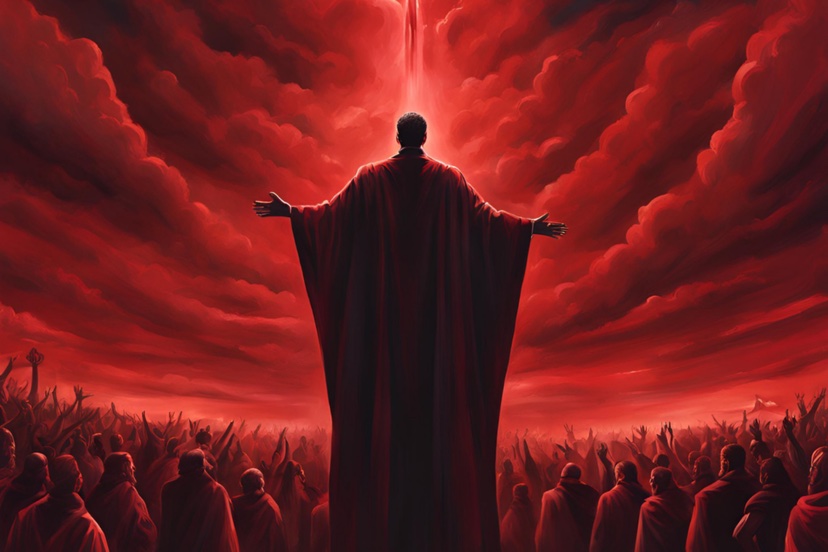
Last month, I wrote a column about a New York Times interview with Tucker Carlson, where he and journalist Lulu Garcia-Navarro briefly discussed whether Donald Trump might be the Antichrist.
I guess that’s possible. I mean, anything is possible. It’s possible that Tucker Carlson himself is the Antichrist and doesn’t realize it. We’ll just have to wait and find out.
Wait and find out if there even is such a thing as the Antichrist?
At least one famous tech billionaire — Peter Thiel — seems to think the Antichrist has already arrived. And I suspect he might be right. I’m not a biblical scholar, by any means, so I rely on people like Peter Thiel, who have personally extracted billions of dollars from the American economy, to lead the way.
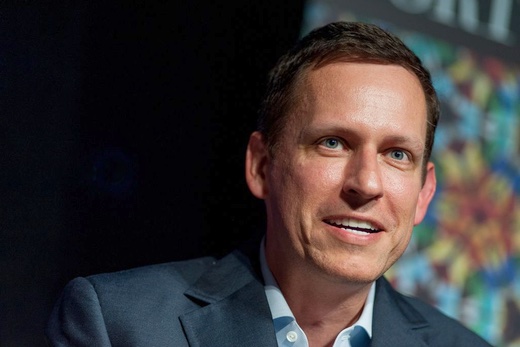
But I also subscribe to the teachings of possibly our greatest President, Ronald Reagan. Such as, “Trust, but verify.” I trust Peter Thiel, but I’d still like to verify that he’s not the Antichrist. That is, the ἀντίχριστος.
Here’s a mention of the ἀντίχριστος from a Greek version of the New Testament, 2 John. That is, the original language, before it got translated.
ὅτι πολλοὶ πλάνοι ἐξῆλθον εἰς τὸν κόσμον, οἱ μὴ ὁμολογοῦντες ἰησοῦν χριστὸν ἐρχόμενον ἐν σαρκί· οὖτός ἐστιν ὁ πλάνος καὶ ὁ ἀντίχριστος.
I can’t read Greek, so I pasted that verse into Google Translate and got this output:
For many deceivers have gone out into the world, those who do not confess that Jesus Christ is coming in the flesh. This is the deceiver and the antichrist.
We might take this verse at it’s most obvious meaning: “An antichrist is a deceiver who doesn’t confess that Jesus Christ is coming in the flesh.”
Either there as many of them — “deceivers” — or there’s only one of them — “the deceiver”. The Greeks weren’t very good at grammar, apparently, and used the plural form and the singular form in the same verse. So we’re left wondering?
Peter Thiel acquired some of his billions by investing in the Artificial Intelligence industry (we will have to wait and find out if there even is such a thing as AI) and he has also written a few articles for the conservative religious magazine, First Things. One of his articles from October 2025 begins like this:
‘New Atlantis’ [a novel by philosopher Francis Bacon, 1626] began a secret literary debate, one later taken up by Jonathan Swift, Alan Moore, and Eiichiro Oda. Across four centuries, these writers wondered: Will science summon or suppress the Antichrist?
Good question. I guess it would depend on whether science confesses that Jesus Christ is coming in the flesh? Seems like a simple way to resolve the question. But Mr. Thiel is not willing to give us an easy answer in his essay.
Who was the Antichrist? When would he arrive? What would he preach? Pamphleteers and polemicists plucked him from the obscurity of theology to attack their enemies. The Roman emperors Nero and Domitian, the Prophet Muhammad, Holy Roman Emperor Frederick II, various popes, Tsar Peter the Great, Napoleon Bonaparte, Adolf Hitler, and Franklin D. Roosevelt were all popular suspects…
I seriously doubt Franklin D. Roosevelt was the Antichrist. A Democrat, yes. But that’s not necessarily the same thing. If he was, then the Antichrist is already dead and we can stop worrying.
Many of my friends will confess, without any hesitation, that Jesus Christ is coming in the flesh. So they are obviously not the Antichrist. Much to my relief.
And we could all use a little bit of relief these days.
I got interested in this topic because I came across some news reports, last month, about humanity and technology. In particular, about AI.
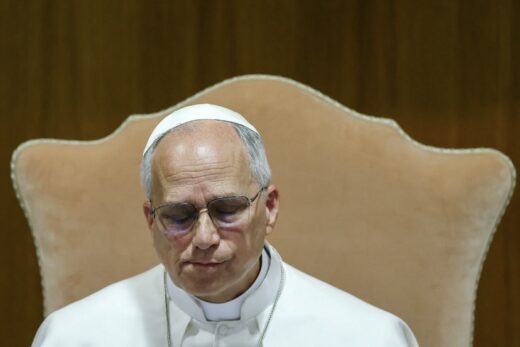
On May 25, Pope Leo XIV, the first American pope, published his first encyclical, Magnifica Humanitas, (Magnificent Humanity) On Safeguarding the Human Person in the Time of Artificial Intelligence.
42,300 words in the English version. Quite an accomplishment. It would probably take me a year to write 42,300 words.
From the 51-page letter, addressed to the Pope’s 1.4 billion Catholic followers:
We must avoid the misconception of equating this type of “intelligence” with that of human beings. These systems merely imitate certain functions of human intelligence. In doing so, they often surpass human intelligence in speed and computational capacity, offering tangible benefits across many fields. Yet this power remains entirely tied to data processing. So-called artificial intelligences do not undergo experiences, do not possess a body, do not feel joy or pain, do not mature through relationships, and do not know from within what love, work, friendship or responsibility mean.
Science created computers, but haven’t yet seen fit to make them experience joy or pain. So we still have to experience those feelings on their behalf. And we have to be the ones who are responsible.
Mr. Thiel is not a Catholic. “In the 21st century, the Antichrist is a Luddite who wants to stop all science,” he warned in an October lecture. “In late modernity, where science has become scary and apocalyptic… the antichrist has somehow become anti-science.”
Be that as it may, we know for sure that AI is not coming in the flesh. So Mr. Thiel has that little problem to deal with.
Underrated writer Louis Cannon grew up in the vast American West, although his ex-wife, given the slightest opportunity, will deny that he ever grew up at all. You can read more stories on his Substack account.