
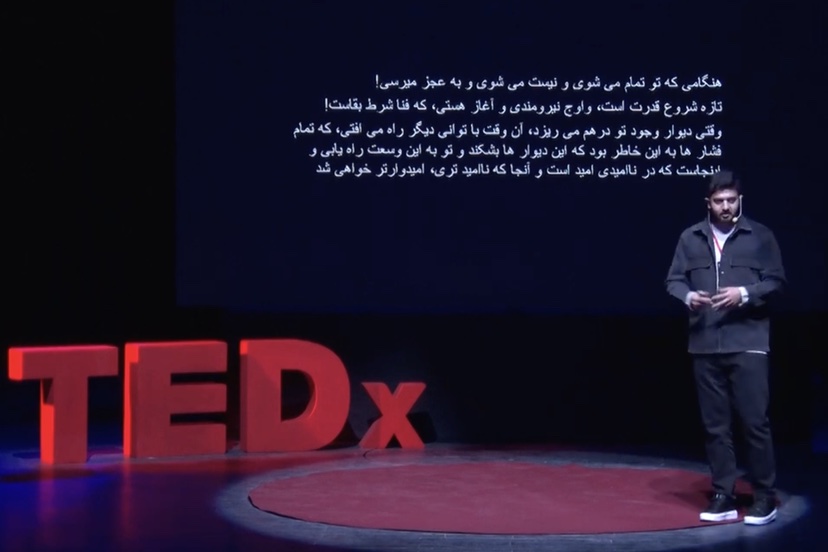
By listening to this speech, you will learn how to use hopelessness as an opportunity for growth and gain a better understanding of the importance of this emotion in life…
— from the description of a TED Talk by psychologist Mohammad Vazifeshenas, January 2025.
In the midst of a seemingly hopeless search for life’s meaning, I came across the following 13-minute TED Talk video.
Which you might enjoy. Or not.
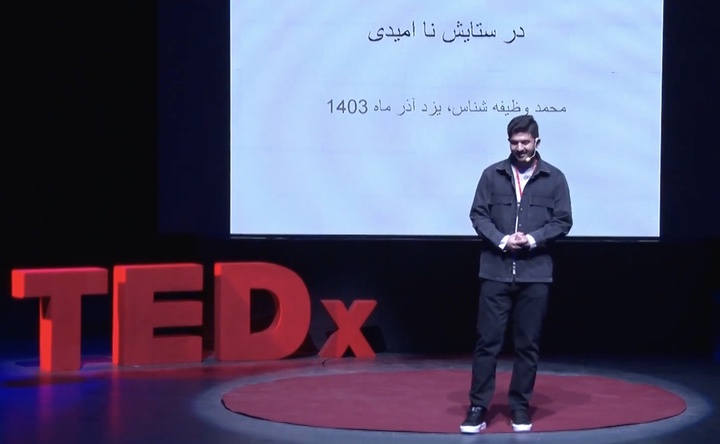
But I can recommend the lecture. Especially if you — like me — have been feeling a sense of hopelessness lately. As we can see, below, the title of Mr. Vazifeshenas’ lecture — delivered at TEDxJavanBlvd — is “In Praise of Hopelessness”.
If you listen to the video below, you will notice that it was delivered in a foreign language — specifically, in Farsi, the language spoken in Iran. If any country knows a thing or two about hope and hopelessness, right about now, it’s got to be Iran.
As we note in the video title, his talk was sponsored by “TEDxJavanBlvd”. I wondered what “JavanBlvd” might mean?
“JavanBlvd” doesn’t appear to be an actual location. (There’s a popular Javan Restaurant in Los Angeles, but it’s on Santa Monica Boulevard. So no help there.)
“Javan” means “youth” in Farsi. So this lecture was presumably aimed mainly at young people in Iran.
I’m not a young person living in Iran, but YouTube still suggested this video to me yesterday, knowing that I’m interested in hopelessness. I really thought YouTube knew my personality better than to think I would be able to understand a lecture delivered in Farsi. Based on my browsing history, YouTube usually directs me to videos that provide tips on how to pick up women. But also, videos about hopelessness, which is a closely related topic.
I will admit that at first, listening to this lecture on the benefits of hopelessness, and quickly realizing that I would not understand a single word of what the guy was saying, didn’t feel exactly encouraging.
However, I was able to see that Mr. Vazifeshenas shared a lot of Farsi text with his audience. One of the first screens in the video included the number “1403” which is the same in English and in Farsi. But what did it mean?
Should we take a wild guess?
I located a sacred “bukhari” — a “report” — numbered 1403, written by Muhammad al-Bukhari.
Whoever is made wealthy by Allah ﷺ and does not pay the Zakat of his wealth, then on the Day of Resurrection his wealth will be made like a bald-headed poisonous male snake with two black spots over the eyes. The snake will encircle his neck and bite his cheeks and say, “I am your wealth, I am your treasure.”
Just a small taste of the hopelessness that awaits us?
I’ve watched a fair number of TED Talks over the years — more than I should have, probably — and many of TED Talk lecturers share photographs, and charts, and data on big screens behind them, to help them illustrate their hopeful messages. (Yes, nearly all TED Talks are hopeful.)
If you watch Mr. Vazifeshenas’ entire 13-minute lecture, however, you notice that the only thing he shares on the TED Talk screen is Farsi script. No photos. No charts. No data. Just sentences written in Farsi that the audience could read, if they were lucky enough to know how to read Farsi.
After 13 minutes of listening him to read words off the screen and offer his commentary related to those words, the audience applauded.
We must assume the applause was genuine, and that — if you live in Iran — your TED Talk doesn’t need photos, charts and data to praise the hopelessness in which we all live. All you need are spoken and written words. Preferably in Farsi, but English would probably do in a pinch.
This gives me hope, that written sentences have some kind of power. I spend a great deal of time generating sentences, like the ones in this column, and I’d like to believe that people feel a sense of hopelessness after reading them.
It makes no difference that Mr. Vazifeshenas’ TED Talk video, posted a year ago, has been viewed only 51 times. That’s 51 people who now a bit more thankful for their hopelessness.
Underrated writer Louis Cannon grew up in the vast American West, although his ex-wife, given the slightest opportunity, will deny that he ever grew up at all. You can read more stories on his Substack account.