

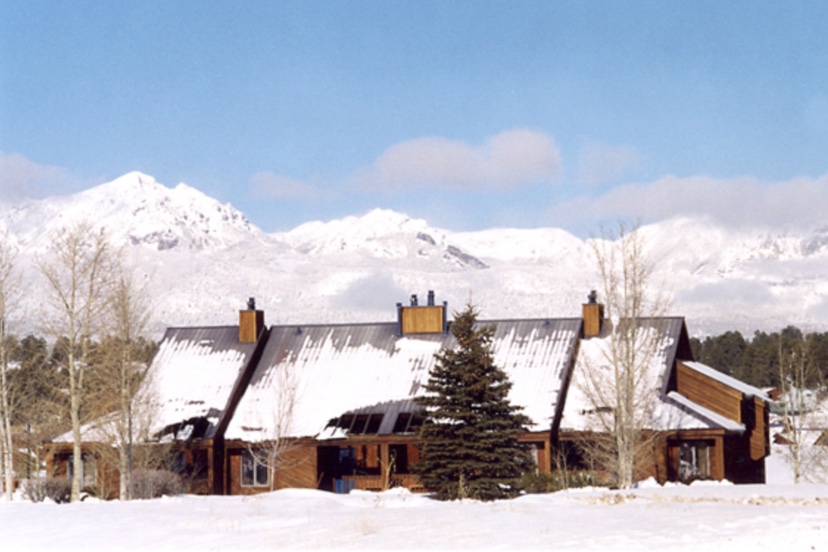
Photo: Masters Place condominiums, currently in bankruptcy proceedings.
WHEREAS, the Town Council hereby finds and determines that acquisition of the Property is appropriate and necessary to the function and operation of the Town and wishes to enter into the Purchase and Sale Agreement with Seller attached hereto as Exhibit A…
— from Town of Pagosa Springs Ordinance 1032, June 10, 2026.
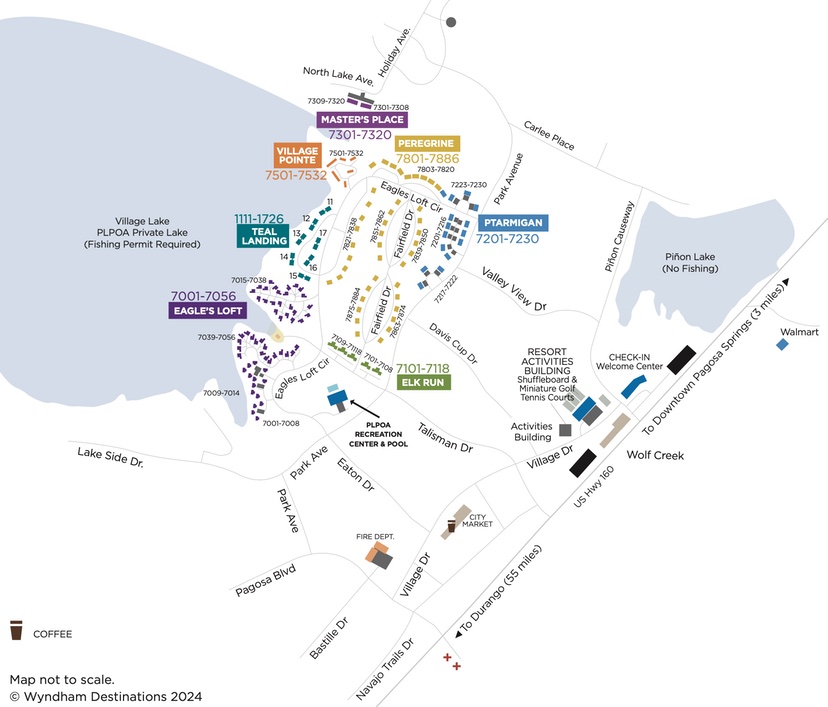
As mentioned yesterday in Part One, the Pagosa Springs Town Council met last night at 6pm to discuss some real estate purchases. Three condominiums within the Wyndham Resort are in bankruptcy proceedings and might be auctioned off to the highest bidder at some point in the next several weeks.
I was not able to attend the Council meeting, unfortunately — I serve on the Pagosa Peak Open School board of directors and we had a meeting scheduled for the same 6pm hour as the Council meeting.
But I reached out to a couple of Council members late last night, via email, and heard back that the three ordinances proposed to the Council had been approved on First Reading.
The theme was affordable and workforce housing and yes, they passed on first reading.
All Town ordinances require a Second Reading before they become law. I believe the public is allowed two weeks to review and consider the ordinances before the Second Reading can be held? And the Town must hold a public hearing on any ordinance before approving — or not — the Second Reading of the ordinance.
Ordinance 1030 suggested that the Council might serve as a “stalking horse” bidder in a bankruptcy auction for Masters Place, a 20-unit condominium.
Ordinance 1031 suggested that the Council might serve as a “stalking horse” bidder in a bankruptcy auction for Village Pointe, a 32-unit condominium.
Ordinance 1032 suggested that the Council might serve as a “stalking horse” bidder in a bankruptcy auction for Elk Run Townhomes, an 18-unit condominium.
You can download these ordinances on the Town website, here.
In bankruptcy cases, a “stalking-horse bid” typically refers to a deal with a potential buyer that is hidden from the public, creditors, and the courts. Usually, when a company is preparing to file bankruptcy, it chooses an entity from a pool of interested bidders to make the first bid to buy the company’s assets. The selected bidder sets the pace for other bidders, such that other bidders cannot bid below the pre-set purchase price.
The term “stalking horse” is borrowed from hunters — a scenario when hunters would hide behind their horses as they moved closer to the prey.
Of course, in the case of a municipal government acting as a stalking-horse bidder, the deal cannot be “hidden from the public” because government boards must, according to Colorado law, ultimately be transparent about financial dealings, since they are using our money.
So the bid offered for 20-unit Masters Place was published on the Town website last night.
$2,376,000.
Village Pointe condos are bid at $4,721,472.
Elk Run Townhomes are bid at $2,432,700,
The Town does not, however, have millions of dollars allocated in their 2026 budget for this kind of real estate purchase, so the Town would have to go into debt to purchase any of these properties.
But not the kind of mortgage debt that you and I might go into. The debt scheme mentioned in last night’s ordinances is called “Certificates of Participation”. More affectionately known as “COPs”.
A local government in Colorado cannot create long-term debt without voter approval, according to the Colorado Constitution. The Town government could ask the voters for permission to create a $2,376,000 debt for Masters Place, but the voters might say, “No thank you”.
COPs are agreements between investors and governments that Colorado courts have determined are “not long-term debts” because the agreement requires the government to annually allocate the money to make the payments on the loan. So, it’s really a debt, but it’s not “technically” a debt. It doesn’t require voter approval.
The advantage to getting voter approval for general obligation debt? The voters agree to fund the debt out of additional taxes. There is minimal financial stress on the government’s annual operations budget.
The disadvantage to COPs? The Town has to figure out how to pay off the loans without taxpayer help.
The three ordinances do not fully explain how the purchase might be “appropriate and necessary to the function and operation of the Town”…
… but the email response I received made it clear that the “theme was affordable and workforce housing.” The Town has listed the creation of affordable housing as one of its priority goals for the past several years, and several studies of the housing crisis in Archuleta County have suggested that we have a serious shortage of affordable apartment units.
As mentioned in Part One, the notice for a special meeting of the Town Council — or any government board in Colorado — requires 24 hour notice. I received the notice for last night’s 6pm meeting at 5:57pm on Tuesday. So, 24 hours and 3 minutes of advance notice.
The ordinances that would be discussed last night were not available on the Town website, however, on Tuesday evening. Typically, an ordinance to be considered would be available to the public a few days in advance of the meeting — in particular perhaps, any ordinance as complicated as Ordinances 1030, 1031, and 1032. But the announcement of the special meeting included this language:
Public comment and agenda comment item sign-up sheets are available at the meeting. Copies of proposed Ordinances and Resolutions are available to the public from the Town Clerk.
So I stopped by the Town Clerk’s office on Wednesday morning to pick up a copy of the proposed Ordinances. Town Clerk April Hessman informed me that the Ordinances were not available yet, but would be posted to the Town website prior to the special meeting at 6pm.
I received an email notice, later on Wednesday, that the ordinances were finally available. I received that notice at 5:50pm.
I agree with the housing studies. Based on my research, Archuleta County is in dire need of apartment units for individuals and families working in our low-wage industries. The Town government may be making a smart move to bid on older resort condominiums, and attempt to convert them into affordable apartment units. The rents charged might be sufficient to cover the COP debt.
But governments in Colorado, funded by our taxes, have an obligation to operate transparently.
This process, thus far, has been anything but “transparent.”
Bill Hudson began sharing his opinions in the Pagosa Daily Post in 2004 and can't seem to break the habit. He claims that, in Pagosa Springs, opinions are like pickup trucks: everybody has one.