
By Jonathon Wible, Undergraduate, LaGrange College , and John A. Tures, Professor of Political Science, LaGrange College.
Whether it’s the campaign spending, the incessant ads on TV, the full mailbox and inbox, or the frequent texts, chances are that you’re being flooding with primary election material. And if you live in a Southern state, you’re likely to experience this a third time, as the top two vote getters compete for a version of political overtime which can last an additional month. LaGrange College undergraduate Jonathon Wible and I researched these runoffs, and here is what we found.
The origins of the runoffs have an odious beginning. Known as “the Black Primary,” when there was one-party rule in the South after the Civil War, these runoffs would ensure that after a crowded primary, no African-American could finish first, as no state had a majority black population. But that’s really not the case anymore, as African-Americans have won under both party labels, even in southern states in statewide contests, like Rev. Raphael Warnock (D-Georgia) and Tim Scott (R-South Carolina), as well as many statewide officeholders and in Congressional and state legislative races.
While the primary and runoff system is far superior to the “smoke-filled rooms” days of yore, where party bosses, not the people, picked the party nominees, the sheer amount of campaign spending and negative attacks can wear down voters, leading to searches for a solution.
My own research on Georgia gubernatorial battles at the ballot box and senate elections from 1990 to 2022 shows that in very few cases, the runner-up dethrones the frontrunner from the primary (Brian Kemp over Casey Cagle in 2018 and Jim Martin over Vernon Jones in 2008 are two such exceptions), though there have been cases of flips in general election runoffs in US Senate races in 1992 and 2020. Runoff turnout is also lower than the original primary voter turnout. In 15 Georgia cases for U.S. Senate and Governor, I found the average turnout to be more than 25 percent lower than for the primary or general election. And to administer the 2020 runoff, it cost the state $75 million, according to Kennesaw State University professors Kerwin Swint and J. Benjamin Taylor and student Ayla McGinnis.
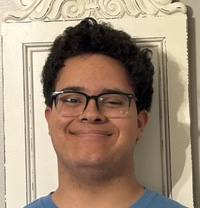
Jonathon Wible researched the issue of Ranked-Choice Voting (RCV) for a paper for his summer class. Voters rank their choices, and it creates a sort of “instant primary runoff” where people can have at least one of their top options win the race. He found that states with a more libertarian ideological bent seemed to like the idea. In an Alaskans for Better Elections poll “84 percent of Alaskans found ranked choice voting to be simple, whereas 56 percent feel positively about the ability to have multiple candidates from the same party in the November general election. This is an increase from only 43 percent of Alaskans back in 2022,” Mr. Wible writes.
Other states have come close but haven’t adopted it. Mr. Wible found in a CNN Maine exit poll from 2020, support for RCV was more likely to come from Democratic Party voters than Republican Party voters. But there is sentiment for the practice in Montana and Washington DC, where the latter adopted RCV.
There is another option. In Costa Rica, where I taught a political science class with Mr. Wible and other LaGrange College students, we found out that Costa Rica (like France) also has a runoff system. But in Costa Rica, a runoff is avoided if the front-runner gets at least 40 percent of the vote, an outcome that has occurred in several Costa Rican elections, including their presidential election this year. Jonathon is more skeptical of this system, but he’s comparing the Electoral College system to Costa Rica’s and worries about small states being ignored in the general elections if we switched to a runoff system in presidential contests.
While the runoff has mostly shed its earlier origins of racial politics, overspending by candidates and declining runoff turnout shows a greater need for some kind of reform when it comes to choosing party nominees, or picking a candidate in a general election.
John A. Tures is Professor of Political Science and Coordinator of the Political Science Program at LaGrange College, in LaGrange, Georgia. His first book, “Branded”, is available on Amazon. He can be reached at jtures@lagrange.edu.