
By John Livingston
On Wednesday, May 27, Governor Jared Polis signed House Bill 26-1342, strengthening penalties to those found knowingly feeding bears.
HB 26-1342, which amended Colorado Revised Statutes 33-6-131, was a priority bill for Colorado Parks and Wildlife and the Colorado Department of Natural Resources during the 2026 legislative session. It removed the requirement to prove that an individual “intentionally” lured bears through mismanagement of food or edible waste and reduced the burden of proof to “knowingly.”
The bill also removed a previous requirement that first-time offenders receive a warning, enhancing enforceability. CPW, along with all peace officers, now have the discretion to either provide a warning or to immediately issue a violation to individuals whose knowing actions have caused some form of human-bear interaction or conflict.
“It is not always what is in the picnic basket that lures a bear, it can also be the common food waste we dispose of. Reducing human-animal conflicts starts by doing our part to properly store our trash, and lock away food waste so we can safely share our communities with our furry friends coming out of hibernation. This new law takes another step to protecting bears and humans alike, and I appreciate the sponsors for their work,” said Governor Polis.

“Human-bear conflicts continue to be a major safety issue for both the public and our wildlife,” said CPW Director Laura Clellan. “This bill strengthens our ability to address these conflicts by updating the culpable mental state tied to this offense and increasing enforcement measures for individuals who knowingly leave out attractants and trash, ultimately helping us keep both communities and bears safe.”
Under current law, a person that knowingly places food or edible waste in the open in circumstances where there is a reasonable probability of luring a wild bear to the food or edible waste commits a misdemeanor offense.
HB 26-1342 raised the penalty for third or subsequent offenses of luring bears from $2,000 to $5,000.
The law does not apply to acts related to agriculture. “Food or edible waste” does not include live animals or food that is grown in the open prior to the food being harvested.
“This is an issue that my district is all too familiar with,” said Rep. Katie Stewart, D-Durango. “La Plata County saw over 12% of the total statewide reports, and in the Durango area alone, 241 conflicts were directly related to property damage from bears seeking food. CPW officers had to set 68 traps and relocate 17 bears in my district in 2024 alone as a result of these increasing conflicts. House Bill 1342 will help to keep bears and residents in the southwest corner of the state safe.”
“Once a bear has learned how and where to obtain human food, it’s really difficult to unteach this behavior, which ultimately leads to more human-bear conflicts and costly bear relocations and euthanizations,” said Rep. Meghan Lukens, D-Steamboat Springs. “We are reducing barriers for CPW to minimize human-bear interactions to keep everyone safe, including Colorado’s bear population. Bears can cause extensive property damage, and this law mitigates human behavior that attracts bears and helps prevent bears from digging through your trash in the first place.”
CPW supported the bill, which was developed following stakeholder input through the agency’s statewide bear working group.
“Human-bear conflict is a human problem, not a bear problem, and this law focuses directly on careless human behavior – giving officers a realistic path to holding repeat offenders accountable before bears pay the price,” said Brenda Lee, Executive Director of Colorado Bear Coalition. “This bill is about giving Colorado’s law enforcement the tools to ensure that one person’s repeated negligence doesn’t put an entire community at risk. That is a win for bears and the people who share their habitat.”
“Keeping bears out of trash is crucial for keeping bears wild and people safe,” said Lara Xaiz, City of Aspen Wildlife Coordinator. “We currently have a patchwork of codes in place throughout bear country, but there are many gaps remaining. This bill helps fill those gaps with standard language that prohibits leaving unsecured trash out in bear country. It can take several years for municipalities to prepare ordinances unique to their communities.This statewide language will be a valuable tool to use in the interim.”
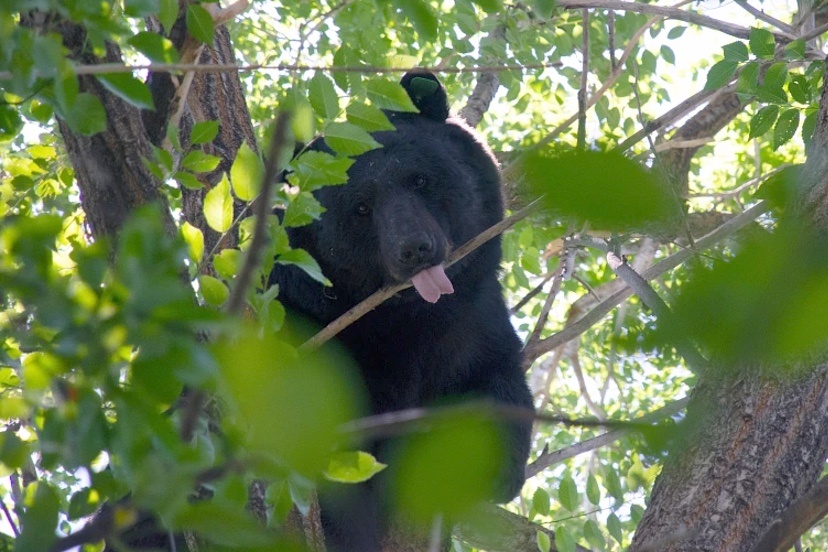
Black bears are native to Colorado, and CPW estimates a population of 17,000 to 20,000 independent adults.
As the state’s population and visitation continues to grow and as natural food failures are likely to increase, human-bear interactions and conflicts have also increased.
In 2025, CPW received 5,299 reports of sightings and conflicts, which was 15% higher than the previous six years. Unsecured trash remained the leading source of conflict between humans and bears.
Of the 5,299 reports CPW received in 2025, 2,448 resulted in property damage to a shed, garage, home, vehicle, fence, etc. More than 57% were linked to trash, and 16% to bird seed, pet food, barbeque grills, coolers and refrigerators.
In 2025, 52 bears were relocated and 78 were euthanized because of conflict. In 2024 when CPW took 5,022 bear reports, 68 bears were relocated and 98 were euthanized because of conflict.
In order to avoid unsafe situations between bears and humans, it is imperative that Coloradans and visitors to the state properly manage attractants that might lure bears into situations of human conflict.
Key Provisions of HB26-1342:
- Changes language of C.R.S. 33-6-131 from “intentionally” luring bears to “knowingly.”
- Removes the requirement for a first-time offender to be given a warning.
- Increases the fine for a third or subsequent offense from $2,000 to $5,000.
- Retains an exemption for acts related to agriculture, as defined in C.R.S. 35-1-102.
John Livingston is Southwest Region Public Information Officer, CPW.
The Pagosa Daily Post welcomes submissions, photos, letters and videos from people who love, and care about, Pagosa Springs, Colorado. More information available at 970-903-2673 or pagosadailypost@gmail.com