
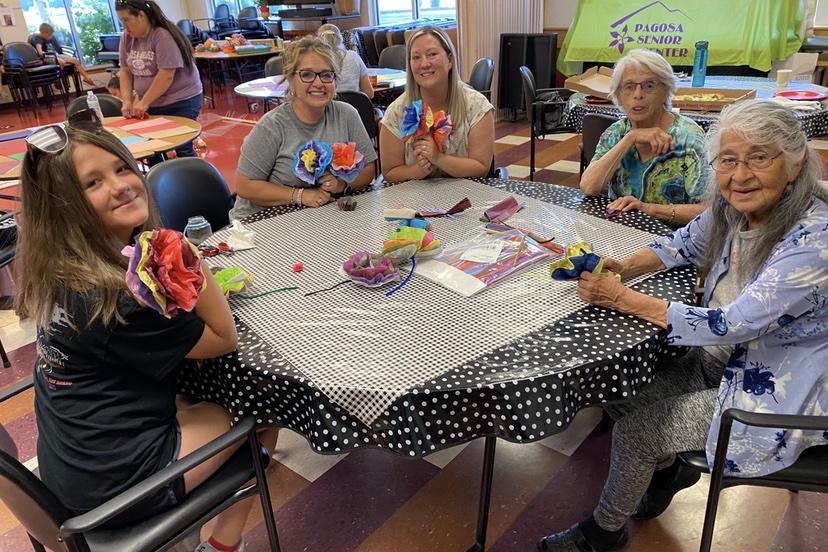
Photos courtesy Rosa Chavez.
There are moments when communities survive not because systems are functioning well, but because culture continues holding people together.
A shared meal after loss.
Children dancing beside elders.
Music echoing across a plaza at dusk.
Hands teaching hands how to cook, plant, sew, weave, create, pray, sing, paint, gather, write and care for one another.
In the rural Southwest, culture has never simply been performance. It has been continuity. A way of carrying memory, identity, resilience, self-determination and belonging through generations.
Communities across the Borderlands have long understood something essential:
People need more than services to stay well. They need connection. They need places where they feel known, welcomed, and part of something larger than themselves.
Increasingly, many communities are rediscovering that culture itself can function as a form of public health infrastructure.
Not as nostalgia.
Not as branding.
Not as exclusion.
But as relationship. As continuity. As collective care.
La cultura cura.
Roughly translated, la cultura cura means “culture heals.” Across the Southwest, the phrase reflects something many families have always known intuitively: culture can help sustain people through hardship, grief, loneliness, displacement, and change.
The cultures of this region are layered and evolving — Indigenous, Hispano, Mexican, Chicano, immigrant, rural, Black, Anglo, queer, disabled, multi-generational, and many others whose stories continue shaping community life through language, food-ways, music, spirituality, labor, care giving, and celebration.
Long before many communities had access to formal behavioral health systems, people survived through kitchens, gardens, storytelling, humor, ritual, music, mutual aid, writing, poetry and interdependence.
Culture carried memory forward. And memory helped communities endure without losing themselves entirely.
Last week, New Mexico and the Southwest mourned the passing of Al Hurricane Jr., who died May 19 at his home in Albuquerque.
Known as “El Godson” of New Mexico music — a title connected to the enduring legacy of his father, Al Hurricane — he helped carry forward a distinctly regional sound and cultural heritage that has shaped generations across the Southwest.
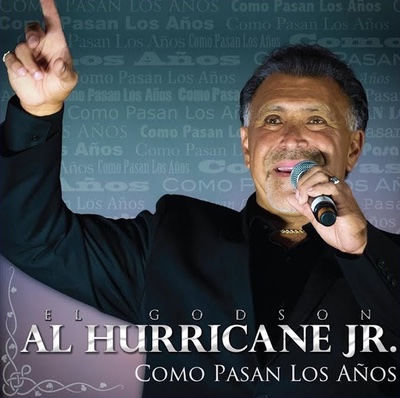
But beyond the stage and public identity, many people are also mourning something more personal — his humanity, kindness, generosity and also the passage of time. The realization that the elders, musicians, storytellers, artists, organizers, and culture bearers who helped shape the emotional landscape of community life do not remain here forever.
Across many communities, there is a quiet anticipatory grief emerging as people recognize how much knowledge, memory, language, music, ritual, and lived experience can disappear within a single generation if they are not actively carried forward.
And yet, alongside that grief, there is also possibility. Not to recreate the past exactly as it was, but to re-imagine how communities continue gathering, mentoring, creating, teaching, and caring for one another in the generations ahead.
That continuity continues through younger generations as well, including artists like Marcus Rivas and Los Mitotitos, whose presence reflects something important:
Culture survives not only through preservation, but through participation.
Not frozen in time. Still living. Still evolving. Still bringing people together.
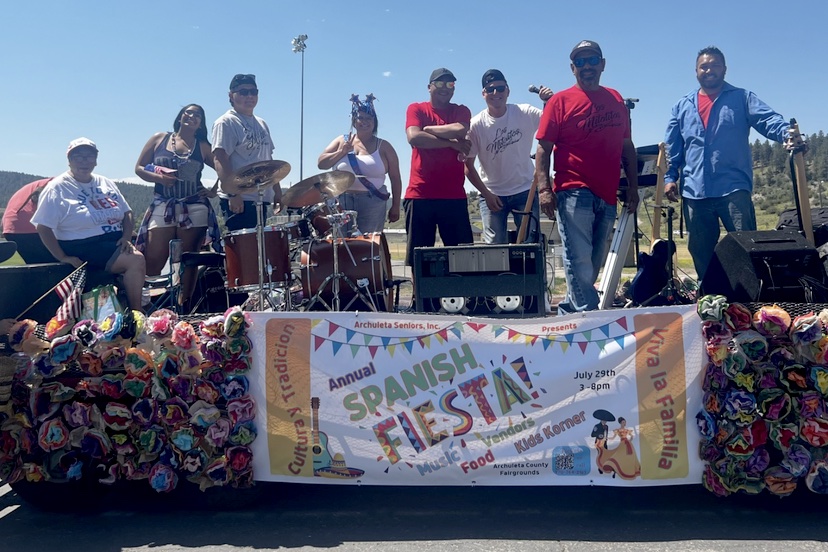
In Pagosa Springs, I witnessed this during my time helping support the revival of community cultural gatherings after nearly a twenty-year hiatus.
What stayed with me most was not spectacle. It was tenderness. The way elders taught children to make paper flowers around folding tables. The way volunteers quietly worked in the summer heat before anyone arrived. The way music softened loneliness.
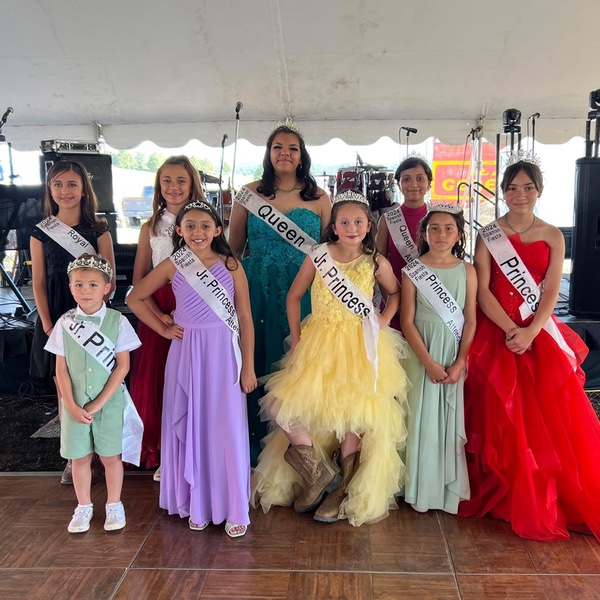
The way families, elders, youth, dancers, musicians, artisans, newcomers, and longtime residents gathered together across generations and backgrounds.
For a few hours, people remembered what it felt like to belong to one another again.
These gatherings were never sustained by one person alone. They were built collectively — through volunteers, families, artists, local businesses, sponsors, nonprofit partners, civic institutions, public spaces, media outlets, musicians, and residents willing to keep showing up year after year.
That kind of cultural infrastructure requires stewardship.
It requires patience.
Trust.
Funding.
Partnerships.
Careful listening.
And a willingness to build something larger than any single event.
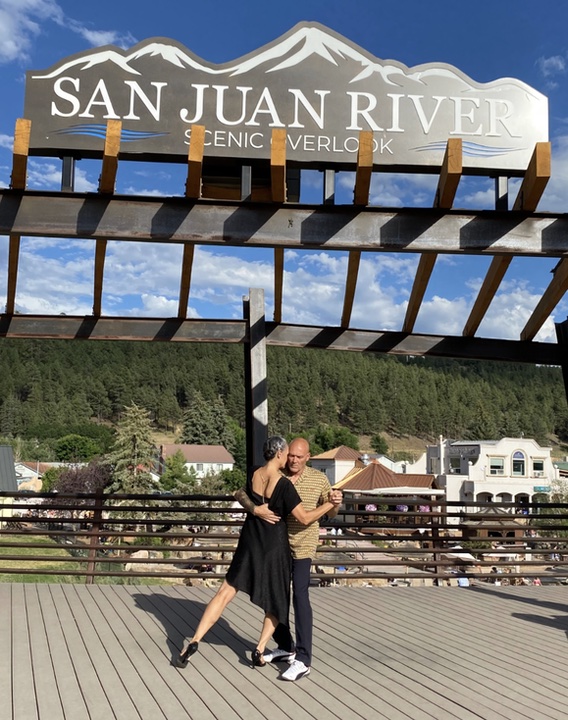
Healthy cultural ecosystems do not happen automatically. They must be nurtured slowly and responsibly so they can continue growing, evolving, and remaining accessible to future generations.
Across the Southwest, many organizations, artists, libraries, senior centers, schools, farmers markets, cultural groups, public agencies, small businesses, churches and community volunteers are already doing this work every day — often quietly and without much recognition.
They are helping hold open spaces where people can gather, celebrate, grieve, create, eat, dance, learn, and reconnect with one another.
That matters more than many people realize. Because community health is not built only through clinics and programs.
It is also built through relationships.
Through shared meals.
Through music.
Through language.
Through public spaces where people feel safe enough to gather and be seen.
Even now, moments of beauty continue appearing everywhere:
At local fairs and farmers markets.
At ferias de salud rooted in community care.
At libraries and senior centers.
At neighborhood gatherings and school performances.
In grandparents teaching recipes to grandchildren.
In crowded kitchens filled with red chile, green chile, tortillas warming on stovetops, and stories moving across generations at long tables.
For a moment, many people experience something increasingly rare in modern public life:
Belonging.
And perhaps that is part of why these spaces matter so deeply right now.
Across the country, communities are navigating loneliness, political exhaustion, economic pressure, grief, fragmentation, and profound social disconnection.
People are searching for places where they can still feel human with one another.
At its core, La Cultura Cura is not about preserving a single identity or romanticizing the past. It is about making enough room for people to belong. Because communities across the Borderlands have always carried layered identities and histories that cannot be reduced into a single story.
Healthy communities are not built by flattening difference. They are built by creating enough room for memory, dignity, complexity, and change to exist together.
As the United States moves through its 250th anniversary period — and Colorado approaches its 150th anniversary — conversations about the future of our communities are already underway.
Moments like these remind us that preserving and carrying forward the cultures, languages, traditions, and stories that shaped this region must also leave room for the people continuing to shape and re-imagine it today.
Sometimes healing does not arrive first through institutions. Sometimes it arrives through remembering.
Through music echoing across fairgrounds.
Through elders laughing beneath shade tents.
Through children dancing under summer skies.
Through neighbors choosing, even briefly, to gather instead of withdrawing from one another.
Health is not only clinical care. It is whether people feel connected, nourished, rooted, and safe enough to participate in community life.
The Borderlands have always known this.
Even in difficult times, people continue dancing.
People continue feeding one another.
People continue making beauty anyway.
And perhaps that too is part of how communities stay alive.
Cuando el sistema falla, la comunidad sostiene la salud.