
By Owen Hablutzel
Policies that protect and improve the abundance and variety of natural living organisms — biodiversity — enjoy broad support and appeal even in today’s technologically dominated world. Though citizens often seem politically divided on many issues, frequently polls show 80-90% popular agreement behind biodiversity-friendly measures. The public’s endorsement isn’t for just some abstract idea — it calls concretely for restoration of habitat, funding for wildlife conservation and more, going well beyond protections for endangered species.
New Mexicans, and most Americans, connect biodiversity with cleaner air and water, healthier food systems, improved outdoor recreation (hunting, fishing, hiking, camping, bird-watching), and even mental well-being from nature.
Today there exist a bewildering number of techniques and approaches aimed at improving biodiversity — everything from building and installing bat or owl boxes, to adapting fencelines with wildlife-friendly retro-fits, to restoring eroding wet-meadow habitats in our watersheds. With so many ways to proceed on offer, it is not always easy to know where land stewards (and the public, funding many such efforts) will get the most return to these goals for the time, money and energy directed there.
For complex situations like these a return to foundations can be clarifying. To improve biodiversity, a perspective grounded in peer-reviewed science — based on essential foundations required for life in all ecosystems — is needed. The science of Landscape Function meets these criteria, so may be worth a further look.
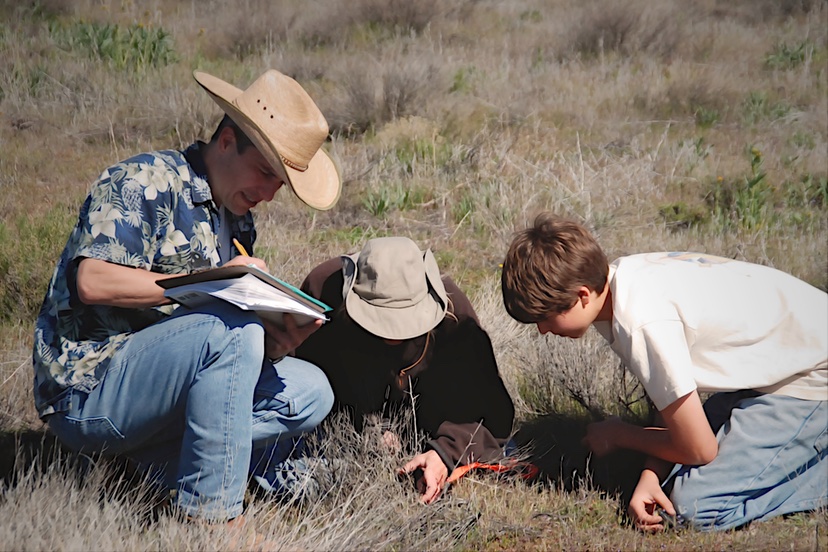
Landscape Function is a land analysis framework developed by Australian range scientists in the 1980s and 1990s. It has since proven capable of reliably delivering valuable predictive information to land managers in any type of ecosystem. It answers the basic question: “Is this landscape trending better (natural resources are accumulating), or will it continue to degrade (resources are leaking away)?”
To determine the condition, a Landscape Function Analysis looks for three fundamental processes — soil stability, water infiltration, and nutrient cycling. Indicators for all are observable directly at the surface of any soil. All must function adequately (holding, not leaking, resources) if we want living organisms to ultimately increase and diversify at that particular location.
The first forms of life to benefit from improvements in Landscape Function (stability, infiltration, nutrient cycling) are the countless species of soil microorganisms. When Landscape Function improves these communities flourish and diversify, building more and better soils in the process. Next, plant communities respond to the microbially-altered conditions, and soon begin similar expansions in vigor, abundance, health and diversity. Then, with plant communities thriving, benefits cascade to more and more forms of life — the ripple-effect of improved Landscape Function makes its way through to the highest levels of nature’s food web that we may have learned about in grade-school.
Because Landscape Function condition is directly observable right at the surface of any soil the framework is extra useful for land stewards (gardeners, graziers, farmers, foresters) making decisions about which management actions best support biodiversity goals. Soil surface processes are monitored quickly and cheaply. Results may be compared before and after different treatments, tools, or techniques have been applied. Where this feedback demonstrates improvements in foundational Landscape Function we know biodiversity improvements follow. Likewise, where monitoring shows Landscape Function degrading we know biodiversity will diminish.
This makes for a powerful tool to gauge biodiversity success between differing approaches — and allows laser-focus on management actions that work — without needing to resort to more time-consuming and costly ‘stamp collecting’ methods (species counts, obsessing on specific vegetation cover types, and the like).
If an approach we are using for increasing biodiversity is not actively improving Landscape Function at the soil surface (or is degrading it) then that effort cannot succeed in the end. When we focus on building what is truly foundational for all lasting biodiversity (Landscape Function) then we are setting ourselves, our landscapes and the variety of wildlife they support on the best foot forward for success.