
This essay by Sharon Sullivan appeared on Colorado Newsline on August 11, 2026.
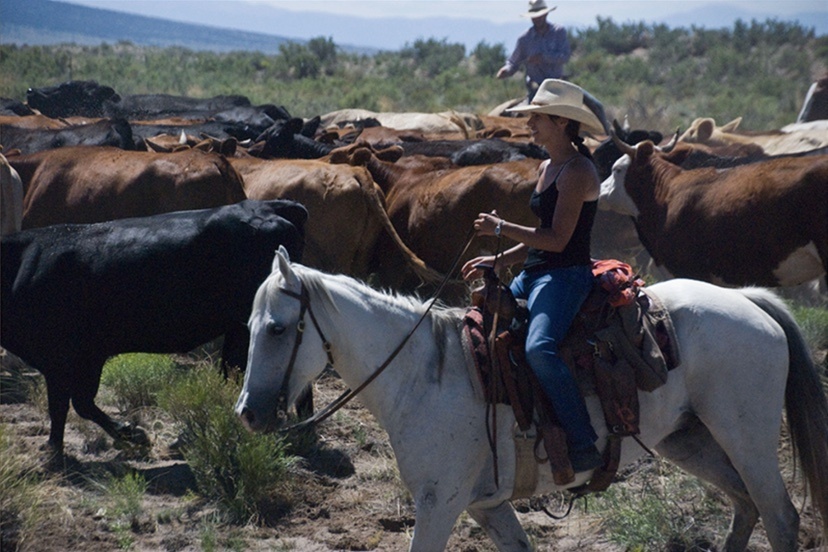
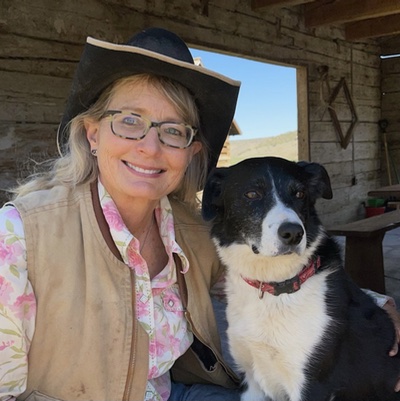
Every three days, Kathleen Sullivan Kelley hauls water from the town of Meeker to fill a 500-gallon tank at her ranch in Rio Blanco County. Kelley’s horses used to drink from ponds on the property, but there’s no longer any surface water, and she and her husband, Reed, sold the last of the 200 cows they once raised. Kelley, 71, is concerned that the ranch could eventually be cut off from the city water source due to worsening drought.
A year ago, the Lee Fire tore through the Kelleys’ property, sparing their concrete house but destroying miles of trees, as well as all their fencing, plus several buildings and old granaries from a former homesteading community on the ranch. After being forced to evacuate, the Kelleys returned home 60 days later to falling ash and more than 75 years worth of destroyed infrastructure, she said.
“Our (weather) conditions have changed so much during my lifetime,” Kelley said. “Now three-quarters of the year is fire season. We’re watching for fire all the time. That’s our life now. We’re constantly thinking about fire mitigation.”
In July, Kelley joined six other ranchers in filing a brief with the U.S. Supreme Court in support of a lawsuit brought by the city of Boulder and Boulder County against three Suncor Energy entities and Exxon Mobil. Boulder is seeking monetary damages for costs incurred responding to wildfires, repairing transportation infrastructure, restoring watersheds and other harm related to climate change.
The county is not seeking to regulate emissions or fossil fuel production. It only wants the fossil fuel companies to help pay for harms the county contends were caused, in part, by the activities of Suncor and Exxon. The defendants say states lack the authority to regulate pollution, including greenhouse gas emissions, originating beyond its borders.
The ranchers’ brief was a response, in part, to a brief filed by several Colorado counties in support of the fossil fuel companies.
Case moves to U.S. Supreme Court
EarthRights International is representing Boulder and Boulder County in the lawsuit. In February, the U.S. Supreme Court granted the defendants’ petition to review an earlier Colorado Supreme Court decision allowing Boulder’s case to move forward. The Supreme Court will decide “whether federal law precludes state law claims seeking relief for injuries allegedly caused by the effects of interstate and international greenhouse-gas emissions on the global climate,” and, whether a U.S. Supreme Court review is even appropriate at this stage of the case.
“More extreme weather, increased wildfire risk and growing strain on critical infrastructure have become an all too familiar reality in Boulder,” said Boulder Mayor Aaron Brockett in a statement provided to Colorado Newsline. “At the same time, proposed federal efforts attempt to shield fossil fuel companies from accountability, leaving local communities and taxpayers to shoulder the financial burden alone. That is a dangerous precedent. Our community should not bear the rising costs of climate impacts caused by decades of deception from the fossil fuel industry. This lawsuit is about accountability, protecting our community and ensuring the companies that knowingly contributed to the climate crisis share responsibility for the costs our communities now face.”
Representatives from Suncor and Exxon did not respond to requests for comment.
The ranchers
Rio Blanco County cattle rancher Deirdre Macnab learned about the case after reading a June 17 article in The Herald Times, a weekly newspaper serving Rio Blanco County. Macnab was disappointed to learn that Rio Blanco County commissioners had spent $7,500 of taxpayer money toward legal fees to file a brief in support of Suncor and Exxon Mobil. Participants in The Associated Governments of Northwest Colorado brief also include Mesa, Delta, Archuleta, Grand, Montezuma, Garfield and Montrose counties. Macnab decided to reach out to other ranchers who have been affected by a changing climate about support for Boulder’s cause.
The burning of fossil fuels has contributed to reduced snowpack, earlier melt-off, increased temperatures, and increasing heat domes, all affecting the agricultural community, Macnab said. Ranchers are not interested in imposing new regulations on the oil and gas industry. The group only wants fossil fuel companies to pay a share of costs that have occurred from harms caused by wildfires, floods and other extreme weather events. Suncor and Exxon both reported record profits last year.
“That’s the impetus of these ranchers getting behind this,” Macnab said. “It’s the responsibility of fossil fuel companies to support these impacted communities. We’re very concerned about the future.”
One of the ranchers is Kathryn Bedell, who, like Macnab, engages in regenerative agriculture, which emphasizes sustainable grazing practices and soil rebuilding. Bedell is on the board of the American Grass-fed Association and executive director of the Southwest Grass-fed Livestock Alliance. She promotes grass-fed agriculture instead of fattening cattle on grain in feedlots. The changing climate is affecting her ability to ranch.
In the spring and early summer, she grazed her cattle on what would normally be her hay pastures, because the water sources on her early summer pasture were dry. She expects she will need to sell her entire herd this fall, because she can’t afford to pay for hay for six to seven months, she said.
Another brief participant, Jay Fletcher, 78, grew up on the ranch he owns near Steamboat Springs. He supports Boulder’s lawsuit because of the changes he’s seen over his lifetime. Daily temperatures of 90 degrees Fahrenheit never used to happen, he said. Snow left his meadows early this year, on March 2 – that’s a first, he said. The unpredictable weather patterns have made ranching difficult, he said.
Other ranchers supporting Boulder’s lawsuit include Andy Breiter of Boulder County; Mike Callicrate, who ranches and farms in Kansas and operates a retail meat business in Colorado Springs; and Caleb Valdez in Montezuma County. Richman Law and Policy, headquartered in New York state, provided pro bono legal services for the group.
Macnab acknowledges some ranchers disagree with their approach, but she said a “significant number” of them agree. The seven ranchers are not seeking financial compensation for their personal losses, but they don’t want counties to be solely on the hook for harms they say are caused at least in part by fossil fuel companies, she said. Suncor is a Canadian company with several subsidiaries, including a refinery in Commerce City.
The federal government denied Colorado’s appeal for FEMA disaster relief, after the Elk and Lee fires burned more than 137,000 acres in Rio Blanco County last year, costing an estimated $27.5 million in damages.
Colorado counties that support Suncor, Exxon
Oil and gas companies operate in the counties that support the AGNC brief in favor of Suncor and Exxon — and generate significant revenue for those communities, said Mesa County Commissioner Cody Davis. He said if Boulder succeeds in its case against Suncor and Exxon, the companies will move operations out of Colorado.
“It’s essentially regulating industry so they won’t be able to operate,” Davis said.
Mesa County contributed $15,000 toward the $75,000 total cost of filing the brief supporting Suncor, Davis said.
In an email to Colorado Newsline, Rio Blanco County commissioners cited high-paying jobs, and “severance tax distributions, federal mineral lease revenues and royalties, and property taxes on energy infrastructure” that help fund roads, schools, emergency services and other essential public functions, as reasons for their participation in the AGNC brief.
Colorado attorney general weighs in
A multistate coalition of attorneys general, including Colorado Attorney General Phil Weiser, filed their own brief with the Supreme Court stating that if it finds it does not have the authority to hear the case, the lawsuit should return to Colorado’s courts.
“At this stage of the case, it would be an overreach and improper for the Supreme Court to prevent Colorado courts from considering the merits of this litigation,” Weiser said in a statement.
Macnab said she recognizes the critical role that fossil fuel development has played in society. “But now the science is clear, and the technology available and we can begin a more rapid transition to a more sustainable future,” she said. “It’s important that people understand we have to protect our food production, and food producers, and local agriculture. Not only people’s livelihoods are at stake, but also food production.”
Colorado Newsline is part of States Newsroom, a nonprofit news network supported by grants and a coalition of donors as a 501c(3) public charity. Colorado Newsline maintains editorial independence. Contact Editor Quentin Young for questions: info@coloradonewsline.com.