
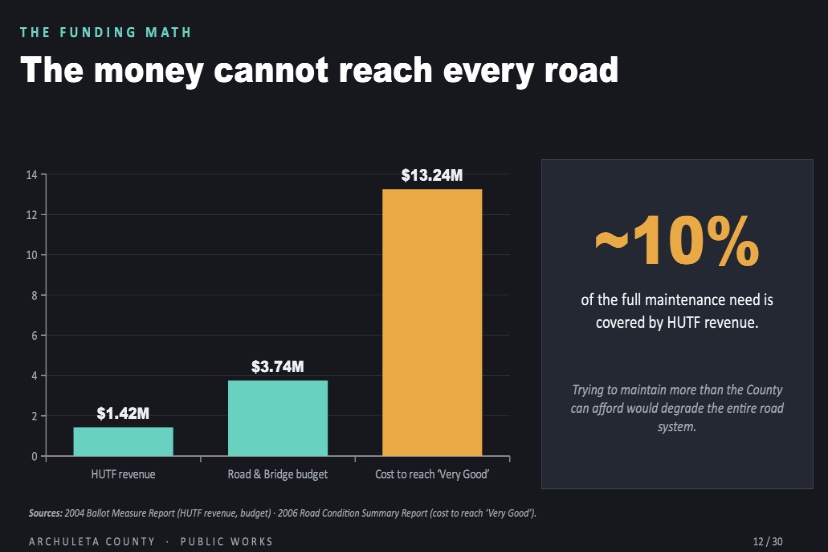
The title on the PowerPoint slide read:
“The money cannot reach every road.”
Can a county government keep on saying that… for 22 years?
As the Fairfield Communities Inc. subdivisions built out during the 1970s and 1980s — the 21 square miles of suburban parcels now referred to as ‘Pagosa Lakes’ — the Archuleta County government and the Pagosa Lakes residents began to realize that some of the subdivision roads had not been properly constructed to handle the growing traffic impacts.
In fact, some of the platted roads had never been completed at all.
By 1990, Fairfield Communities Inc. had filed for bankruptcy, and as part of the bankruptcy settlement, Archuleta County received several hundred thousand dollars to upgrade roads that Fairfield had failed to complete. Some of the funding was used to pave certain subdivision roads with asphalt.
Something else was happening around the same time. A petition was being circulated to create a new municipality in Pagosa Lakes. If approved by the residents, this would be a separate municipality, competing with the nearby Town of Pagosa Springs.
The municipal leadership at the Town apparently didn’t like this idea, and they came up with a scheme to annex all of the commercial property along Highway 160 that would be located in the proposed new town. That move deprived the proposed ‘Pagosa Lakes’ municipality of nearly all its potential sales tax revenue.
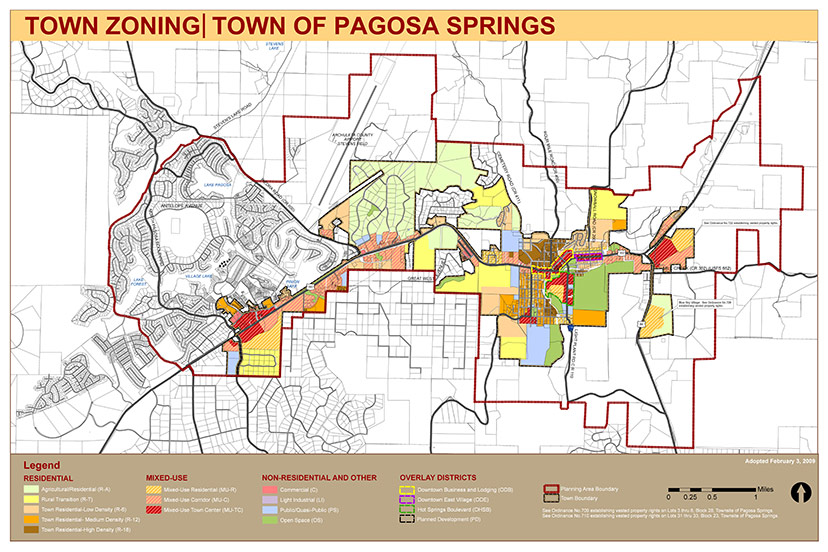
The resulting annexations created a “Town of Pagosa Springs” that now included residential homes in the downtown area to the east, and almost none of the residential neighborhoods in the “uptown” area to the west. The colors in the map below represent the various types of land uses allowed in each Town zoning district.
The non-colored areas lie outside the Town, in the unincorporated county. That’s where 85% of the community lives.
This annexation scheme left the Archuleta County government — rather than the Town government — in possession of an extensive suburban road system in Pagosa Lakes, but with a tax base incapable of fully funding the maintenance of those roads.
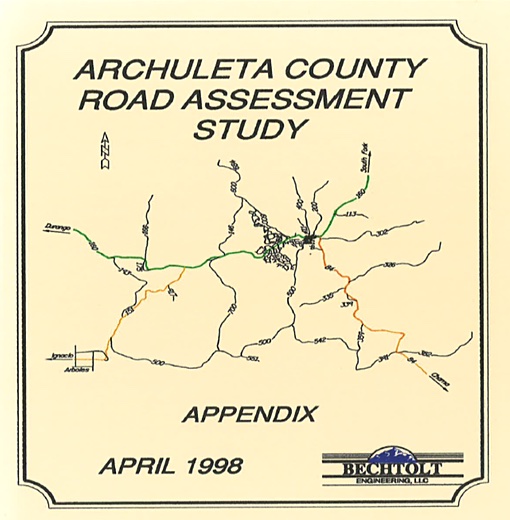
Things came to a head in 1998, with Pagosa Lakes residents demanding better road maintenance, and the County Commissioners countering that they couldn’t afford to maintain the Pagosa Lakes road system. Following the publication of a system analysis by Bechtolt Engineering…
…the Board of County Commissioners entered into an agreement to fully maintain the Pagosa Lakes subdivision roads until 2003, to allow Pagosa Lakes residents time to figure out an alternative maintenance plan.
Meanwhile, some of the outlying subdivisions in the county had already figured out their own maintenance plans, by creating local metropolitan districts authorized to collect property tax — when approved by the subdivision residents — to be used exclusively for road maintenance. Those subdivisions were Aspen Springs, Loma Linda, San Juan River Village, Piedra Park, Colorado Timber Ridge, and Alpha Rock Ridge. Currently, those subdivision levy metro district assessments of between 7.4 and 15 mills.
So let’s go back to an earlier day — as related during the presentation by Archuleta County Public Works Director Mike Torres to the BOCC during an August 4 work session.
Here’s Slide Number 9 of his 40-slide presentation:
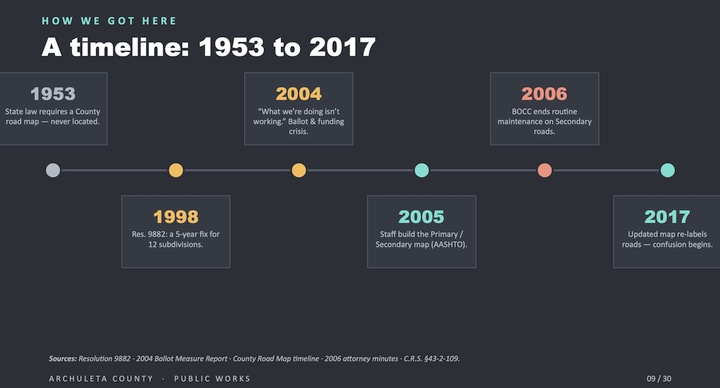
In 1953, the Colorado legislature passed a law requiring counties to approve a “road map” clarifying how roads in the jurisdiction would be maintained.
If Archuleta County did indeed create such a map back then, the current Public Works staff has been unable to locate it. Reportedly, road maintenance scheduling in those days was dependent upon whether you were friends with one the current commissioners.
Many people were left unsatisfied by this arrangement, especially as new subdivisions began to build out.
In 1998, Archuleta County entered into the agreement with 12 Pagosa Lakes subdivisions, guaranteeing road maintenance for five years.
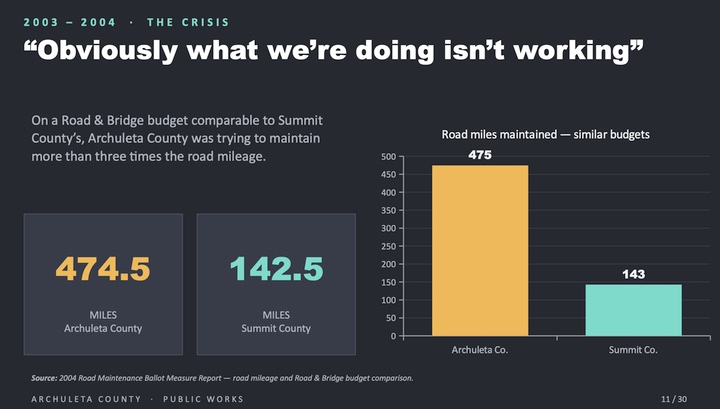
By 2004, Archuleta was experiencing a budget crisis, due at least in part to road maintenance costs. With a budget similar to Summit County’s road budget, our Road & Bride department was trying to maintain more than three times the road mileage.
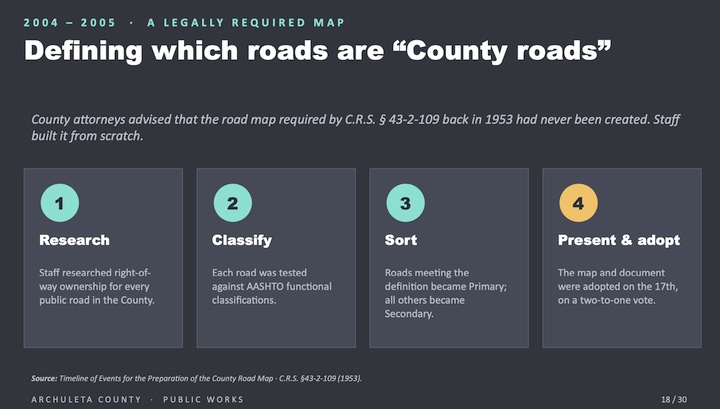
The next year, in 2005, the BOCC began developing a road system map that defined roads as either “Primary” or “Secondary”. The Primary roads would receive full road maintenance; Secondary roads would be the responsibility of the surrounding subdivision.
This map was not popular with the Pagosa Lakes subdivisions that had been receiving “full” maintenance for five years. But it was nevertheless adopted by the BOCC.
I looked for the 2005 map on the County website and was not able to find it.
In 2006, two things took place. County Road & Bridge announced its intention to cease routine maintenance on Secondary Roads… and the BOCC placed Ballot Measure 1A before the voters, to allow the County to retain property taxes in excess of TABOR (Taxpayer Right of Rights) limitations for five years, with most of the retained revenues to be allocated to road maintenance. This type of relief from TABOR is often referred to “de-Brucing” in honor of Douglas Bruce, the primary author of the TABOR amendment.
This was not a “tax increase” per se. The mill levy remained the same. But the TABOR refund normally distributed to property owners was instead placed in a “1A Fund.”
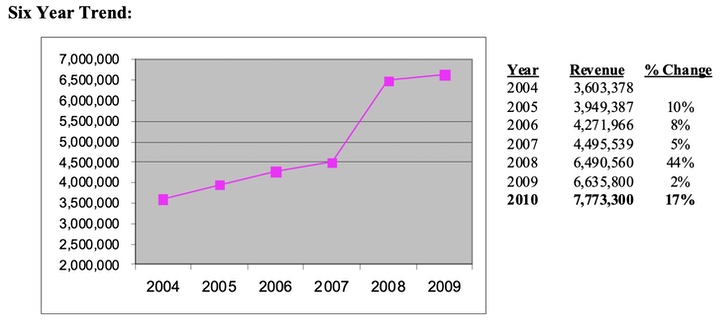
As a result, the County’s property tax collection grew substantially, increasing by 44% in 2008, and by another 17% in 2010.
In 2007, however, the County announced that $2.5 million had somehow gone “missing”, and the County was teetering on possible bankruptcy. It appeared that the state government might step in and take over control of the County government. (We never learned what exactly had happened to the $2.5 million.)
In 2011, the County went back to the voters to make the “de-Brucing” permanent. But the County had spent the past five years doing an unacceptably poor job of maintaining the roads, in spite of the additional funding — and the voters rejected the permanent de-Brucing proposal.
The fact that the County could simply “lose track” of $2.5 million may have influenced the negative vote.
So the County was back to Square One… with an approved map of Primary and Secondary Roads that was not being followed… and with constant complaints from Pagosa Lakes residents.
Fast forward to 2017… 13 years after admitting publicly: “Obviously what we’re doing isn’t working…”