
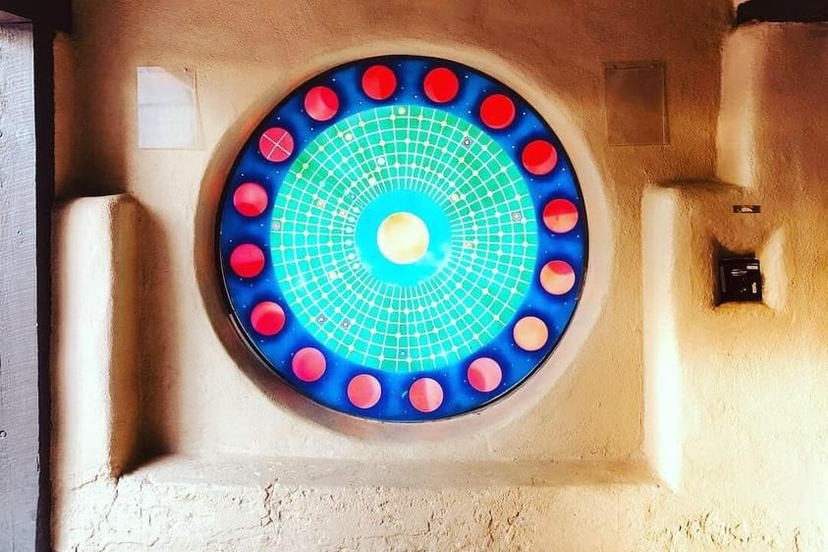
Photo by Rosa D. Chavez.
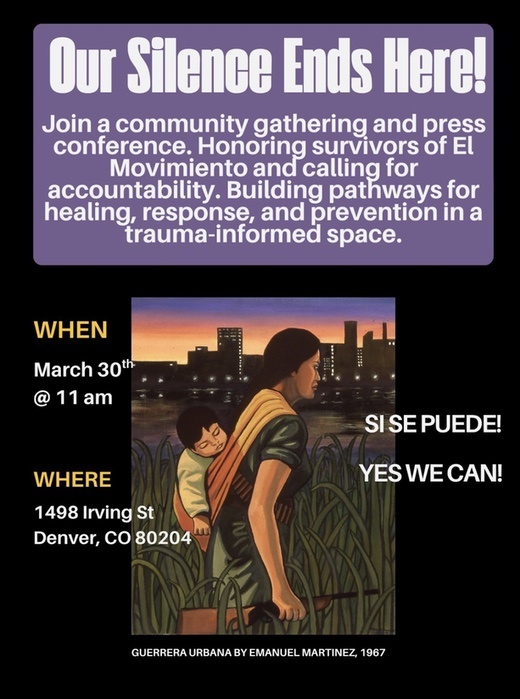
On Monday, March 30, a room in Denver will be arranged in a circle — one of the oldest forms we return to when something needs to be seen clearly.
Chairs will be set close enough for people to see one another, but with space for those who need it.
Some will come ready to speak. Others will come unsure if they will say anything at all. Some may step outside for air. There will be no pressure to share.
No expectation to explain. Only a space — held with care.
Moments like this don’t look like policy. They don’t show up in data dashboards.
But they reveal something essential: What happens after the truth is spoken is not guaranteed.
This Is More Than a Conversation
Across the Borderlands — from Denver to the San Luis Valley, from Northern New Mexico to the Four Corners — communities are asking a deeper question:
What happens after the truth is spoken?
The work led by sovereign Tribal Nations and relatives advocating for Missing and Murdered Indigenous Peoples (MMIP/MMIW) has made this visible for years—offering a clear and sovereign analysis of harm that continues to shape how other communities are now asking these questions.
This moment is part of a longer history of organizing across the region. From El Movimiento—where many elders organized for labor rights, land, dignity, and cultural survival—to ongoing work led by Black, Brown, and queer communities, there has long been an understanding that harm does not occur in isolation.
These movements have named, in different ways, how systems shape both vulnerability and resistance—and how communities are often asked to carry what institutions have not yet been built to hold.
Harm is not isolated. It is patterned, systemic, and shaped by conditions. And too often, it is carried alone.
National data reflects the scale: 1 in 3 women in the United States experience sexual violence, with even higher rates among Indigenous, Latinx and LGBTQ+ communities, including nearly half of transgender individuals and bisexual womxn.
But numbers only tell part of the story. What they don’t show is what happens next.
A Quiet Shift
In earlier columns, we explored the limits of self-care—how loneliness and trauma are often treated as individual burdens, even when they are shaped by systems. That same pattern is visible here.
A story is told. A community responds. Attention rises—and then recedes.
Meanwhile, survivors continue navigating harm, healing, and safety largely on their own.
This is more than a gap in services. It is a continuation of isolation—at a systems level.
It is also shaped by how we have been trained to understand care.
Many dominant models — whether in governmental, health, mental health, or social services — were developed within institutions that did not always account for culture, history, or structural conditions. As a result, responses to harm can locate the problem inside the individual, while the conditions that produced the harm remain unaddressed.
When that happens, survival responses can be misread as dysfunction, and healing becomes about adaptation rather than transformation. In some cases, the systems meant to support healing can unintentionally reproduce harm—particularly when they are not designed with the communities they serve.
From a Borderlands Health perspective, this leads to a different way of understanding the issue: Safety is infrastructure.
Not just crisis response. Not just awareness. But the systems that determine whether people are supported, protected, and able to heal over time.
If harm is systemic—then our response cannot remain individualized.
Expanding to Systems
What would it look like to treat safety the way we treat other forms of infrastructure?
To invest in:
Survivor-centered systems that extend beyond crisis moments
Community-defined accountability processes that reflect culture and lived experience
Coordination across counties, states, and sovereign Tribal Nations—each with their own authority
Prevention strategies grounded in public health, not just reaction
This is the shift from reaction → design. It is not separate from other conversations happening across the Borderlands.
We have already begun to understand housing and food as forms of health infrastructure—systems that stabilize daily life and shape long-term outcomes.
Safety is no different. The same conditions that shape access to housing and food—economic stability, land, community connection—also shape vulnerability to harm.
When these systems are fragmented, risk increases. When they are aligned, communities become safer over time.
What We Are Seeing Locally
In Southwest Colorado, this reality is already visible. In Archuleta County, organizations like Rise Above Violence provide critical advocacy and crisis support—often across long distances and with limited resources.
Across La Plata and Montezuma counties, service providers report similar patterns:
- High demand
- Complex cases
- Limited long-term support
Particularly for rural residents, Tribal communities, Spanish-speaking families, and LGBTQ+ individuals.
Community and faith-based organizations, including efforts associated with the Cornerstone Foundation, have also raised concerns about trafficking and exploitation within rural tourism and transient labor economies.
Across these communities:
Survivors come from every background — white, Hispanic/Mestiza, Native, Immigrant and LGBTQ+
Many cases never enter formal systems
Support remains reactive, not sustained
And yet, local organizations continue to hold what systems have not fully built.
A Regional Decision Moment
On March 30, this gathering in Denver will bring people together not only to reflect—but to begin asking what it would take to respond differently.
Not only: Do we acknowledge harm? But: Do we know how to respond to it—together?
Because moments like this are not just conversations. They are early steps in shaping what community-led healing, accountability, and prevention could look like across the region.
Across the Borderlands, many of the practices that support care and healing have always existed, in relationships to land, to food, to ceremony, to each other. In mutual aid, shared knowledge, and the everyday ways communities sustain one another, even when systems fall short.
These are not separate from public health. They are part of the infrastructure.
The question is whether systems are willing to recognize, support, and invest in what communities already know how to sustain.
From Truth → Repair → Prevention
The shift in front of us is not complicated—but it is significant: From truth → repair → prevention
This direction is not new. In earlier writing, I explored the need for a Borderlands Truth & Reconciliation approach—one that moves beyond acknowledgment toward community-defined processes for truth, repair, and long-term accountability.
What is emerging now across the region reflects that same call: not only to name harm, but to build the structures that make repair and prevention possible over time.
The work is already happening—in fragments. In advocacy organizations. In Tribal-led efforts. Regional hotlines and coalitions respond every day.
The question is not whether the work exists. It is whether we are willing to resource, align, and scale it.
We already know harm exists. The question is: Will we continue to rely on individuals and families to carry what systems have not yet been designed—or resourced—to hold?
Or will we begin building the infrastructure that makes healing, accountability, and prevention possible?
There are moments when communities are asked not only to witness what is happening—but to decide what they are willing to carry forward, and what must change.
These moments require clarity, courage, and a willingness to act—not all at once, but in ways that begin to shift what is possible.
This moment does not stand alone. It continues a lineage of organizing—from Indigenous communities to El Movimiento elders to Black, Brown, and queer leaders today—who have long known that survival is not sustained by intention alone, but by what we build together.
The answer will not come all at once — but it will not come without us.
It will begin the moment we decide that safety—like housing, like food — is something we build.
Safety protects the present. Infrastructure determines whether healing—and prevention—are possible.
Event Information
Community Gathering on Healing, Accountability, and Response to Sexual Harm
Open to community members, service providers, leaders, and Tribal representatives across Colorado and the Southwest.
Monday, March 30, 11:00am
1498 Irving St, Denver, CO
For more information please contact: Sí Se Puede Collective | 720-469-1834
Support Sign-On Form: https://forms.gle/PhiXiFygSjMFGjpE7
Cuando el sistema falla, la comunidad sostiene la salud.
Rosa D. Chávez, MPH, is a public health practitioner and systems leader rooted in the borderlands of Southwest Colorado and northern New Mexico. Her work explores how culture, care, land, power and community infrastructure shape health and belonging.