
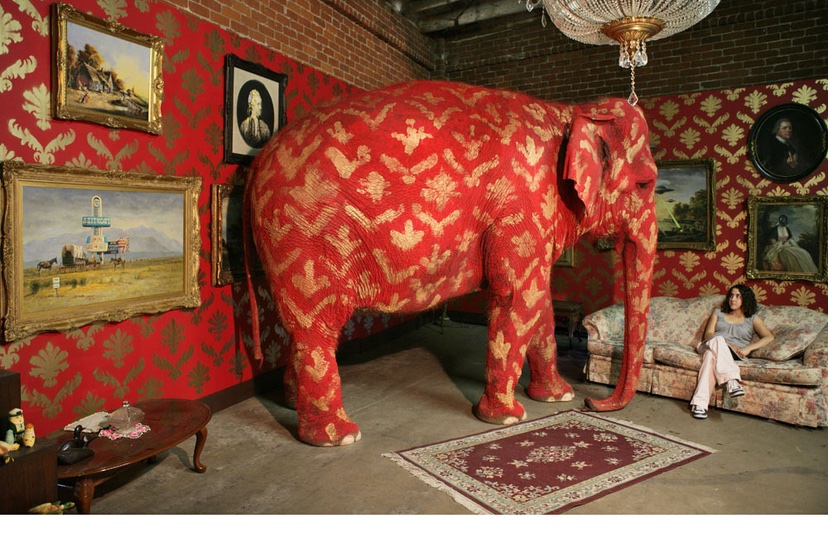
Photo: The Elephant in the Room, by Banksy.
Is the phrase supposed to be “The Elephant in the Room”?
Like, is there only one elephant, in one room?
Or are there, in fact, multiple elephants in multiple rooms?
This question arose when I ran across a YouTube channel called “Elephants in Rooms” — implying that, yes, there are indeed many elephants, in many rooms.
The YouTube discussion posted on June 8 featured Ken LaCorte, an American media executive and journalist with 790,000 subscribers to his YouTube channel. Mr. LaCorte was an executive at Fox News for about eighteen years, rising to senior executive producer of the website FoxNews.com, where he oversaw digital operations.
After leaving Fox, he founded LaCorte News, a digital outlet he said was intended to “restore trust in journalism”.
Good luck with that one, Ken.
Apparently, good luck was not forthcoming, however. If you can believe what you read on the internet, LaCorte News was being kept alive by promotional links coming from a couple of “troll farms” called Conservative Edition News and Liberal Edition News, which got shut down by Facebook in 2019 for “terms of service” violations. I can’t speak from experience, but I assume you have to do something really, really bad to get shut down by Facebook.
LaCorte News subsequently disappeared.
Which suggests that Mr. LaCorte knows a thing or two about elephants in rooms.
You can paint the elephant to match the wallpaper, but it remains obvious to the anxious lady sitting on the couch.
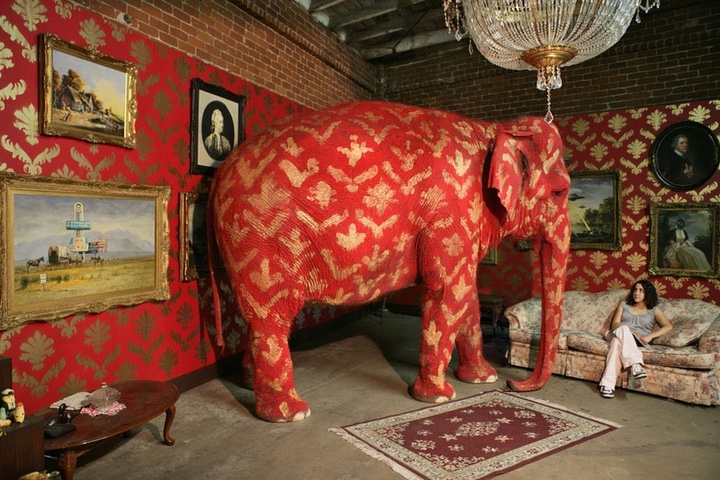
Thus, when the elephant appears in the room — whatever room that might be — we don’t bother to decorate it with red and gold paint. We simply act like it’s not there.
A few days ago, Mr. LaCorte posted a video titled, “What happened to the news?” Most of us have probably been wondering the same thing.
But Mr. LaCorte didn’t just wonder. He put together a rather compelling case that the news, in America, has been “fake” since before the Revolutionary War, and that attempts to make the news “fair and balanced” derived, not from a sense of honestly, but from a business decision to sell newspapers and TV news programs to a wider audience. By keeping the news “non-controversial”, a news outlet could hope to appeal to people of various persuasions.
During the early days of the newly-independent United States, only relatively wealthy people could afford newspaper subscriptions, during which time newspapers freely promoted controversial political opinions. But in 1833, a businessman named Benjamin Day began selling issues of the New York Sun for one penny, to the widest possible audience. His business model involved making his real money from advertisers in need of consumer eyeballs — and in order to provide as many eyeballs as possible, the headlines steered clear of political controversy and focused on murders, robberies, and natural disasters.
In other words, there’s something about expressing an opinion that ruins your attractiveness. (Same thing applies in a marriage.)
As new media developed — radio, and then television — this ‘advertiser-supported’ business model remained in place. Juicy political corruption got less coverage than it might have if the media were primarily concerned with properly informing us. The media continued to focus on airplane crashes instead. Disaster stories were ‘safe’, even if airplanes weren’t.
But during the 1980s and 1990s, the media landscape began to change, and we’re now living in a very different informational world. Media outlets are now actively striving to be as controversial as possible, because that’s how you get promoted by the Algorithms. It makes no difference if you’re making stuff up and totally lying. In fact, probably better if you are, if what you want are consumer eyeballs.
Thus, America’s media outlets have become the red-and-gold elephants of 2026. We willingly allow these elephants into our rooms, but pretend everything is hunky-dory.
Which is not to suggest, by any means, that today’s Daily Post column is full of lies and deceit.
But it might be.
Underrated writer Louis Cannon grew up in the vast American West, although his ex-wife, given the slightest opportunity, will deny that he ever grew up at all. You can read more stories on his Substack account.