
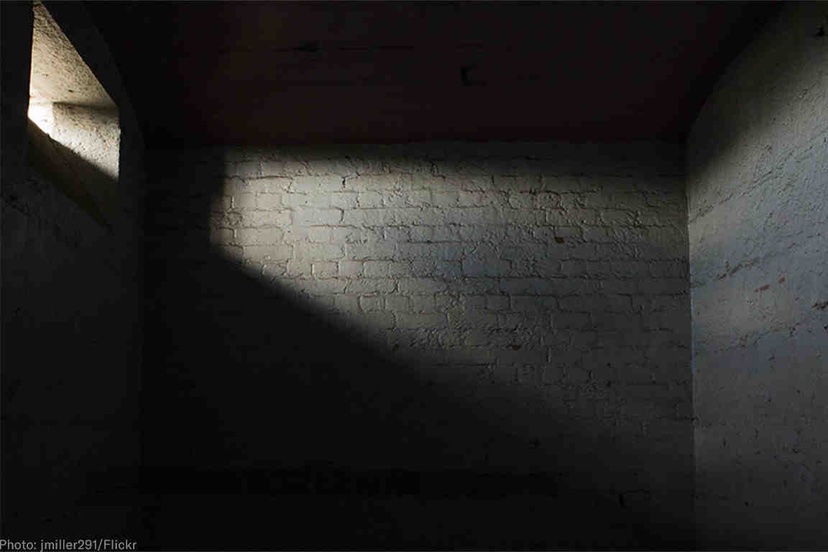
In the outskirts, stands a great prison, called the Eastern Penitentiary: conducted on a plan peculiar to the state of Pennsylvania. The system here, is rigid, strict, and hopeless solitary confinement…
— from ‘American Notes for General Circulation’ by Charles Dickens, 1842.
On January 3, 1842, one month shy of his 30th birthday, author Charles Dickens sailed with his wife, Catherine, from Liverpool aboard the steamship RMS Britannia bound for America. What he thought he might find there, I cannot say.
Arriving in Boston, the author was immediately mobbed. He enjoyed the attention at first, but soon the endless demands on his time began to wear on his enthusiasm.
He complained in a letter to his friend John Forster:
I can do nothing that I want to do, go nowhere where I want to go, and see nothing that I want to see. If I turn into the street, I am followed by a multitude…
By the time he reached Philadelphia, the crowds had thinned somewhat, and he was able to schedule a tour of the Eastern Penitentiary. What he thought he might find there, I cannot say. But we know what he did find: a prison built around the then-novel idea that solitary confinement would convert the (penitent?) criminals into more refined citizens.
His view of this innovative Quaker-inspired approach to moral rehabilitation?
My firm conviction is that, independent of the mental anguish it occasions — an anguish so acute and so tremendous, that all imagination of it must fall far short of the reality — it wears the mind into a morbid state, which renders it unfit for the rough contact and busy action of the world. It is my fixed opinion that those who have undergone this punishment, MUST pass into society again morally unhealthy and diseased.
This story intrigues me because I have an abiding interest in mental health.
My own, mainly. Considering the rough contact and busy action of the world.
If you were able to witness some of the weird dreams I’ve been having lately, you would understand my abiding interest. Fortunately, you haven’t had to witness my disturbing dreams — lucky you! — although you may be having some of your own.
For your own mental health, I will avoid relating my dreams in today’s column. But rest assured: they’ve been really weird.
A surprising number of psychologists, and wanna-be-psychologists, have been posting advice for ordinary people concerned about troubled mental health. (The mental health of the ordinary people… not the mental health of the psychologists.). Much of the psychological advice has to do with ‘social contact’. We want the right amount of it, if we want to remain mentally (and morally) healthy. The absence of social contact can be as bad as too much of it.
Personally, I lean towards the ‘absence’ end of the spectrum, even though I’m uncomfortable being alone, at certain times. During a thunderstorm, for example. That’s why I have a cat. Roscoe is completely unfazed by thunder and lightning, so in those situations, he’s allowed to sleep on my pillow.
To many of us, the concept of solitary confinement may not sound all that bad. A chance to catch up on all the reading we’ve been meaning to do, or a chance to finally learn how to meditate.
But the actual experience didn’t turn out well for the prisoners in Philadelphia in 1842.
It also didn’t turn out so well for some rats that were sentenced to solitary confinement by scientists at the University of Pittsburgh. (About 250 miles west of Philadelphia, if you’re keeping track.) Within just a few days, rats isolated in small, nearly empty cages began to exhibit stress-related symptoms, aggressive behavior, higher incidences of disease, and lost the ability to recognize other animals. With passing time, blood flow and nervous systems were impaired. One month later, scans of the isolated rats’ brains showed their neurons had shrunk by 20 percent in volume.
Scientists believe this happens to humans in isolation as well. But it’s considered unethical to subject humans to the same kinds of experiments we happily subject rats to. However, humans share about 99% of the same DNA as rats (as we might guess) so scientists feel justified in presuming that solitary confinement likely caused the same brain-cell shrinkage in humans.
Charles Dickens seems to have sensed the change to human brains without the benefit of a brain-scanning machine, merely by looking into the faces of the prisoners.
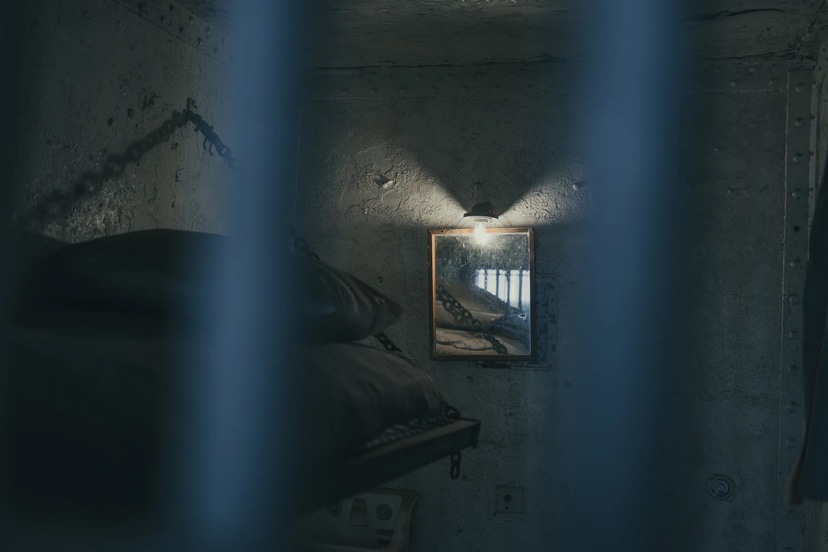
My own isolation is self-imposed. The University of Pittsburgh scientists didn’t do any experiments with rats who willingly choose to live in isolation… so as far as anyone can tell, my brain cells might still be the normal size.
That’s an unproven assumption, however.
Underrated writer Louis Cannon grew up in the vast American West, although his ex-wife, given the slightest opportunity, will deny that he ever grew up at all. You can read more stories on his Substack account.