
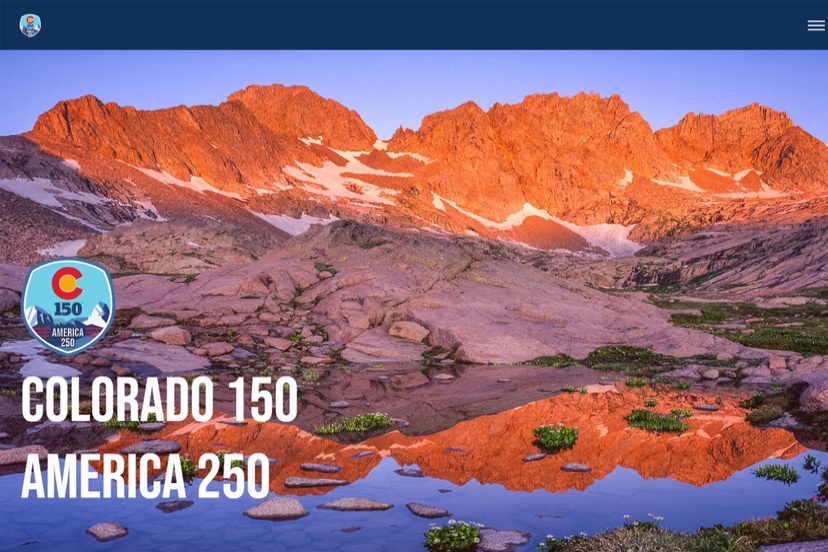
In 2026, the United States will mark the 250th anniversary of the Declaration of Independence—our nation’s semiquincentennial. At the same time, Colorado will mark the 150th anniversary of our entrance into the Union — our state’s sesquicentennial. As the Centennial State, Colorado is the only one who will observe twin anniversaries — our Sesquisemiquincentennial…
— from the History Colorado website.
On August 1, 2026, an unknown number of people will be celebrating the 150th anniversary of Colorado’s statehood, honoring a handwriting exercise that took place on August 1, 1876, when President Ulysses S. Grant — a man with a reputation for excessive alcohol consumption — signed Proclamation 230, admitting the rough-and-tumble Colorado Territory into the slowly-but-inexorably-expanding United States of America.
Whether President Grant was sober when he signed the Proclamation, we probably can’t know for certain.
Colorado thus became the 38th state, about a decade after Nebraska, admitted in 1867, and more than a decade before North and South Dakota, the next two in line.
The main requirement for admission? That the Territory hold a Constitutional Convention and that the voters approve the Colorado Constitution. The proposed Constitution was published in March 1876, and overwhelmingly approved by Colorado voters on July 1, 1876, with 15,443 voting ‘yes’ and 4,062 voting ‘no’. Reportedly, voting was limited to white males who met the residency requirements.
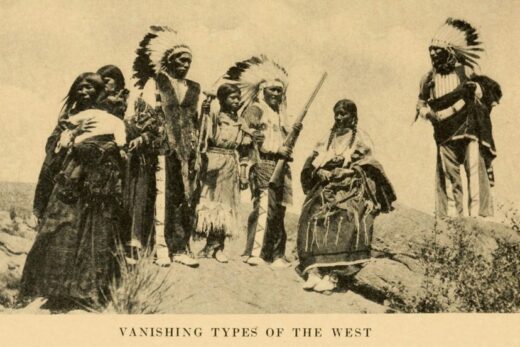
The region has been inhabited by Native Americans and their ancestors for at least 13,500 years. Possibly much, much longer.
Historical records show that at least 50 Native tribes had connections to the region before Colorado became a state. By 1876, major tribes like the Cheyenne and Arapaho had been displaced to states such as Oklahoma, Montana, and Wyoming, following events like the 1864 Sand Creek Massacre, when U.S. Army troops led by Colonel John Chivington attacked a village and murdered perhaps 200 Cheyenne and Arapaho people, mostly women and children.
Today, Native Americans constitute about 3% of the state’s population.
About a month earlier, on July 4th, the Pagosa Springs community will be celebrating America’s 250th birthday.
Its ‘nominal’ birthday.
On July 4th, 1776, the Second Continental Congress met in the colonial town of Philadelphia and approved an important document — the Declaration of Independence — which made the hopeful claim that the thirteen British colonies in American would eventually free themselves from British rule.
The colonists living in the thirteen colonies did not vote to approve this Declaration, however, nor had the nation adopted a Constitution. The British finally agreed to American independence on September 3, 1783, and the U.S. Constitution was officially ratified by the required two-thirds of the state legislatures on June 1, 1788. Rhode Island was the last of the colonies to ratify the U.S. Constitution, on May 29, 1790.
So we have other dates that could more reasonably be considered to be “America’s birthday”: September 3, June 1, and May 29.
Unlike the citizens of Colorado, who overwhelmingly voted to adopt the Colorado Constitution, the citizens of the United States never voted to adopt the U.S. Constitution. The adoption was handled by state legislators.
I’m fine with people celebrating July 4th as America’s birthday — even though I personally don’t consider it the actual birthday, for the reasons stated above. People have been content to celebrate the wrong day for 250 years, so who am I to make a fuss about it?
And I’m not going to protest the efforts, here in Colorado, to conflate the ‘Colorado 150’ celebration with ‘America 250’ as a joint birthday celebration. History Colorado lists more than 300 Colorado events in various communities connected to the joint celebration.
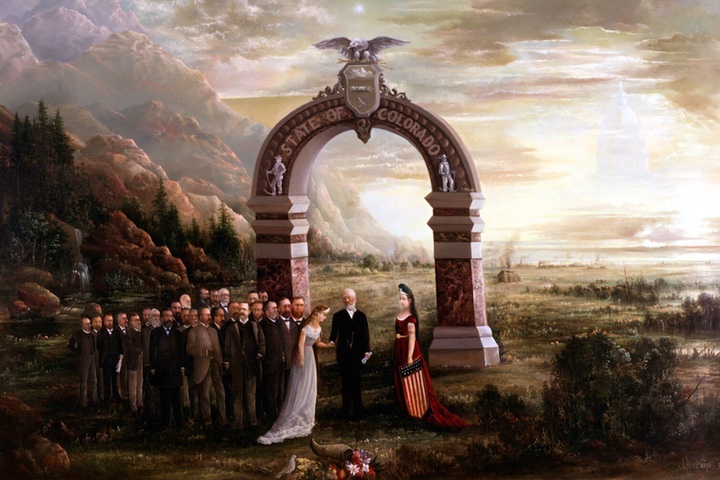
Here in Pagosa Springs, a number of local organizations have collaborated to stage a big July 4th celebration, starting with a flyover by The San Juan Squadron and a parade down Hot Springs Boulevard; followed by a ceremony at Yamaguchi Park to honor our nation and local heritage, including speeches and performances from Native American nations (Jicarilla Apache, Ute, and Navajo), Spanish and Hispanic American community leaders, and local Centennial ranchers teaching us about our collective history.
From 3:00pm – 9:30pm, Yamaguchi Park will be packed with a range of activities for all ages, including live music, family fun and games with the Adventure Zone bouncy houses, river fun, and arts and crafts. Food and drink vendors will be available throughout the day, including a beer garden and featuring specialty alcoholic drinks from local businesses.
The event will not include a fireworks display, due to drought conditions.
The event could have been scheduled for August 1 — to honor Colorado’s 150th birthday — and I personally would have preferred a bigger celebration on that date.
Colorado is not America, and America is not Colorado.
In 2022, Colorado voters overwhelmingly elected an openly-gay Democrat to serve a second term as Governor.
Two years later, America elected a Republican — a convicted felon and a racist — to serve a second term as U.S. President.
Clearly, we have two different constituencies at play here.
From the History Colorado website:
2026 will be an opportunity for us to come together as we celebrate Colorado by acknowledging our complete shared history, honor what makes Colorado unique, and recognize our shared destiny as we strive toward a more perfect union.
We acknowledge that the land currently known as Colorado has been the traditional homelands of Indigenous peoples since time immemorial.
It’s highly unlikely that an acknowledgment such as the above, mentioning the traditional homelands of Indigenous people, would appear in any document published by the Trump administration.
Instead, the Trump administration issued a directive to freeze federal grants, temporarily halting or eliminating an estimated $24.5 billion in funding for Tribal governments and organizations. These cuts have affected essential services like health care, education, law enforcement, housing, and social services — programs that exist because of federal trust responsibilities established through historic treaties.
Cuts to national safety net programs such as Medicaid and the Department of Veterans Affairs have disproportionately affected Native communities, who often experience higher rates of poverty and whose members serve in the military at higher rates than other groups.
The dissolution of the Corporation for Public Broadcasting and subsequent $1.1 billion funding loss have threatened the existence of Tribal radio stations. These radio stations are often an information lifeline for Tribal members. Around 57 stations serving Native communities — heavily dependent on CPB grants for funding — now face closures, loss of emergency alert systems, and reduced language revitalization efforts.
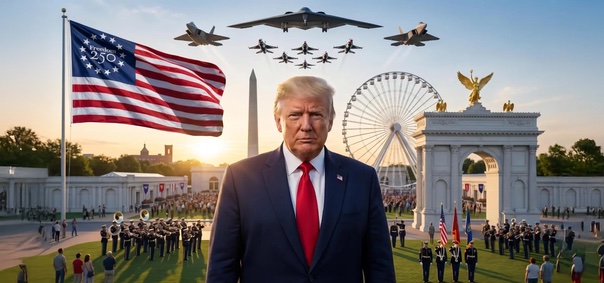
Meanwhile, supporters of the Trump administration are currently staging a ‘Freedom 250’ event — the so-called Great American State Fair — running from June 25 through July 10 on the National Mall in Washington DC. President Trump asserted that roughly 45,000 attendees had attended the Fair kickoff, while on-the-ground media estimated the crowd as “more than 1,000,” and visual reporting said the crowd only thinly covered a short stretch of the Mall.
Examples of state pavilions, courtesy Freedom 250:
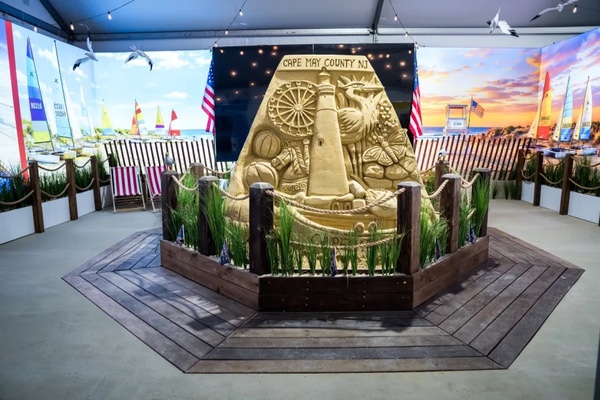
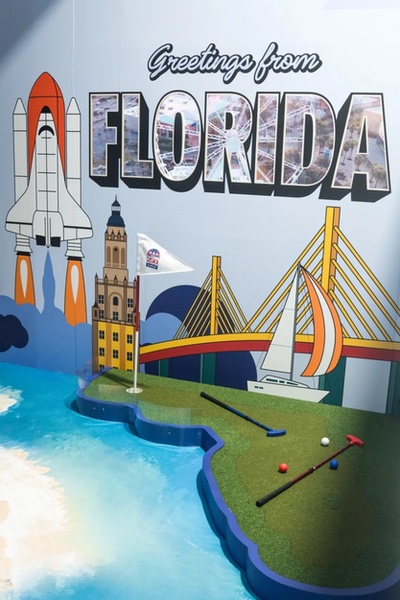
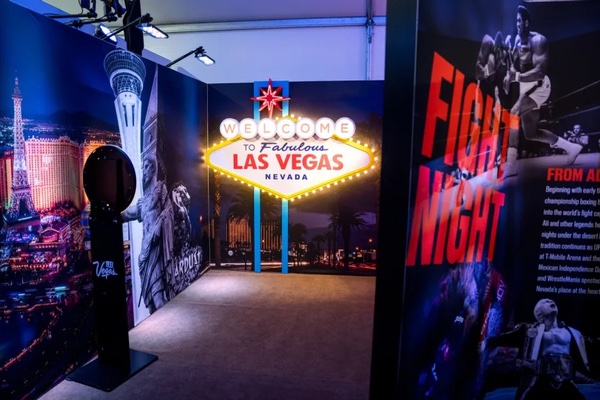
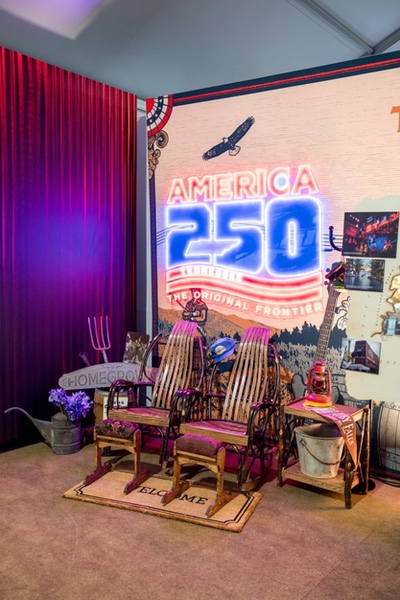
On May 27, ‘Freedom 250’ revealed the musicians expected to perform as part of the concert series at the event. Within two days, the majority of the music artists had dropped out, with some saying they were misled about the organizers behind the event. Among the remaining artists, Vanilla Ice remains committed to performing.
Bill Hudson began sharing his opinions in the Pagosa Daily Post in 2004 and can't seem to break the habit. He claims that, in Pagosa Springs, opinions are like pickup trucks: everybody has one.