

A friend who supports our local schools, offered a summary of Archuleta School District’s current predicament in a recent email to me:
ASD has a timeline, with various decisions to be made at intervals that are dependent on other outcomes. eg: BEST grant, ballot considerations, community voices (generally and particularly at the ballot), ballot outcome. At each milestone, depending the outcome, more information is available to consider for the next move forward. ASD must be prepared to pivot and create a best-path forward at each milestone decision. This is what we’re doing and I’m sorry you’re not satisfied with this process…
Indeed, I have not been satisfied with the process.
When Clarissa and I arrived in Pagosa Springs with our three children, in 1993, the community was digging itself out of an economic downturn caused mainly by falling oil prices in Texas during the late 1980s. Pagosa real estate prices had dropped significantly, but we found it impossible to find a suitable rental, so we applied for a mortgage and bought a run-down house on Lewis Street for $52,000. We then spent about $25,000 fixing it up.
Not everyone enjoys fixing up buildings that have fallen into disrepair. I guess it takes a certain personality.
Archuleta School District (ASD), meanwhile, has done an admirable job of keeping our school buildings in good repair, and also expanding and upgrading the facilities as needed. Three of the buildings — the Elementary School, the 5-6 Middle School, and the 7-8 Middle School — recently had new roofing installed, and all four school buildings (including the High School) have been upgraded with safety and security features.
Expansion of the 7-8 Middle School building (formerly the High School) and the Elementary School building were necessary as the Archuleta County population grew from 2,733 in 1970 to 12,084 in 2010, and as district enrollment grew. But as noted in this editorial series, ASD has watched its enrollment decline — a trend seen in most Colorado school districts.
Demographic shifts — falling birth rates, fewer immigrant arrivals, and young families priced out by housing costs — are driving this change. For a few years, federal COVID subsidies hid the financial strain, allowing districts to maintain and even increase staffing as student counts fell. Now those COVID dollars are gone, and districts are confronting the inevitable: too many school buildings, too many employees, and not enough students to support them.
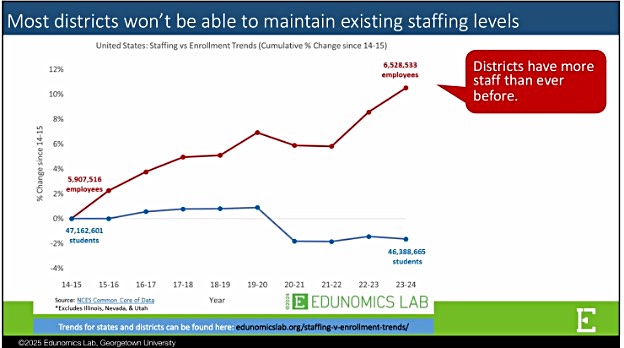
Here’s a graphic from ReadyColo.org illustrating a 10% increase in school staffing since 2015 (red line), compared to a 2% decline in public school enrollment (blue line).
When enrollment declines in a Colorado school district, however, the district has the option of using “3-year averaging” which can temporarily delay the financial effects of falling enrollment.
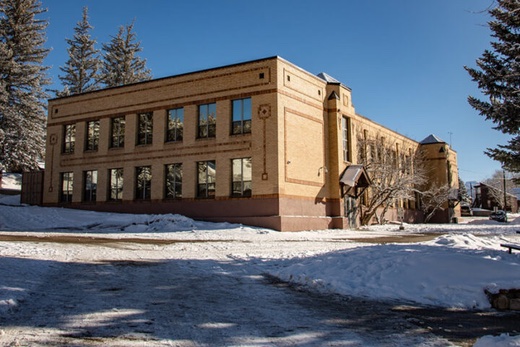
Looking at typical school district budgets, staff salaries account for about 80% of costs. That leaves about 20% to pay for utilities, maintenance, and other costs. In some cases, as buildings get older, maintenance becomes more expensive. But not always. Here in Pagosa Springs, I believe the maintenance on the High School building (built in 1997) has historically been more expensive than the maintenance on the 5-6 Middle School building (built in 1924.)
At the top of today’s installment, I mentioned my family’s decision in 1993 to purchase an older and somewhat run-down house, and then remodel it at a cost of about $25,000. I suggested that it takes a certain personality to make that kind of choice. Some people would never think of purchasing a home that needed substantial repairs. Some families want a shiny new home, with all the modern bells and whistles… and some can afford that kind of home.
When ASD convened its Master Plan Advisory Committee (MPAC) in January 2025, the consultants from Colorado-Springs-based RTA Architects presented, at the first committee meeting, some financial calculations. I was serving on that committee.
RTA had inspected all four ASD school buildings, looking for urgent and less-than-urgent maintenance issues, and had concluded that the existing buildings needed about $29 million in immediate repairs and upgrades. This total included recommended upgrades at Pagosa Springs High School, which needed about $1.2 million in upgrades. Most of the recommended upgrades were at the Elementary School, at an estimated cost of $19.6 million.
The obvious recommendation from the architects was to abandon the two Middle School buildings and the Elementary School building and build a brand new PreK-8 facility. (Not surprising that an architecture firm would serve up that type of recommendation, perhaps?) Not that RTA came right out and made a formal recommendation, but they made sure the information they presented led the committee to that conclusion.
The MPAC — a hand-picked selection of local citizens interested in effective public schools — agreed that spending $126 million to build a brand new PreK-8 facility was preferable to spending $29 million to repair and upgrade the existing buildings. But when asked, the committee had doubts that the community would support such a decision.
The consultants explained that the Colorado Department of Education’s BEST (“Building Excellent Schools Today”) grant program could potentially cover a portion of the $126 million. The ASD School Board subsequently submitted a grant application to the BEST program, to build a new facility on Vista Boulevard and to abandon the three existing school buildings that needed repairs and upgrades. As announced earlier this month, ASD was not awarded a BEST grant.
Next steps? From the ASD press release on May 22:
Potential options forward include:
- The possibility of pursuing a bond in November 2026 and then reapply for a BEST grant next spring with the matching dollars secured, or
- Wait for next year’s BEST grant awards and, if awarded, then pursue a bond in November 2027.
Unfortunately, ASD does not appear willing to consider the most reasonable option, which is to shift gears, and fix our existing buildings. Nearly all of the BEST grants awarded this year were to districts that were repairing or upgrading their existing facilities — and with BEST program funding in steady decline, I have to believe future grants will continue to focus on “upgrades” rather than “brand new facilities”.
I suspect — given the uncertainty in the U.S. economy in 2026, and the fears many families are feeling about their financial situation…
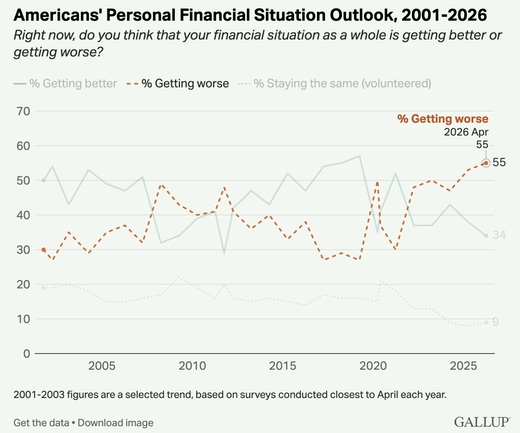
…ASD would be more successful in 2026 or 2027 if they ask for help with maintenance of our current school facilities. Historically, Archuleta County voters have been adverse to higher property taxes to fund shiny new buildings, but have been willing to support upgrades and improvements to existing buildings.
At each milestone, depending the outcome, more information is available to consider for the next move forward. ASD must be prepared to pivot and create a best-path forward at each milestone decision.
Agreed. I’m one of the voters who would gladly approve a reasonable property tax increase… to support better maintenance of existing facilities.