
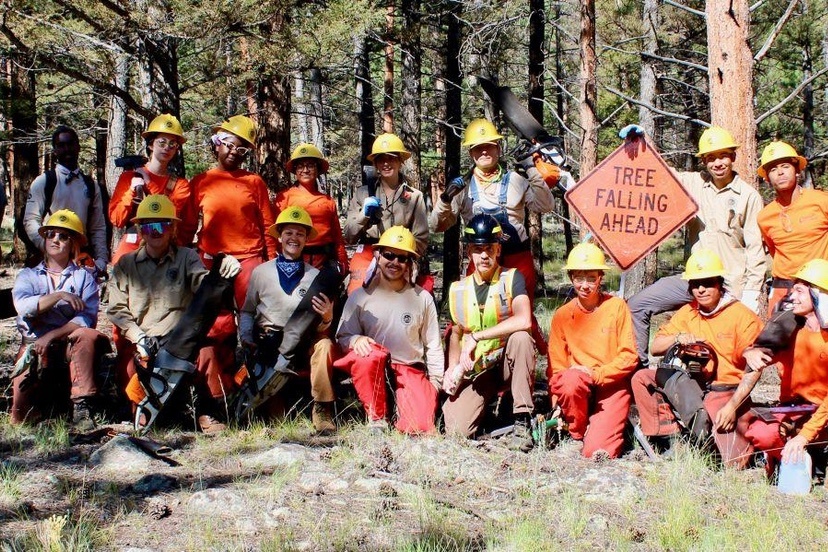
Photo: In 2014, Colorado’s Landscape Resilience Investment Program which targeted wildfire mitigation. Projects selected for funding were awarded between $500,000 and $1,100,000… and were matched by $6 million…
Something we might not think too much about: the relationship between power — electricity, coal, oil, natural gas — and rising rates of homeowner insurance in Colorado.
Relationships can be complicated, and sometimes disturbing. But also fascinating.
One of our current advertisers here at the Daily Post is Nicole Pitcher, running for re-election to the La Plata Electric Association board of directors. Her campaign website notes that LPEA kept our local electricity rates stable last year, even while Tri-State Generation & Transmission — the regional cooperative that historically supplied most of LPEA’s power — raised its rates. LPEA left Tri-State on April 1, 2026, and is now able to purchase power from a variety of suppliers and sources.
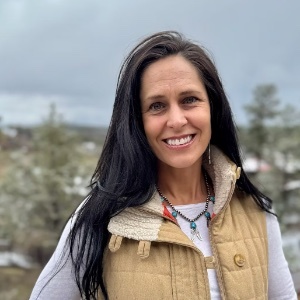
Her website also states, “I support a diversified and decentralized power supply that strengthens reliability and allows LPEA to partner with local energy producers.”
Let’s take a moment and discuss those ideas. Diversified. Decentralized. Local energy producers.
I got my first inkling that LPEA was not completely happy with its participation in the Tri-State cooperative about 10 years ago, when Pagosa-based Forest Health Timber Products LLC had proposed a plan to generate electricity with a biomass facility near the Archuleta County airport.
Forest Health Timber Products had a fascinating plan in 2012. The U.S. Forest Service wanted to thin some of its dangerously-overgrown forests, as a wildfire mitigation tool. The general idea was to remove smaller trees and make the forest environment better for the larger, more mature trees. One of the challenges came from the fact that small trees do not generally produce usable lumber; but the trees could conceivably be ‘chipped’ and used for various biomass or landscaping projects.
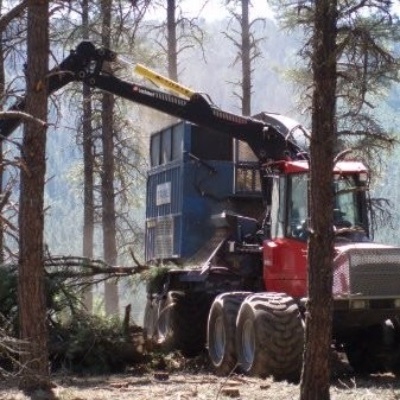
The company proposed to process the wood chips in a ‘gasification’ facility, which could produce electrical energy for Archuleta County while also creating a useful soil amendment called ‘biochar’. The facility would give off minimal pollution; the carbon would be stored in the biochar product.
Biochar is the generic term for charcoal used as a soil amendment. It’s commonly made from wood and other plant material that has undergone pyrolysis — where the organic material is subjected to high temperature and pressure in the absence of oxygen. The process releases combustible gases and leaves a carbon-rich solid called char. The combustible gases could then be used to fire turbines and generate electricity. Because it would take decades to treat the surrounding San Juan forests, this project could be considered ‘renewable energy’… because, after 50 years, the forests would need another treatment.
LPEA was on board with the project, but LPEA’s contract with Tri-State Generation gave Tri-State the power to reject the electric power project. Which Tri-State did.
Reportedly, Tri-State did not give their reasons for rejecting the project, but we know they had spent billion of dollars building huge coal-fired electric plants, back when coal was still viewed as an acceptable source of power. They presumably saw local electric projects as a threat to their bottom line.
From a Durango Herald article from 2014:
“I had a preliminary agreement with LPEA,” said [Forest Health founder] J.R. Ford, “But Tri-State blocked us from going forward.”
The reason why is subject to speculation because Tri-State has not explained publicly. At this point, we urge them to do so, especially in light of evidence that biochar can supply another benefit in its use in the reclamation of soil damaged by mining.
All the specific details of Ford’s plan should be scrutinized before he gets a green light, but the local market for electricity should be open to him. Tri-State cannot hide beneath the covers and pretend that plans to produce alternative energy will simply go away if ignored. Doing so only ensures that Tri-State will likely go the way of the ancient forests and dinosaurs that, eons ago, died and turned into the coal it is so dependent upon.
Ah, yes. Dinosaurs. They come in many flavors. We even have big electric cooperatives that could be classified as ‘dinosaurs.’
Now that our local electric cooperative LPEA has bought its independence from Tri-State, at a cost of $159 million, a project like the Forest Health Timber Products biochar facility could feasibly move forward. But over the past 10 years, Forest Health has developed an alternative business model, which involves compressing their wood chips into ‘bricks’ that can be burned in a wood stove. Back when I was a kid, we could purchase a similar product called “Presto-Logs”. Forest Health also produces rough-cut lumber at a sawmill on Cloman Boulevard, and hopes to increase employment opportunities with the pending installation of factory-grade three-phase electrical power.
There’s other aspect to an electricity generation project like the one Forest Health Timber Products had proposed back in 2012, as I hinted at earlier. The cost of living in a rural community like Pagosa Springs has been steadily increasing, and seems likely to continue in that direction, partly due to the fact that we live close to a highly flammable forest. That fact has led to significant increases in homeowners insurance.
If we are been able to aggressively thin the forests proximate to Pagosa neighborhoods… could our insurance rates become less frightening?
And could our electric bills be stabilized by access to local electricity generation, that doesn’t have to travel hundreds of miles over high-voltage transmission lines through flammable forests?
Is “local” the key to “diversified”… and “stabilized”?
We’re a small town. Does “small town electricity” make the most sense, looking to the future?