
On Friday, I wrote about a May 14 decision by the Pagosa Area Water and Sanitation District (PAWSD) board of directors to reclassify an ongoing construction project — the Aspen House group home for adults with developmental disabilities — from “multifamily commercial” to “residential”.
This reclassification will reduce the project fees owed to PAWSD by about $50,000.
Disclosure: I currently serve as a volunteer on the PAWSD Board of Directors, but this editorial reflects only my own opinions, and not necessarily the opinions of the PAWSD Board and staff.
I also mentioned, on Friday, that the May 14 agenda included a ‘First Quarter Financial Report’ from PAWSD comptroller Jack Dossett. The report compared first quarter revenues and expenses against the adopted 2026 budget approved last December.
A budget always requires some guesswork.
The report began with some comments about the board’s past willingness to grant waivers to affordable housing projects.
While we are managing several variances on the expense side, this analysis is to report a risk regarding our Capital Investment Fee (CIF) revenue. Through quarter 1 (Q1), we are trending behind last year and significantly behind budget. If this trajectory continues, we risk a violation of our debt service ratio covenants, which could jeopardize our standing with lenders and has the potential to negatively impact our ability to fund future infrastructure projects.
PAWSD carries a considerable amount of debt, related mainly to a new $44 million water treatment plant on Snowball Road, and a $10 million upgrade to the Vista Wastewater Treatment Plant required by the state of Colorado. When taking those loans, PAWSD promised to maintain a certain Debt Service Coverage Ratio (DSCR) — the ratio of revenue and expenses as compared to loan payments. Lenders typically want to make sure that PAWSD will always have enough money to make its loan payments. Of course.
Last year, when approving the annual budget, the board made a decision to minimize the increase in customer monthly bills, even though this meant some (acceptable) risk to PAWSD’s ability to meet the required DSCR in 2026.
Another source of PAWSD revenue is the Capital Investment Fee paid by new development. A new residential home within the PAWSD district, requesting both water and sewer service, now pays a CIF of $26,158. As recently as 2023, those fees totaled just $6,532.
From Mr. Dossett’s report:
CIF Shortfall:
From my limited perspective, I would suggest our current revenue miss is not merely a seasonal fluctuation, but it represents a potential shift in our revenue base.
• Water Fund: Q1 CIF revenue was $170,795, a -$50,653 decline from last year Q1. This is concerning given our annual budget increased $30,000 to $1,030,000, despite last year’s unaudited actuals only reaching $762,894.
• Wastewater Fund: Similar to Water, Wastewater is failing to meet revenue targets. Last year’s unaudited results were a -$391,000 deficit to budget. We are currently trending slightly ahead of last year through Q1; however, our current trajectory is significantly behind budgeted goals.
“Significantly behind budgeted goals…” The 2026 PAWSD budget assumed $1 million in water CIF revenues to be collected in 2026. Revenue in Q1 was an anemic $170,795.
Mr. Dossett suggests that this “revenue miss” is not merely a seasonal fluctuation. It might “reflect a structural change” in the Pagosa Springs economy, which has, for decades now, depended heavily on new home construction. In the late 1990s, the population was growing by a remarkable 7% annual rate, making it — in terms of percentage — one of the fastest growing counties in the U.S.
All those incoming workers and retirees needed homes.
The growth rate slowed to around 3% during the early 2000s, and then went negative following the financial meltdown known as the Great Recession. Some folks — especially those in government and business — have been praying for a return to the boom years of the 1990s. As recently as 2022, the San Juan Water Conservancy District (a separate agency from PAWSD) adopted the following estimates of projected population growth… as high as 5% during the 2020s…
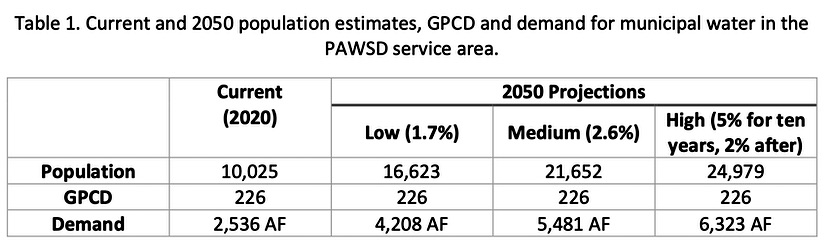
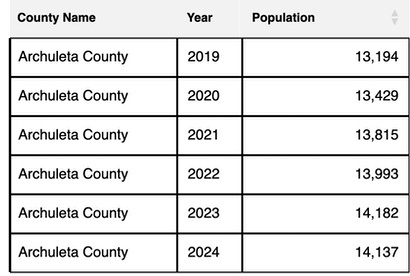
Over the past decade, PAWSD has planned its annual budgets by assuming a 2% annual growth rate. But we now have indications that the rate may be closer to 1%?
Or… that we are actually losing population?
From the Colorado State Demographer:
There are other indications that Pagosa Springs will not be building as many new houses this year as PAWSD assumed in its 2026 budget.
From Lee Riley’s real estate report, shared here in the Daily Post last month:
The big story in April is that the total number of sales for the month was way down. We had 41 sales in April compared to 63 last April, which is a 35% decline….
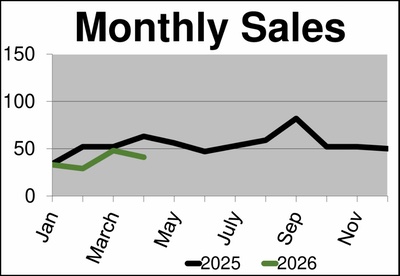
…Vacant land sales are where we see the greatest decline. The cost of building a new home is part of the story. For example, the cost of hooking up to PAWSD water and sewer has tripled in the last few years. It used to cost $9,000, and now it costs $29,000 to hook up to the water and sewer system. The quality of available home sites is also declining. Most of the cherries have already been picked and built on.
The lower end of the residential spectrum is more heavily influenced by interest rates. Before the war with Iran started, a 30-year fixed-rate mortgage was at 5.99%. It went as high at 6.62% on March 26. Currently, the 30-year fixed rate is at 6.50% and the 15-year is at 6.03%. These rates have jumped due to gas and oil prices skyrocketing.
One thing to note from this report. “Vacant land sales are where we see the greatest decline.”
A new home requires vacant land. Fewer vacant land sales could imply fewer new homes in the future.
According to a story in the weekly Pagosa Springs SUN, sales tax collections in Archuleta County were 1% lower in March 2026 compared to March 2025. But if we include 3% annual price inflation into that calculation, it would appear that the spending decline — in real dollars — might be closer to 4%.
In such an economy, would the PAWSD board be crazy to go around, waiving fees?