
Earlier this month, I wrote a column about the ‘American Girl’ doll turning 40 years old.
One of the attractions of that 18-inch doll was a connection to American history. The one we bought for our daughter Ashley — the Molly McIntire doll — came with clothing that a 9-year-old girl might have worn in the year 1944, and a set of six books celebrating Molly’s experiences in America, back when America was still great.
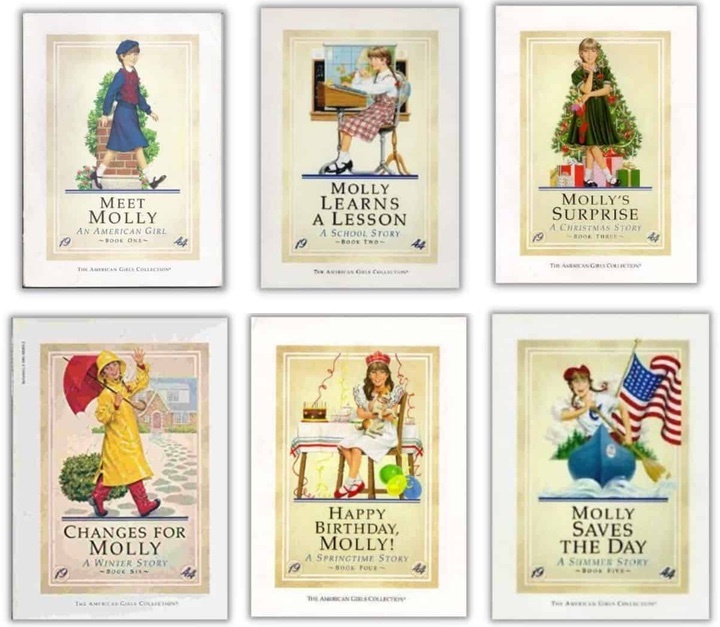
It was pretty clear from the books that Molly was not autistic. But these books were written 40 years ago. It’s possible that some of the Molly McIntire dolls currently available, in stores and online, have mental health challenges, as so many of us do these days.
Meanwhile, Barbie dolls have become very open and honest, these days, about their mental health issues. From a press release from Mattel, Inc.:
Mattel, Inc. unveiled today its first-ever autistic Barbie doll, created with guidance from the autistic community to represent common ways autistic people may experience, process, and communicate about the world around them. This doll invites more children to see themselves represented in Barbie.
Autism has become a common concern in America — when compared with, say, back in 1944 — due to a rather impressive increase in diagnoses.
Back when Molly was learning her lessons in 1944, psychiatrists were diagnosing about 1 child out of 10,000 as autistic.
Currently, about 1 child out of 36 is getting an autism diagnosis. Like I said, a rather impressive increase.
That suggests that a significant number of the American Girl dolls being manufactured in 2026 will be autistic. It’s not clear if Mattel will be revealing that diagnosis to the purchasers.
But Mattel is being very transparent with its Barbie dolls.
Part of the controversy around the slightly unbelievable increase in autism diagnosis is related to the concurrent (slightly unbelievable) increase in vaccinations given to babies and children since 1944.
I don’t want to suggest that Mattel has been vaccinating its dolls, but I admittedly know very little about their manufacturing process.
The psychiatrists back in the 1950s and 1960s had a different theory about autism — which, as noted, was extremely rare in those days. Some of them put forward what was called the “refrigerator mother” theory — that autism resulted from emotionally cold parenting, particularly by mothers. Certainly, there’s almost nothing like an emotionally cold mother to give a child mental health issues.
But the treatment focused on separating the kids from their parents and housing them in institutions. As we all know, one of the only things worse than a cold mother is a cold institution.
It’s quite possible that, back in 1950, 1 out of 36 children were autistic, and we simply didn’t notice. It’s also possible that mothers are much colder than they were in 1950.
But a lot of us believe that an excessive number of childhood vaccinations is the culprit. Of course, if that’s actually the case, the pharmaceutical industry will do everything in their power to deny it.
In fact, I wouldn’t be surprised if the pharmaceutical industry is behind the appearance of an Autistic Barbie, to help us all feel like autism is just a normal everyday condition that even your doll can suffer from, and so let’s not get too hot and bothered about the vaccines or whatever is causing the epidemic.
For many decades, the psychiatric industry thought autism could be “cured” with the correct treatment. The current thinking focuses on making autistic kids comfortable, because — let’s be honest — they’re going to be autistic for the rest of their lives. Part of being ‘comfortable’ is avoidance of physical contact, unnecessary noise, and crowds.
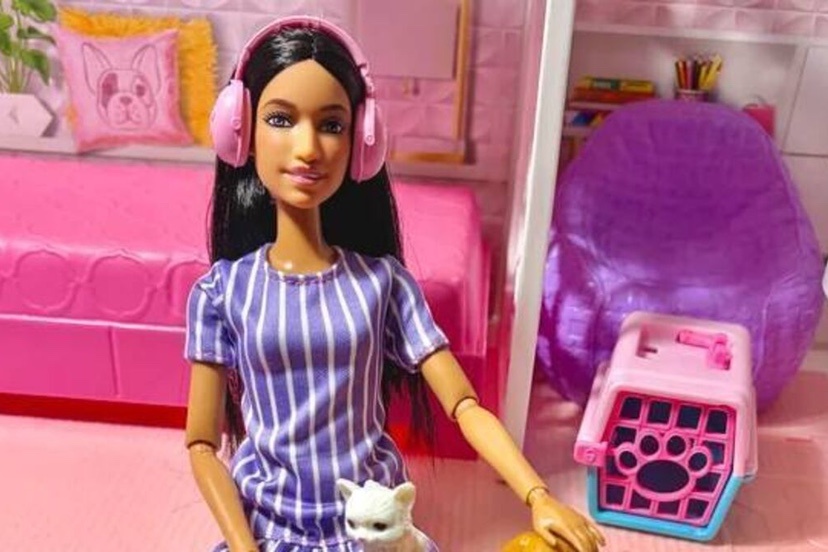
So your Autistic Barbie comes with a pink headset (noise-cancelling, presumably) and a fidget spinner.
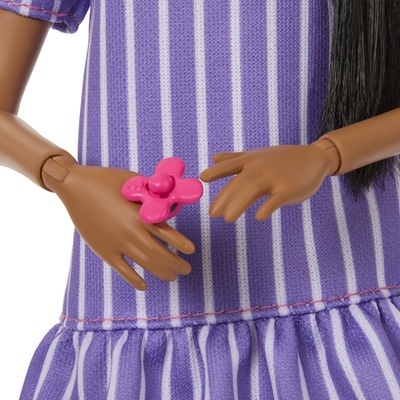
She is designed with an eye gaze shifted slightly to the side, reflecting how some members of the autistic community may avoid direct eye contact. She also comes with a pink tablet showing symbol-based ‘Augmentative and Alternative Communication’ (ACC) apps on its screen, and that can help with everyday human-doll communication. But she might not want to communicate with you, depending on where she lands on the spectrum.
But if your parents bought you an Autistic Barbie, you’re probably not too keen on communicating either.
One of the photos I found of the new doll showed her with a white cat, apparently sold separately.
But my research suggests that turtles and rabbits might be a better choice for certain autistic children who prefer pets that don’t require a lot of touching.
We’re looking at you, Mattel. Got any little plastic rabbits?
Underrated writer Louis Cannon grew up in the vast American West, although his ex-wife, given the slightest opportunity, will deny that he ever grew up at all. You can read more stories on his Substack account.