
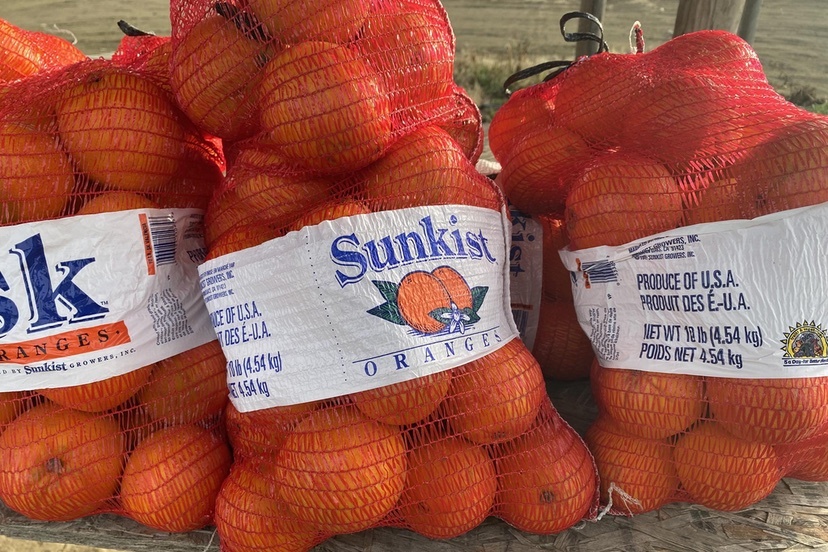
There are winter mornings in Northern New Mexico and Southern Colorado that feel stitched into memory — mornings when the sky was still dark, the earth was quiet, and children’s voices rose through the cold air like a prayer:
“¡Mis Crismes!”
Before the holidays became curated and commercialized, our communities held a quieter, humbler practice. Children, wrapped in whatever warmth their families could gather, walked from house to house with flour sacks in hand. They knocked on neighbors’ doors with the simple hope that someone would open, smile, and say pásale, corazón.
And they did open — with generosity that defied scarcity.
An orange.
A handful of piñón.
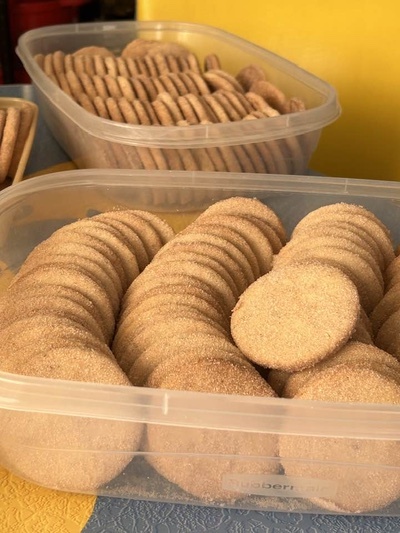
A warm bizcochito.
A single peppermint saved for the occasion.
These offerings were small, but their meaning was profound. They were not gifts of wealth but gifts of recognition — the oldest medicine our ancestors knew. In those moments, children received something no store-bought present can give: a sense of belonging not to one household, but to an entire community.
Journalist Jeremy Jojola, in his series Cuentos y Corazón, recently lifted this memory back into public view. In an Instagram reel, he describes Mis Crismes as “a village effort to make sure every child felt joy when families had little.”
I offer these reflections with deep respect for the elders and families who kept this practice alive. Naming its cultural and structural roots is not critique — it is recognition of its brilliance.
A Tradition Rooted in Relational Care
My mother, Alice Archuleta y Chavez, now 84, grew up practicing Mis Crismes in Pagosa Springs. When she remembers those mornings, her voice softens:
“It wasn’t about the treat. Era que every door opened to us. Even people with very little still shared. That made us feel like we belonged.”
In public health, what she describes is called a protective factor — the kind of relational buffer that strengthens children for life. Research now confirms what curanderas and abuelas understood intuitively: children who feel seen and welcomed develop stronger identity, emotional resilience, and social grounding.
Her memory is also a map of how our people endured hardship:
By making joy anyway.
By making community anyway.
By opening the door anyway.
The Context — Told Gently, But Honestly
For generations, rural communities across the Four Corners have navigated economic marginalization, geographic isolation, and uneven investment. These realities shaped family life and even holiday customs.
Yet our ancestors met these conditions not with bitterness, but with creativity and generosity. They practiced public health without naming it, curanderismo without credentials, mutual aid without a budget. Mis Crismes is not merely tradition. It is ancestral adaptation — a relational technology designed for connection and communal resilience.
What We Lose When Mis Crismes Fades
The loss is not symbolic — it affects our social fabric.
1. Cultural continuity: Keeps children rooted in a story larger than themselves.
2. Intergenerational connection: Provides essential contact between elders and youth.
3. Community cohesion: Opening the door signals trust and reciprocity — predictors of community health.
4. A uniquely Borderlands expression of joy: Our children deserve to inherit the fullness of their cultural lineage.
On the Critique of “Pushing Culture”
Whenever we uplift Hispana, Indigenous, or Mestiza traditions, someone will eventually say: “Why is she pushing her culture?” Yet mainstream Christmas images — imported, commercialized, Anglo-European — are never labeled as cultural imposition. This double standard reveals whose traditions are allowed to appear “neutral” and whose are marked as “too much.”
Reviving Mis Crismes is not “pushing culture.” It is restoring the protective ecosystems that help children thrive.
It is not nostalgia — it is culturally grounded public health.
How We Bring It Back
Our communities have always adapted traditions to new realities. We can do so again.
Imagine:
- Community Mis Crismes routes
- Elders offering stories, bendiciones, and homemade treats
- Youth recording oral histories
- Borderlands foods shared as nourishment and cultural literacy
- A public health lens understanding belonging as preventative medicine
This is how traditions live — not by freezing them, but by tending them.
A Pagosa Blessing for What Comes Next
Jeremy Jojola’s storytelling reopened a door many thought was closed. But my mother’s Pagosa memory offers the clearest guidance:
“We didn’t have much, pero teníamos comunidad. That’s what made Christmas beautiful.”
Pagosa has always been a place where winter mornings carry the sound of children, neighbors know each other’s names, and traditions linger longer than we realize.
Maybe this is the year we honor that inheritance.
Maybe this is the year we let the old chorus rise again:
“¡Mis Crismes!”
And open our doors — as Pagosa has always done — with both hands.