
A lot of us are not pregnant, and will never be pregnant. We have no desire to be pregnant.
We’re males, and we usually stick to doing male things.
Building houses. Hunting and fishing. Playing softball. Deporting immigrants. Inventing vaccines.
Writing humor columns.
But a rather small but influential group — mostly conservative legislators and their friends — has been doing something slightly outside the “male box”. They’ve been pushing the idea of “Pro-Family Parking”. Which is not what you might think at first.
Here’s a quote from Patrick T. Brown, writing for the Institute for Family Studies back in July.
Baby on Board: Why States Should Embrace Pro-Family Parking
Welcoming a new child is a joy. The physical symptoms of pregnancy? Not so much. While the exact level of inconvenience varies from mom to mom, most would agree that those last three months are generally considered to be a slog, especially in the often sweltering heat of July. Even a quick grocery store run, or park outing with soon-to-be big brothers or sisters, will inevitably involve a certain baseline level of physical discomfort that no doctor, policymaker, or supportive spouse will be able to do much about.
But that doesn’t mean we can’t take steps to make it a little easier. And given that America has already made a national commitment to make parking a little easier for the disabled and mobility-impaired, the time has come to incorporate accommodations for pregnant and new moms in the system as well.
The idea is simple. Baby on board? You get preferred parking.
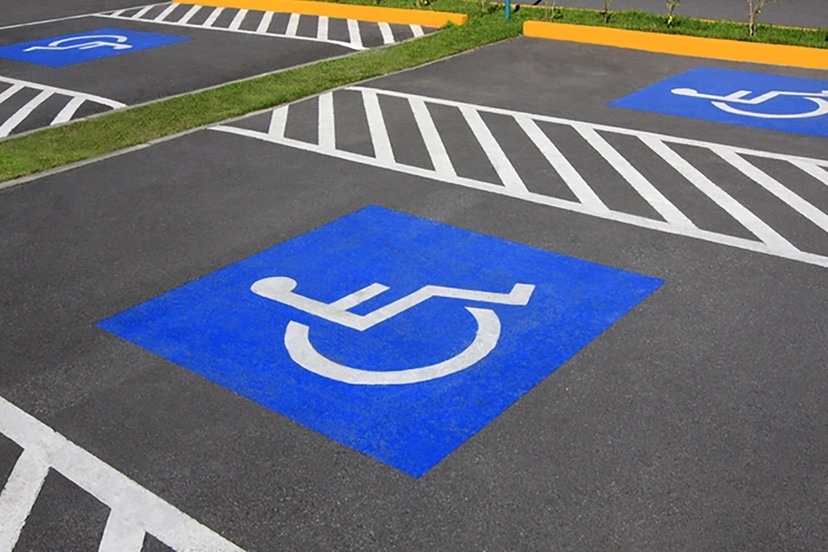
That is to say, you could be allowed to use the handicapped parking spaces. Even though you are not technically ‘handicapped’. You’re just pregnant. But pregnancy has evolved into a very special thing in 2025.
The Florida legislature passed a new law that took effect on July 1, allowing pregnant women to apply for a handicap parking permit, good for one year. They were copying an Illinois law that does the same thing, except that in Illinois the permit applies only during the last three months of pregnancy. Florida gives you a full year of preferred parking. Regardless of the fact that nine months is typically all that’s necessary.
You don’t even have to be showing. Just bring a note from your doctor and pay $15.
Speaking as the father of three, I can vouch for the fact that pregnancy seems to be generally more physically challenging for the mother than for the father — especially, as Mr. Brown suggests, during the final couple of months. Although, as I recall, my wife Darlene went on a 10-mile bike ride the day before she went into labor with our second child. So we don’t want to exaggerate the challenges.
But there’s more to this suggestion that just accommodating a person who is eating for two. It’s part of the ongoing culture wars.
As Mr. Brown makes clear:
Symbolism matters for how people think about motherhood and family life…
Motherhood does indeed matter to me personally. Symbolically, I mean. There is no symbolism that matters as much as the symbolism around motherhood.
Family life, not so much. But motherhood? Yes.
And there’s probably no symbolism more potent than reserved parking spaces with maximum fines attached.
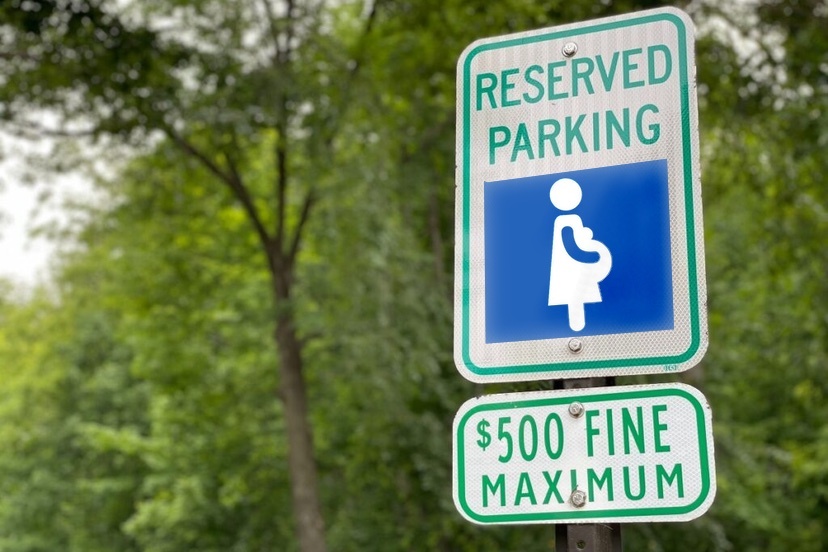
According to journalist Praveena Somasundaram, writing in the Washington Post, this new trend of allowing pregnant women to occupy handicapped parking spaces is part of the larger movement by conservatives to encourage more U.S. births and bigger families.
If this movement had been around when Darlene and I were having our kids, and she had been provided with privileged parking spots, I bet we would have had a dozen kids instead of only three.
The only problem with this “symbolic” endeavor is, of course, that the conservatives might actually succeed in getting more women to get pregnant more often. And pretty soon, the people who truly need a handicapped parking space — because they walk with crutches, or use a wheelchair, or recently had a hip replacement — those people will have to walk, or roll, across the entire parking lot, because their handicapped spots are all occupied by motherhood.
One might hope this whole effort is merely another failed attempt at symbolism. Especially if one uses a wheelchair.
The sad fact of the matter is that, nowadays, the people most likely to have large families here in the U.S. are exactly the same people that the conservative movement is trying to deport.
Nevertheless, wheelchair users in Florida are not taking this new law sitting down.
Well, I guess, actually, they are sitting down, but at least one of them is suing the state of Florida for violating the 1990 Americans with Disabilities Act.
It’s a “math problem,” according to Olivia Keller, age 48, who is a wheelchair user living in Tallahassee. “If you’re not adding more spaces and you’re adding more people, obviously you are taking it away from the people who need to park there.” She sued last month, seeking to overturn Florida’s law, in what appears to be the first legal challenge to pregnant parking policies.
She might have to sue other states as well. Ohio’s legislature is considering its own version of the law, as are Republican lawmakers in Arizona, South Carolina, and Arkansas.
Patrick T. Brown, the guy quoted above, helped design the slate of pregnant parking bills, which he is pitching as a low-cost way to implement ‘pro-family policy’ without going through Congress. Nobody in their right mind wants to try and get anything through Congress these days.
While the conservative movement seems eager to encourage more babies, they’re less concerned about whether the babies have food or clothing or medical care or a roof over their heads, once they are born. The movement mainly wants better parking.
It’s symbolic.
Underrated writer Louis Cannon grew up in the vast American West, although his ex-wife, given the slightest opportunity, will deny that he ever grew up at all. You can read more stories on his Substack account.