
A couple of deer were sitting under my apple tree this morning, chewing the cud. Chewing, chewing, chewing…if you didn’t know better, you might think they’d somehow got hold of a pack of chewing gum.
A deer has a four-chamber stomach, one of which is the “rumen”, and after eating breakfast, that deer will look for a quite place to settle down, and regurgitate the vegetable matter from its rumen stomach chamber for additional chewing, to better prepare the food for digestion by the microbes living in its gut.
Not being a ruminant myself, I feel a twinge of jealousy, watching a deer who gets to enjoy their breakfast twice. We humans have to be satisfied with eating it just once. The microbes in our guts also get only one shot.
Doesn’t seem fair.
But there’s a lot of things that don’t seem fair.
Why has our world turned out that way? Basically unfair?
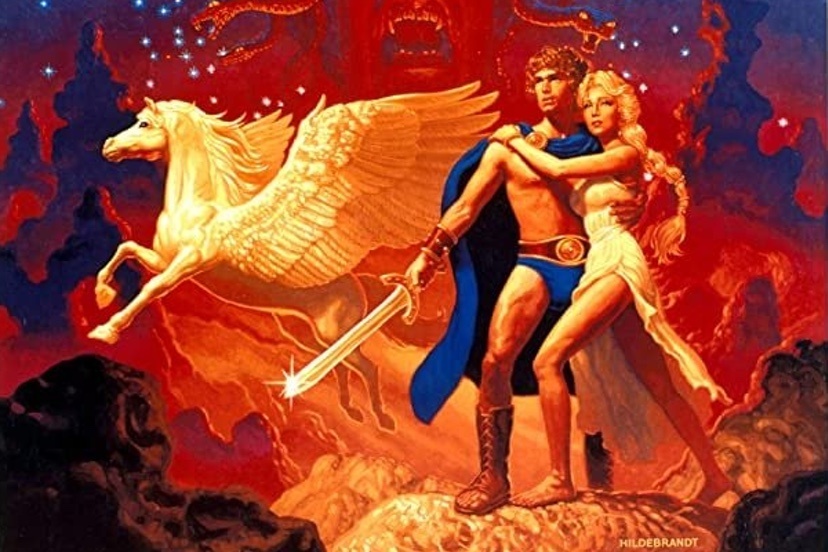
I had coffee with my friend Peter the other morning — I’m calling him Peter in this story, although his name is actually Bob — and we were talking about the Greek gods. Peter had recently watched an old movie, Clash of the Titans, and he had some thoughts about the way our world has turned out.
I watched Clash of the Titans when it first came out in 1981, so Peter had to refresh my memory as to the story line, and the underlying implications. The main characters were the hero Perseus; his love interest, Princess Andromeda, daughter of Queen Cassiopeia; Pegasus the flying horse; and the arch villain Callibos. But several of the Greek gods had their fingers in the pie. Zeus. Hera. Athena. Thetis. Poseidon. Aphrodite. Hephaestus. Maybe a few more?
The monster Medusa lost her head along the way. But maybe that was a good thing.
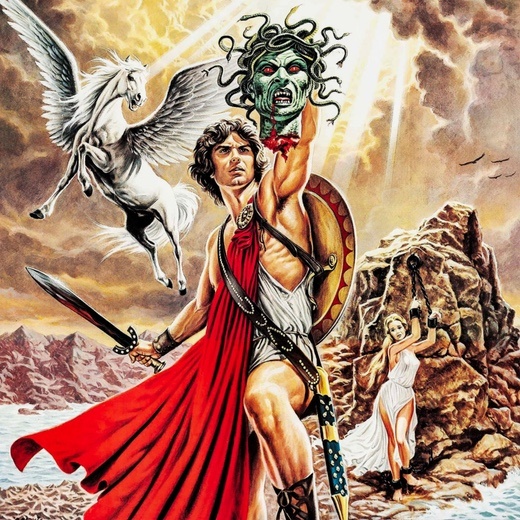
Lots of people and monsters died in the story, but in the end, Perseus and Andromeda lived happily ever after and had lots of kids. Zeus told the other gods, in a firm tone of voice, not to pursue vengeance against them.
You have to watch the movie if you want the rest of the details.
But Peter wasn’t so concerned about the details, as with the overall divine landscape.
“Back in those days,” Peter noted between sips of coffee, “the Greeks had a god in charge of pretty much every aspect of nature. A whole bureaucracy of gods. They didn’t always get along, but each them had a job to do, and they didn’t often stick their immortal noses into each other’s department.
“Their disagreements were typically about whether they helped, or hindered, mortal humans like Perseus and Andromeda. And naturally, also about who was sleeping with whom.
“I’m not saying the world was perfect back then, but when humans were treated unfairly, the humans knew who to blame. The gods.”
I could see where Peter was headed with this line of reasoning, so I responded.
“Okay, I get your point. We’ve lost the ability to blame the gods for every little problem. Plus, the Greek gods split up the work into somewhat manageable departments, but nowadays, we’ve got only one god. How can anyone expect one god to keep track of everything that’s going wrong? That’s got to be a really frustrating job.”
Peter had a slightly different concern. “Well, the fact is that nowadays, we don’t actually expect our god to be in charge. Modern science has figured out that everything happens according to ‘laws’. What goes up must come down. Every action has an equal and opposite reaction. Energy concentrated in one place will always flow to places of lower concentration.”
I pushed back. “Are you suggesting that there’s no way, in our modern world, for a divine being to interfere in an outcome? Everything that happens has to happen?
“But that would mean there’s no such thing as an accident. I refuse to accept the idea of a world where accidents never happen.”
Peter smiled. “What I’m saying is, the Greeks had actual gods in charge of every natural process. On what day would the first snowflake fall? One of the gods made that decision.
“Was a volcano going to erupt? Depended on some god’s mood. And you could make offerings to that god, and send prayers. We’ve lost that power, according to science. The volcano erupts because it simply has to erupt. Case closed.”
“Sort of sounds like you’re advocating the adoption of the ancient Greek religion…” I laughed.
Peter smiled. “Wouldn’t you rather live in a world where someone is actually making decisions?”
I thought about that for a moment. “Well, that doesn’t seem to be working out too well in Washington DC.”
Peter nodded, sadly.
But maybe… if the Greek gods were still making the decisions for us…
… we could live happily ever after, and have lots of kids.
And there wouldn’t be so much vengeance going on. Right, Zeus?
Underrated writer Louis Cannon grew up in the vast American West, although his ex-wife, given the slightest opportunity, will deny that he ever grew up at all. You can read more stories on his Substack account.