
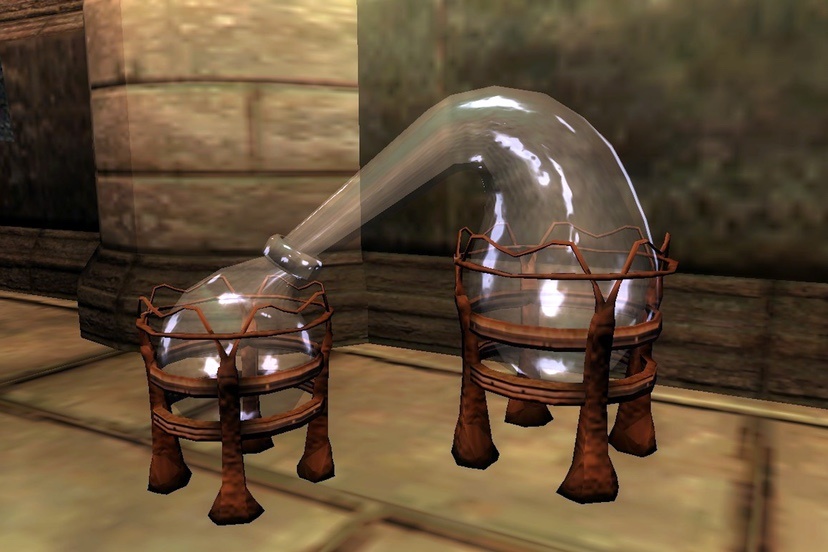
Photo: An alchemist’s alembic.
Solitude is the alembic of personhood, as the alchemists might have said.
— Lewis Hyde, writing in the Introduction to a 2011 English translation of “Briefe an einen jungen Dichter” (“Letters to a Young Poet”)
Dear Young Poet:
Poetry is complicated, because human beings are complicated. Even in solitude, we are complicated. But mostly, poetry is complicated.
For example, you can find a word like “alembic” in a poem, and find yourself scratching your head.
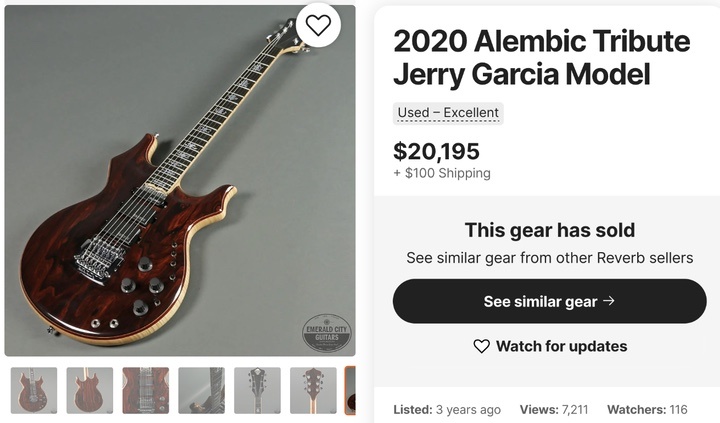
As you probably know, “Alembic” is a guitar manufacturer famous for creating an instrument used by Jerry Garcia of the Grateful Dead.
You can find similar Alembic guitars, used, for around $20,000. Plus shipping, of course.
But an ‘alembic’ (not capitalized) is also a device used by alchemists for distilling liquids… first developed (according to Zosimos of Panopolis) by Maria the Jewess, an early alchemist who lived in Alexandria during the first century A.D.
You can use the word “alembic” poetically, however, to refer to solitude. In fact, I highly recommend doing so.
I once thought about being a poet, after two of my poems were published in our high school literary magazine when I was in tenth grade.
My poetry didn’t rank with Shakespeare’s sonnets, by any means. I was only a pimpled sophomore who rode his bicycle to school, too painfully shy to actually talk to a girl. But in my youthful imagination, I understood the depths of love as well as Shakespeare ever did.
Thus, my published poetry.
About my bicycle.
Isn’t there a period in every boy’s life, when he’s in love with his bicycle?
Mine was a gold Schwinn ten-speed which I had modified with a blinking tail light — a safety feature suggested by my mother, who understood my habit, after dinner, of riding my bike past Betsy Slyngstad’s house.
For no other reason than I just enjoyed riding my bike.
Someone stole my bicycle the following year, when I left it leaning against the garage door overnight, unlocked.
And Betsy Slygstad moved to Las Vegas.
Thus, the end of my poetry career.
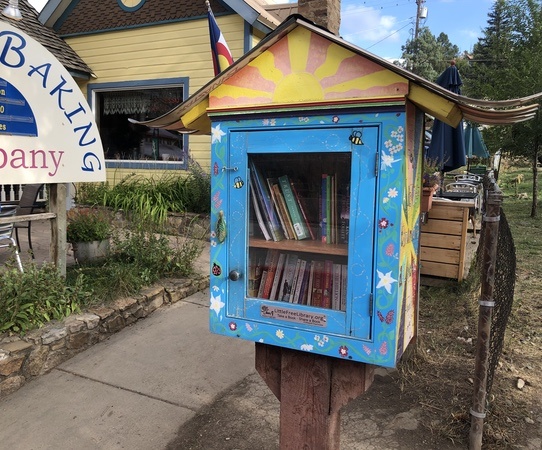
So I can’t explain why, when I came across a copy of “Letters to a Young Poet” in the Little Free Library box outside the bakery downtown, I suddenly felt the need for some advice from European poet Rainer Maria Rilke. The book featured an Art Deco design on the turquoise-colored cover, and I’ve always had a ‘thing’ for turquoise, and also Art Deco.
Not that I’m a young poet, by any stretch of the imagination. I’m neither young nor a poet. But I know a thing or two about solitude.
A translation from the original German version is by Charlie Louth. Another point in the book’s favor: the translator calls himself “Charlie” instead of “Charles”. I’ve decided, if I ever translate a book of poetry, I will call myself “Louie” instead of “Louis”.
If you’re ever walking past any of the Little Free Libraries that are posted around town, I recommend taking a look at what books your fellow Pagosans have discarded. You will gain a better understanding of our community — especially, the type of books we’re getting rid of.
(You will be walking, of course, because your bicycle has been stolen.)
I refer to Rainer Maria Rilke as “European” rather than “Austrian” because, although he wrote his letters in German, he spent hardly any time in Austria or Germany once he decided to become a poet… which he did against his father’s advice.
Was he simply trying to live as far away from his father as possible? We might assume so.
I didn’t find any evidence that Rilke owned a bicycle, but he did get married and had a daughter, and later, had numerous affairs with inspiring women. But his first and deepest love, it seems, involved books by the Danish novelist and poet J.P. Jacobsen.
Get hold of the little volume ‘Six Novellas’ by J. P. Jacobsen, and his novel ‘Niels Lyhne’, and begin with the first story in the first of these volumes which is called ‘Mogens’. A world will come over you, the joy, the richness, the incomprehensible greatness of a new world. Live in these books for a while, learn from them what seems to be worth learning, but above all love them.
If you’ve decided to become a poet, “love” is a word you will find yourself tempted to use… more than, say, “alembic”.
Shakespeare used the word “love” often, but sometimes in confusing ways.
For example, from Sonnet 63:
…For such a time do I now fortify
Against confounding age’s cruel knife,
That he shall never cut from memory
My sweet love’s beauty, though my lover’s life.
His beauty shall in these black lines be seen,
And they shall live, and he in them still green.
It appears, based on a careful reading of this poem, that Shakespeare’s sweet lover was a guy.
Which might strike you as confusing, if you are also thinking of becoming a poet.
One option is to avoid talking about love altogether, and stick to writing about expensive guitars.
Underrated writer Louis Cannon grew up in the vast American West, although his ex-wife, given the slightest opportunity, will deny that he ever grew up at all. You can read more stories on his Substack account.