
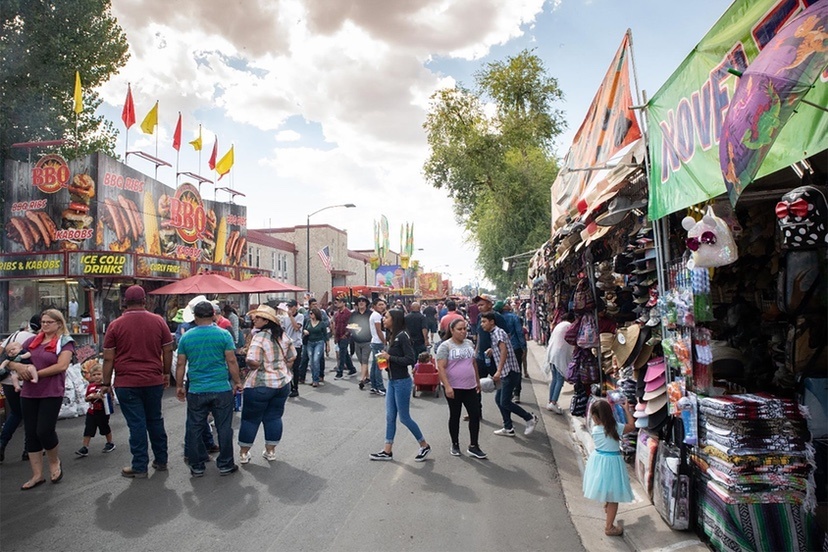
Photo courtesy ColoradoStateFair.com
On August 6, a dozen Republicans serving in the Colorado General Assembly — Senators and Representatives — shared a joint letter of complaint addressed, “To Whom It May Concern”.
Which definitely applies to me. Speaking as a concerned citizen.
To Whom It May Concern,
As rural legislators, we are deeply disappointed by Governor Polis’ decision to call a special legislative session during the Colorado State Fair — one of the most meaningful events for rural communities across our state.
This week is a time to honor the people who feed Colorado, power our economy, and represent the values that make our state strong. It is a proud and important moment for rural Colorado, marked not only by the State Fair, but also by long-standing traditions such as the Centennial Farms celebration and the Legislative Barbecue. These events recognize the hard work and deep roots of the families and workers who make Colorado thrive.
We have heard talk of a special session for nearly six weeks, plenty of time to coordinate a schedule that would not trample on rural participation. But alas, rural Coloradans and our Western way of life have once again been set aside and ignored.
By scheduling a special session during this time, the Governor has shown how disconnected his priorities are from the people who do God’s work on God’s land. Rural Colorado deserves respect not political theater that pulls us away from our communities during one of the most important weeks of the year.
We urge the Governor to consider the impact of his decisions on every corner of the state — not just the Front Range.
Sincerely,
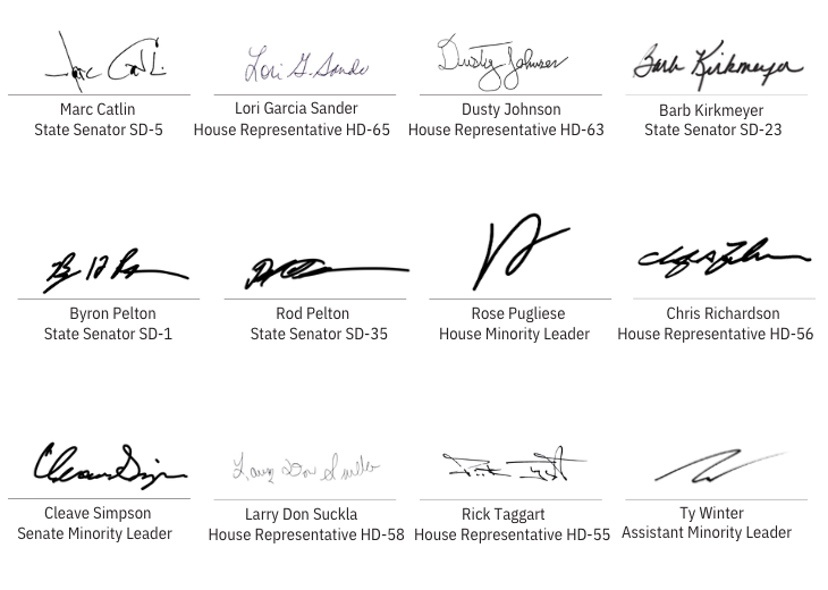
The letter highlights the political divide that exists, not only between the Republicans and Democrats serving in the General Assembly, but also more broadly, the divide between the legislators from the Denver and Front Range on one hand, and on the other hand, those representing “rural” Colorado — a geographically expansive part of the state inhabited by a demographically small population who spend their lives doing “God’s work on God’s land”.
Again, this applies to me, as a concerned citizen, living in rural Colorado — “God’s land” — writing humor columns for an online news magazine.
If any kind of work qualifies as “God’s work”, making fun of politicians must surely rank up near the top of the list.
Legislators from Denver and the Front Range tend to be Democrats, by a somewhat overwhelming margin, while the legislators from rural Colorado tend to belong to the minority Republican Party. The obvious implication, from all this, is that the Republican Party is “God’s party”.
Given that the scheduling conflict between the Special Legislative Session called by Governor Jared Polis, commencing on August 21, and the dates of the Colorado State Fair, which runs August 22-September 1, we should probably assume that God is equally disappointed.
It’s possible these legislators — when they mention “God’s work” — are thinking of the many journalists working in rural Colorado, who go out of their way to cover time-honored community events like the Colorado State Fair, the Centennial Farms celebration, and the Legislative Barbecue. But it’s more likely they were thinking primarily about farmers and ranchers, whose rights are being “trampled on” by the timing of the Special Session. That’s bad, although I would assume it’s not nearly as bad as being trampled on by an herd of beef cattle.
The state’s $43.9 billion budget was signed into law by Colorado’s Democratic Governor Jared Polis on April 28, well before the ‘One Big Beautiful Bill Act’ was passed by the U.S. Senate (on July 1) and by the U.S. House of Representatives (on July 3) and was signed by President Donald Trump (on July 4.) The federal bill cut corporate tax rates, a change responsible for about 70% of the projected Colorado shortfall. When combined with changes to Medicaid and SNAP, and other federal funding that once flowed to our state government… like cool, clear irrigation water, bringing life and vitality to the Colorado budget… the non-partisan budget projections from April now appear to be about $1 billion out-of-whack.
Special sessions typically last from three to five days, which means the rural Senators and Representatives will need to either miss most of the Colorado State Fair, or miss most of the Special Session.
I don’t know which choice I would make, if it were my decision. Luckily, it’s not a decision I have to make. I’m perfectly free to attend the Fair,
It’s not immediately clear why Governor Polis scheduled the Special Session to occur during the Colorado State Fair. Commentators have suggested that the August 21 timing aligns, in general, with the end of summer vacations, when legislators might more available than earlier in the summer. Another possible motivation for the August 21 date is a request by Polis that legislators address potential amendments to the state’s new AI law, which is scheduled to take effect in 2026. Changes to that law, made in August, would give corporations time to adjust their plans before a revised law goes into effect.
Colorado’s AI law is the first in the U.S. and probably has some bugs to be worked out. (Another part of “God’s work”.) We all want AI to work properly, so it can help governors avoid scheduling conflicts like this one.
Although it’s entirely possible Governor Polis made use of AI to help him plan a Special Session that rural Republicans would be unable to attend.
On the bright side, the missing Republicans — cotton candy in hand — will be able to dodge the “political theater”.
Underrated writer Louis Cannon grew up in the vast American West, although his ex-wife, given the slightest opportunity, will deny that he ever grew up at all. You can read more stories on his Substack account.