
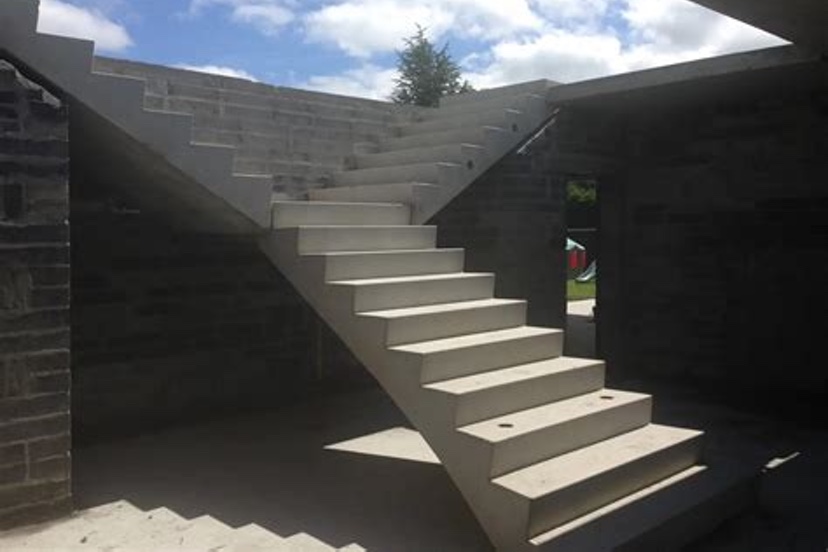
As America slowly evolves into a nation of couch potatoes, the people promoting physical exercise as a health benefit have had to become more and more creative.
Someone, somewhere, recently decided that I am a prime candidate for something called “Chair TaiChi” or “Seated Tai Chi” or the authentic Chinese version, “Tai Chi Chair.”
I know this because I’ve been treated to dozens and dozens of ads for this curious exercise routine whenever I watch YouTube videos. To judge by the appearance of some of the men promoting Chair Tai Chi, it somehow produces a physique rivaling that of Arnold Schwarzeneger in his prime, without requiring you to lift anything heavier than your own arms and legs.
Some of the YouTube ads suggest that the routine takes only 15 minutes, and you can do it while watching TV.
It can reportedly rid you of belly fat. That’s no doubt what makes me a prime candidate.
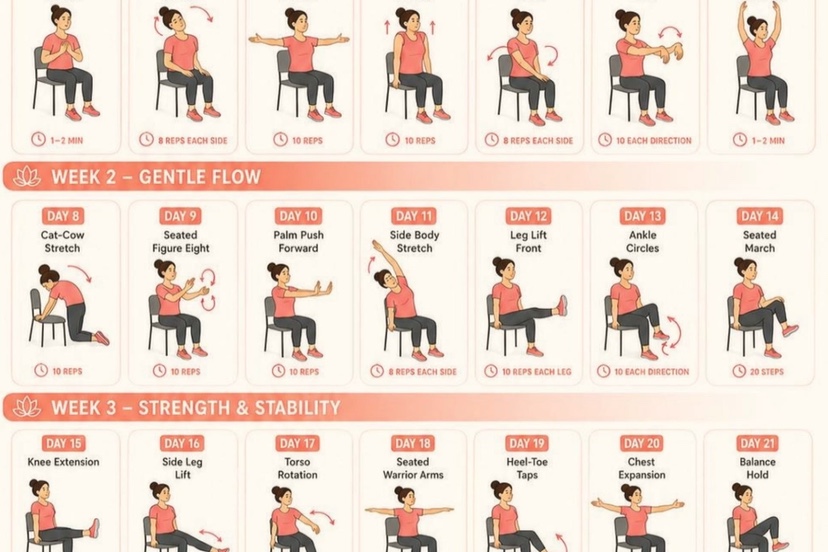
But it still looks like exercise… something I have been carefully (and successfully) avoiding for the past 30 years. And it takes 15 minutes, which is nearly twice as long as it takes me to eat a bowl of ice cream.
So you can understand why I became intrigued by a recent randomized trial, conducted by Austin Morales, William Wong, Jeff Moore, and Jochen Kressler and reported on the National Institutes of Health in 2024.
One minute of light-intensity stair-stepping decreases postprandial glycaemia in the evening in non-diabetic adults
This was, like, two years ago, and I am just now hearing about it? Has YouTube been asleep?
As with many people my age, the two phrases that stood out for me were “one minute” and “light-intensity”.
Maybe for other people, the phrase “postprandial glycaemia” stands out? I don’t personally know anyone for whom that phrase would stand out, nor would I likely able about to manage a conversation with them, but ‘live and let live’, I always say.
The research built on earlier experiments showing that 10 minutes of brisk walking or climbing stairs generally lessened surges in people’s blood sugar levels after meals or snacks. Not to be satisfied with 10 minutes, the researchers asked the participants to eat a quantity of sugar — enough to normally cause a “blood glucose spike” — and then had the participants engage for 60 seconds in light-intensity stair climbing. They found that this exercise routine reduced sugar spikes by around 40%.
Speaking as a person with a sweet tooth, I was hoping for “100%” but I will settle for “40%”, on the assumption that 2 minutes of stair climbing will reduce glucose spikes by 80%, etc. (This assumption was not part of the research, but I know from previous experience that 2 times 40% is 80%.)
Now obviously, reducing sugar spikes is not exactly the same thing as reducing belly fat, but it’s in the ballpark.
Some readers may have noticed the statement, above, that I found this research on the National Institutes of Health (NIH) website.
Those same readers may have an opinion about NIH research, knowing that these are the same folks who recommended that we all had to wear masks and engage in ‘social distancing’ during the COVID crisis.
If I’m not mistaken, they were also the same people who were funding the virus research at the Wuhan Institute of Virology.
It’s entirely possible that one minute of light-intensity stair climbing would have reduced my chances of acquiring COVID by 40%, but nobody thought to do that research back then. Instead we locked down the entire global economy. (Except Sweden.)
Heck, if I could have avoided getting that nasty COVID infection by light-intensity stair-climbing, I probably would have done it for 5 minutes a day, without even breaking a sweat.
On the outside chance it would have also reduced belly fat, that would be an added bonus.
Underrated writer Louis Cannon grew up in the vast American West, although his ex-wife, given the slightest opportunity, will deny that he ever grew up at all. You can read more of his nonsense here.