
Go back far enough in your family tree, and you are likely to find people who can be classified as peasants…
— from ‘The Man Who Taught Us How to Pay Attention’ by A.O. Scott in The New York Times, October 18, 2026.
peasant
noun
1. A member of the class constituted by small farmers and tenants, sharecroppers, and laborers on the land where they form the main labor force in agriculture.
2. A country person; a rustic.
3. An uncouth, crude, or ill-bred person; a boor.
— from The American Heritage® Dictionary of the English Language, 5th Edition
It’s quite possible that I could have been named “John”, “Paul”, “George” or “Ringo”, instead of Louis.
My parents were big fans of The Beatles, starting in 1963 when they released their album ‘Meet the Beatles’. Also, my mom got pregnant with me around the time The Beatles first appeared on the Ed Sullivan Show, on February 9, 1964.
I might have been conceived that very night, in fact. I’m assuming I was.
But my grandmother wanted to have me named after her father, Louis, because none of the boys in the family had been given that name yet. So I got named after a rustic farmer from Des Moines, instead of a famous musician from Liverpool.
That’s not the reason why I’m thinking about peasants this morning, however.
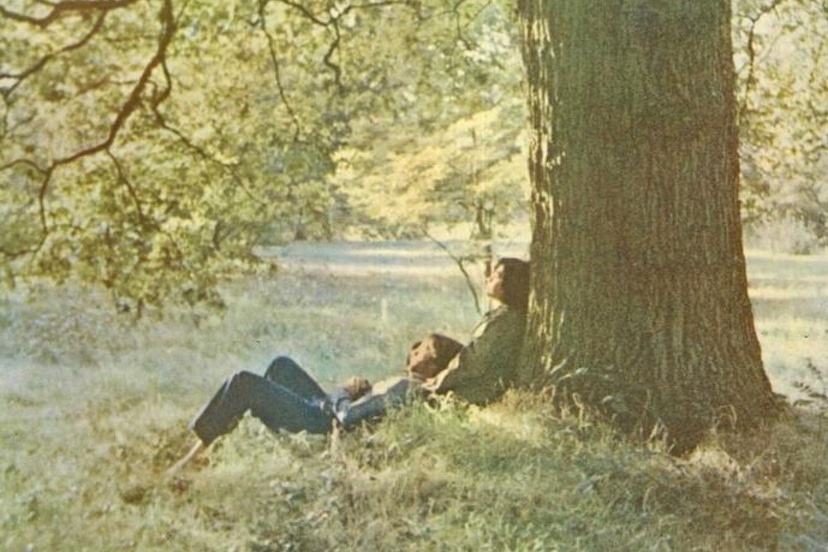
It’s because of a John Lennon song from his ‘Plastic Ono Band’ album, released in 1970 following the breakup of The Beatles. I was six years old when that album came out, and although my parents bought a copy, they rarely played it. It was pretty dark, in terms of lyrics. Very different from the generally uplifting stuff The Beatles had been putting out.
But I was having a rough time, in first grade. My girlfriend, Theresa, had dumped me for Benny Hutmacher, who could play ‘When the Saints Go Marching In’ on the harmonica. He was also the class bully.
John Lennon had suffered a lot more pain and loss than I had, but I could identify with some of his lyrics on the ‘Plastic Ono’ album.
They hurt you at home and they hit you at school
They hate you if you’re clever and they despise a fool
‘Til you’re so fucking crazy you can’t follow their rules
A working class hero is something to be
A working class hero is something to be
My parents didn’t approve of me listening to this album, partly because of the ‘adult language’. But also, probably, because they knew about my breakup with Theresa. They kept hiding the ‘Plastic Ono’ album, and leaving out ‘Bridge Over Troubled Water’ for me to find. Hopefully.
But the simple fact is, I imagined myself growing up to be an angst-driven working class hero. Maybe writing tortured lyrics like John Lennon, or else silly nonsense like his book, ‘In His Own Write’.
Then, yesterday, I was reading a New York Times article about art critic and author John Berger, whom I’d never heard of, even though I guess he was pretty famous. Apparently, a hero, among intellectuals.
I want to be clear that I have no interest in becoming a hero to intellectuals. If I eventually become a hero, I want it to be for the working class. For the peasants, even, if any are left.
According to A.O. Scott’s article, John Berger had been a British intellectual — you have to be an intellectual to be an art critic — but he finally got tired of all the pretense and moved to the French Alps in the mid-1970s to live among, and document the lives of, the peasants there. He realized that the culture and values of the peasantry were doomed to extinction, and he wanted to document their lives while he still could.
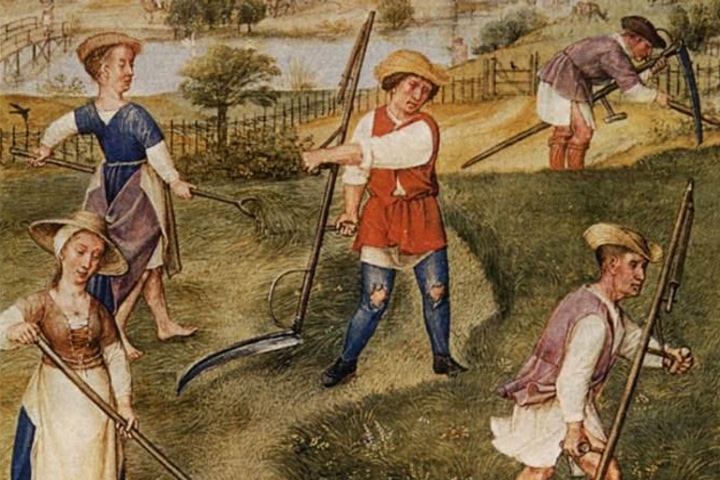
My personal connection to peasantry is practically nonexistent, other than the fact that I am named after a farmer from Des Moines.
By the time I settled in southern Colorado, the peasants had mostly disappeared and been replaced by government bureaucrats, school teachers, contractors, real estate agents, and small business owners. A few ranchers and cowboy ranch-hands remained, and we might be tempted to classify them as peasants, although I doubt they would approve of such a classification.
So I’m making my morning coffee and thinking about John Berger and the peasants he documented as best he could… and the words of John Lennon spring into my mind.
Keep you doped with religion and sex and TV
And you think you’re so clever and classless and free
But you’re still fucking peasants as far as I can see
A working class hero is something to be
A working class hero is something to be
Not a very nice thing to say about people who might think themselves clever and classless and free. Nor was it a nice thing to infer about peasants.
Of course, as a six-year-old growing up in Reno, Nevada, I didn’t even know what a peasant was. But obviously, they weren’t heroes.
John Lennon was in a lot of emotional pain, even after becoming one of the wealthiest musicians in history. But maybe he didn’t mean “peasants” in the sense of “impoverished people who work the land and provide food.” Maybe he meant, “uncouth, crude, or ill-bred persons” like the dictionary says.
In any case, I knew, even then, that I didn’t want to grow up to be a fucking peasant. But maybe, a working class hero?
Underrated writer Louis Cannon grew up in the vast American West, although his ex-wife, given the slightest opportunity, will deny that he ever grew up at all. You can read more stories on his Substack account.