
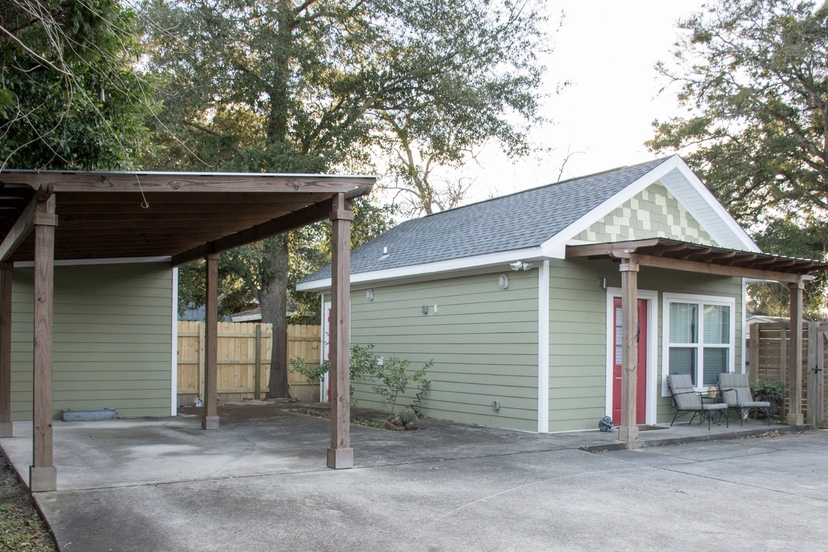
Accessory dwelling units, or ADUs, offer a solution and are becoming an increasingly popular housing option because of their affordability, flexibility and potential for housing stability…
— from the Habitat for Humanity website.
Yesterday in Part Eight, I shared some quotes from local resident Gary Noland, addressed to the Pagosa Springs Town Council about the Council’s efforts to purchase three bankrupt condo complexes near Village Lake, within the Wyndham Resort area.
Mr. Noland expressed his hope that, if the purchase goes through, the Town would make sure the “quality of life” in that neighborhood is not adversely affected.
“I have no issue with workforce housing, and no issue with workforce housing being at Masters Place. I ask you, as a group, to make sure you uphold your part of the obligation, in making sure that everyone’s quality of life stays the same. The people moving in to Masters Place, and the people around it.”
I think we can feel confident that the “quality of life” in Pagosa Springs, and in this neighborhood, is not going to “stay the same”. Change is constant.
I would further argue that we — the community residents — want change to happen, while at the same time wanting nothing to change. It’s just human nature… to want to have your cake, and eat it too.
The people serving in our local governments face the same dynamic. They feel obligated to try as best they can to keep Pagosa Springs from changing — while also wanting to fix the aspects that are broken. And among the broken aspects is a serious housing crisis.
The Town of Pagosa Springs provides a number of services to local residents and to visiting tourists, in the areas of health, safety, and welfare. Sewer treatment. Street and sidewalk repair. Police protection. Maintenance of parks. Recreation programs. Beautification of public spaces. Information and events for visitors. Control of land uses and development.
The Archuleta County government supplies some of the same services outside the town limits, and some additional services, such as wildland firefighting, an airport, child protection services, a public health department, a community landfill operation, a coroner, a County jail, etc.
And also, like the Town, the County controls land use and development in its jurisdiction.
Over the past decade, the Town and County have become involved in the production of new housing.
Many of the services provided by the Town or County are funded through community taxes. We, as individuals, don’t normally pay a fee to have our street repaired, for example, or to participate in an election, or to have police protection, or to use the parks, or to have our property values protected. The whole community pays for these services, and everyone can benefit from them.
But some government services, we have to pay for, individually. I have to pay a fee to use the County landfill, for instance, or to participate in certain recreation programs, or to have my sewage treated, or to have my development plans reviewed and approved.
In some instances, we see ourselves as a “community” and in other instances, we’re treated as “individual households”.
What about “housing”? Who ought to pay to costs, when the community as a whole is experiencing a crisis?
Traditionally in America, families and individuals have been responsible for paying for their own food, clothing and shelter. In general, governments have been tasked with common, shared needs — not with individual needs.
But there’s not really a hard line, where housing is concerned. Lately, the County government has been donating County-owned residential parcels to local non-profits, for workforce housing. The County has additionally refunded property taxes for certain qualifying workforce housing projects. The County paid for a ‘Housing Needs Study’ last year, and has now engaged consultants to create a ‘Housing Action Plan’.
The Town government has changed its Land Use and Development Code to discourage the conversion of residential homes into Short-Term Rentals, STRs. Additionally, the Town has changed its regulations to allow for, and encourage, more ADUs — Accessory Dwelling Units — by making them a ‘use by right’ in most neighborhoods, and by reducing development fees for these smaller ‘backyard cottages’.
New ADUs were not allowed previously, in much of the town. I’m not sure where they are allowed in the unincorporated county.
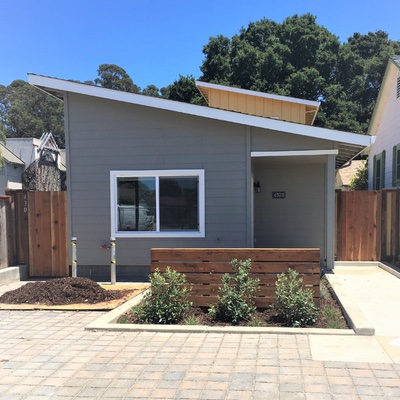
Some cities and towns have embraced ADUs as a significant tool for addressing the lack of affordable housing for workers and retirees. Nine states now have a statewide mandate, allowing ADUs as a ‘use by right’ in single-family neighborhoods.
The advantages to ADU development — as compared, perhaps, to other approaches to the housing crisis:
1. The units are funded, supervised, and maintained by a private property owner, on their own property. The need for ongoing government subsidies and oversight can be minimal.
2. The units are generally small, which reduced cost and makes the rent affordable.
3. ADUs can promote housing stability by generating rental income for those living on fixed or limited incomes.
4. ADUs can help older adults remain in their communities and close to support networks. An AARP survey found that among adults 50 or older, 69% would consider living in an ADU to be close to someone but still have their own space, and 68% would build an ADU to house a caregiver to help with daily activities.
You can download a Habitat for Humanity report about ADUs, here.
The Town Council, this month, voted to try and purchase three bankrupt condominium complexes near Village Lake, to serve as workforce housing. While we might see this as a creative approach to addressing a serious situation in our community, we also recognize that the Town government does not have any experience operating and maintaining a massive housing project.
Maybe the active promotion of ADU construction is a much better approach to the problem?
Bill Hudson began sharing his opinions in the Pagosa Daily Post in 2004 and can't seem to break the habit. He claims that, in Pagosa Springs, opinions are like pickup trucks: everybody has one.