
This story appeared on DavidKorten.org in February, 2026. We are sharing it in four parts. Subscribe to David Korten’s newsletter at davidkorten.org.
Life does not merely adapt to Earth; it actively shapes the planetary system.
Earth is not a passive stage on which life plays out. Life has turned Earth into a self-organizing, living system whose atmosphere, oceans, soils, and biosphere co-evolve through tightly coupled feedback processes. Over billions of years, these processes have maintained conditions conducive to life despite dramatic changes in solar radiation, tectonics, and biological composition.
Life does not merely adapt to Earth; it actively shapes the planetary system. Microorganisms regulate atmospheric gases. Forests influence rainfall and climate. Oceans moderate temperature and distribute energy. Through countless interactions, Earth behaves as an integrated whole whose stability emerges from dynamic balance rather than static equilibrium.
Human societies have now become a dominant force within this living system. Our collective activities alter carbon cycles, disrupt hydrological systems, fragment habitats, and accelerate species extinction. These changes are not external impacts on an otherwise separate Earth. They are internal perturbations within a living system of which we are a part.
From a participatory perspective, the current ecological crisis is a failure of human relationship to the living Earth. Industrial civilization organized human participation in ways that rewarded extraction, displacement of cost, and insulation from feedback. For a time, Earth absorbed these disruptions. Today, planetary responses—climate instability, ecosystem collapse, declining resilience—are making negative feedback unavoidable.
Vandana Shiva, physicist turned ecologist and global activist, repeatedly reminds us that ecological crises are inseparable from questions of justice, power, and relationship. Earth’s responses are not punitive. They are regulatory. Living systems respond to disturbance by seeking new forms of balance. The goal is not to minimize damage while continuing business as usual. It is to realign human institutions so that they contribute to Earth’s regenerative capacities rather than undermining them.
Such realignment requires more than technological substitution. Renewable energy, efficient production, and conservation are essential, but insufficient. A living Earth calls for living economies, living governance, and cultures that measure success by our active human contribution to planetary health.
When compassion becomes our common language, the boundaries of race, religion, and nations begin to dissolve, and we rediscover ourselves as kin within a single Earth community.
Life on Earth has never been static. Over billions of years, the planet has experienced ice ages and warm periods, comet impacts and volcanic eruptions, mass extinctions and bursts of diversification. Life’s evolution has responded to each crisis with extraordinary creativity.
When rising oxygen levels threatened early anaerobic life, new life forms evolved that could breathe oxygen and harness its power. When an asteroid impact ended the age of the dinosaurs, mammals diversified to fill the vacated niches. New forms emerged that had never existed before. Out of disruption came previously unimagined possibilities.
The crises of our time—climate disruption, biodiversity loss, social fragmentation—are part of this same pattern, but with a crucial difference: this time, the driving force is a single species with unprecedented power and potential to destroy the whole. Our technologies, economies, and cultures are destabilizing the very systems that sustain us. Yet those same capacities, if brought into alignment with life’s deep patterns, could help heal the damage and open new pathways for flourishing. It is within our means to make conscious choices never previously within the means of living beings.
From the perspective of the integral spirit cosmology, evolution is not a blind, meaningless process. It is movement toward ever greater complexity, diversity, depth of relationship, and capacity for collective choice. Each species, each ecosystem, each culture adds a unique voice to the symphony of life. The human voice is especially distinctive in this regard.
This understanding defines our distinctive potential. As Joanna Macy taught, the pain we feel for the world is the world feeling through us. It is evidence of our profound interconnection with the living Earth. To numb that pain is to cut ourselves off from the very source of our capacity to respond. To honor the pain is to recognize that we are participants in a larger body that is calling us to protect and restore its integrity.
Compassion is not passive sympathy. Rather, it is active solidarity with life. It is the heartbeat of evolutionary creativity, moving us from despair to engagement, from paralysis to participation. When we act from compassion, we become agents of the universe’s self-healing. Through every act of kindness, reconciliation, or stewardship we mend a thread of creation’s torn fabric.
Compassion is thus the bridge between grief and action, between awareness of our interdependence and living it. When compassion becomes our common language, the boundaries of race, religion, and nation begin to dissolve, and we rediscover ourselves as kin within a single Earth community. In that shared compassion lies the seed of an Ecological Civilization worthy of the living universe that brought us forth.
Similarly, hope is not a prediction that things will turn out well. It is a commitment to act as if our efforts matter, because we participate in a much larger flow of evolutionary creativity.
We do not know whether humanity will navigate this bottleneck successfully. But we do know that our choices influence the odds—not only for ourselves, but for countless other beings and for generations yet unborn.
To act from this understanding is to treat every home, every neighborhood, every watershed as an expression of the sacred integral spirit. Regenerative agriculture, community land trusts, restorative justice, local energy cooperatives, and experiments in living democracy become expressions of the universe’s drive toward wholeness at the human scale. They are practical acts of faith in the sacredness of life’s unfolding.
For such experiments to flourish, however, they must be grounded in a cultural story that affirms their deeper meaning. That leads us to the task of cultural transformation advanced through relevant educational experience.
Humanity’s Evolutionary Moment
Humanity stands at a pivotal moment in Earth’s evolutionary history. Never before has a single species possessed the capacity to alter planetary systems at such scale and speed. This power marks a threshold not only of technological capability, but of evolutionary responsibility.
From a living-systems perspective, evolution is not a ladder of progress culminating in human dominance. It is an ongoing process of experimentation through which life explores ever more complex forms of relationship. Species that persist do so by fitting within the constraints of the larger systems that sustain them.
Human intelligence and social organization have given us remarkable adaptive abilities. They have also enabled patterns of behavior that exceed Earth’s capacity to regenerate. The resulting tensions signal a mismatch between human systems and the evolutionary context in which they operate.
This moment can be understood as an evolutionary test. Will human societies mature from expansionary systems driven by accumulation and control into regenerative systems guided by reciprocity and restraint? Or will delayed feedback drive a contraction marked by conflict and loss?
Evolution offers no guarantees. But it does offer guidance. Systems that endure learn to limit their own excesses. They develop mechanisms for cooperation, distributed decision-making, and mutual care. They align power with responsibility and privilege with accountability.
Cooperation and constraint are essential to long-term resilience. Systems that suppress feedback or reward short-term advantage ultimately undermine their own viability. Human cultures now face a similar learning challenge. Conscious participation—acting with awareness of systemic consequences—becomes our defining evolutionary task. This requires redesigning institutions so that they reward behaviors that sustain the whole rather than undermine it.
Systems that endure learn to limit their own excesses.
Education, governance, economics, and technology all become arenas of evolutionary choice. The question is not whether change will occur, but whether it will be shaped by intention or imposed by breakdown.
An Ecological Civilization represents a pathway of intentional evolution—a collective decision to align human creativity with the conditions that make life on Earth possible.
Education for Transformation
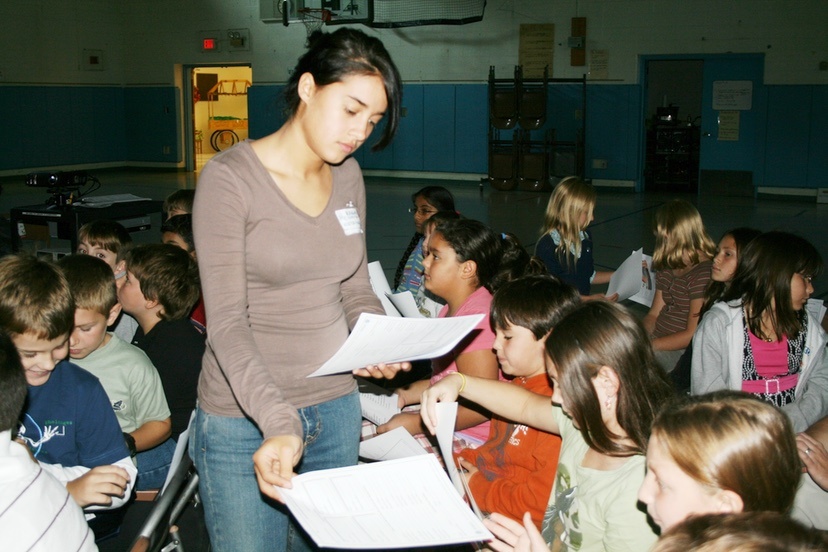
Education stands at the heart of this transformation. Modern schooling arose largely to serve industrial capitalism—producing disciplined workers and compliant consumers. It often teaches disconnected facts rather than integrated understanding, competition rather than cooperation, obedience rather than creative exploration. It prepares young people to fit into existing structures rather than to imagine and join in the creation of new possibilities.
Education for Ecological Civilization will:
Cultivate ecological literacy—understanding of how energy flows, nutrients cycle, and feedback loops sustain the regeneration and continued unfolding of life.
Foster systems thinking—seeing patterns, relationships, and long-term consequences rather than isolated events.
Nourish moral imagination—asking what kind of world is worth creating and how the students’ gifts might serve it.
Practice living democracy—inviting participation in real decisions that affect the learners’ communities and ecosystems.
Model lifelong learning—recognizing that in a rapidly evolving world, every person, at every age, must remain a student of the ever-growing potential of the unfolding of life and of Earth’s living systems.
A living-systems perspective calls us to lives of continuous learning. Education, in this frame, is not preparation for a future role in an external economy. It is cultivation of the capacities required for conscious participation in a living world. These include systems literacy, ethical reflection, emotional intelligence, ecological awareness, and the ability to collaborate across differences.
Such education emphasizes questions over answers and relationships over credentials. It teaches learners to recognize patterns, anticipate unintended consequences, and act with care in situations of uncertainty. It values curiosity, empathy, and responsibility as essential forms of intelligence.
As system theorist and Buddhist scholar Joanna Macy has emphasized through her work on systems awareness and the Great Turning, learning in a time of crisis must also cultivate emotional resilience—the capacity to face disturbing information without denial or despair, and to respond with courage and compassion. Such learning is not confined to formal institutions or to childhood. In a rapidly changing world, societies themselves must become learning systems—capable of continuously reflecting on outcomes, revising assumptions, and adapting institutions in response to feedback.
Reorienting education in this way is not an add-on to existing curricula. It is a foundational shift in how societies understand knowledge, purpose, and success. Without it, efforts to redesign economies and governance will remain brittle and easily reversed.
Cultural transformation does not happen overnight. It requires new stories in our films, curricula, sermons, news, and everyday conversations. It calls for spiritual communities that honor science. And for scientific communities that support us in recovering a sense of reverence. It invites each of us to examine our assumptions about success, security, and belonging.
Cultures are creations of the human mind. They can and do change, sometimes more quickly than we expect.
Cultures are creations of the human mind. They can and do change, sometimes more quickly than we expect. The stories we tell our children today will shape the institutions they participate in creating and inherit tomorrow.
An Ecological Civilization will emerge only if we raise future generations to understand themselves as participants in a living universe. These cultural shifts must in turn generate new economic and political arrangements that reflect the logic of life.
This participatory understanding aligns with the spiritual awakening now spreading among people who describe themselves as “spiritual but not religious.” They are rejecting hierarchical dogmas grounded in loyalty to kings and gods. Instead, they seek direct connection with the sacredness of creation unfolding. This reflects a shift from belief in an external ruler to an experience of immanent presence—the sacred as the living essence within and among us.
In this participatory view, the sacred is not confined to a distant heaven, a book, a priesthood, a king or a god. It permeates forests and rivers, neighborhoods and council meetings, farms and factories. To live a spiritual life is to contribute to the well-being of the continuously unfolding whole. A defining goal of education in an Ecological Civilization is to guide us each in finding our distinctive place of serve to the regenerative emergence of the whole.
An Ecological Civilization will emerge only if we raise future generations to understand themselves as participants in a living universe…
Dr. David C. Korten is the founder and president of the Living Economies Forum, and co-founder and board chair emeritus of YES! Magazine.He is best known for his seminal books framing a new economy for the Ecological Civilization to which humanity must now transition. Learn more at https://davidkorten.org/