
On Friday, the Colorado Senate Republicans sent out their “Weekly Roundup”, touching on key issues at play in the state as we begin the 2026 legislative session.
The Republican Party in Colorado has struggled to get candidates elected to legislative office — and in fact, to any political offices at all — except in the rural areas of the state, where Republicans continue to have considerable success. On the Archuleta Board of County Commissioners, for example, all three commissioners are members of the Republican Party.
But in the Colorado Senate, only 12 of the Senators are Republican, while 22 are Democrats. In the Colorado House, 43 representatives are Democrats while only 22 are Republicans. This disparity makes it difficult for the Republican caucus to accomplish any of their goals in Colorado, and it’s made even worse because the Governor is also a Democrat — although a relatively moderate Democrat, as Democrats go.
What victories can Colorado Senate Republicans claim in their weekly legislative newsletter? (You can sign up for the newsletter here.)
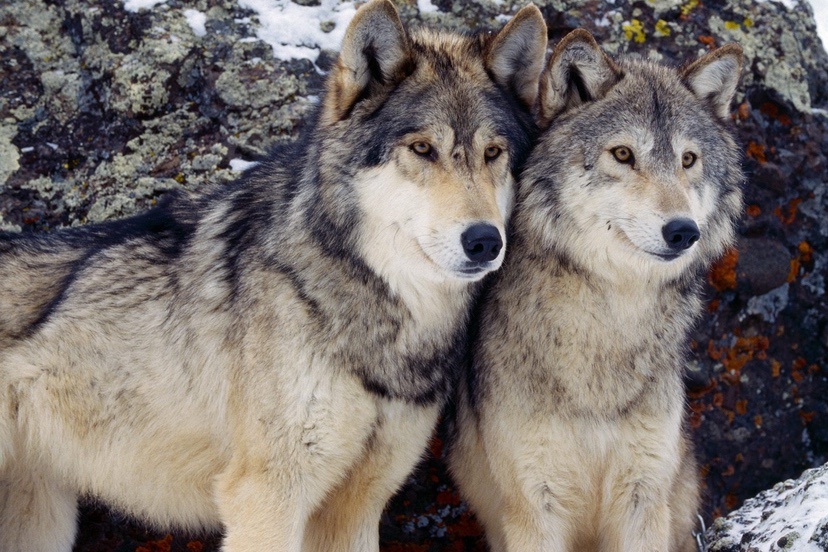
The press release from Friday reflects a connection with rural Colorado, in a story about the voter-approved wolf reintroduction program:
On Wednesday, thanks to continued pressure from Republicans and rural Coloradans directly affected by the wolf reintroduction, the Governor finally caved and paused the reintroduction program.
This program was a multi-year failed experiment in which pet projects met ballot-box biology at the expense of rural Colorado and everyday taxpayers. It is estimated that pausing this program will save Colorado taxpayers an estimated $3.5 million this year alone.
This project was a failure by every measure; it was a waste of taxpayers’ money, a burden on farmers and ranchers, and almost half the wolves reintroduced died.
Perhaps some exaggerations here?
Colorado had been importing wolves from Washington state and from British Columbia. But Washington state recently declined to provide more wolves after sensing problems with their own wolf population. And U.S. Fish and Wildlife has informed Colorado that importing wolves from Canada was a violation of wildlife regulations.
From a story by Sam Brasch on CPR.org, January 21, 2026.
Colorado’s wolf reintroduction effort is officially on pause.
Colorado Parks and Wildlife confirmed it won’t release any more gray wolves in the next few months. After failing to find any other state or tribal nation willing to provide wolves, the agency will continue to explore options to release wolves in the upcoming winter of 2026-2027, according to a press release published on January 21.
The announcement raises doubts about the future of Colorado’s groundbreaking — but controversial — restoration effort.
Obviously, the wolf reintroduction program — approved by voters in 2020 — has impacted rural ranchers more heavily than folks in downtown Denver. Some ranchers and some hunters have opposed the project, claiming it was greenlit by urban voters far removed from the consequences.
The Senate Republicans are correct, that nearly half of the wolves introduced since 2020 have died. As of January 2026, about 11 wolves have died following the start of Colorado’s reintroduction program in December 2023, representing nearly half the 25 wolves imported thus far.
However, some pups have been born to the introduced wolves, so I presume the total population is not known accurately at this time.
Republican exaggerations in their newsletter?
Governor Polis “finally caved and paused the wolf reintroduction program…”? This and the rest of the Senate Republican press release implies that hard work by rural Republicans caused the Democrats who run the Colorado government to “cave” to pressure.
The actual reported facts seem to tell a different story.
“This project was a failure by any measure…”
Wolf pups have been born in Colorado for the first time in nearly 100 years. Do we want to classify that as “a failure by any measure”?
About 50 years ago, scientists began to notice that the presence of apex predators — like wolves and mountain lions — actually benefit the overall ecological health of a region.
Some ranchers and hunters understand that concept. But not all of them.
Even some Republicans understand the concept. Apparently, Republican President Richard Nixon understood it. His administration established the EPA in 1970 and signed landmark laws, including the Clean Air Act, Clean Water Act, and Endangered Species Act, establishing a lasting, pragmatic legacy meant to protect America’s environmental balance.
Another concept I wish people understood. Telling the truth.
Bill Hudson began sharing his opinions in the Pagosa Daily Post in 2004 and can't seem to break the habit. He claims that, in Pagosa Springs, opinions are like pickup trucks: everybody has one.