

Illustration by Arthur Rackham from ‘Peter Pan in Kensington Gardens’ by J.M. Barrie, published in 1906. Apparently, Peter Pan was fond of sailing even as a very young boy.
When novelist and playwright J.M. Barrie invented the character called ‘Peter Pan’… who first appeared in his novel The Little White Bird written for adults in 1902… and then appeared in his family-oriented stage drama, Peter Pan, or The Boy Who Hated Mothers in 1904… he may have understood the difficulties faced by a boy maturing into a man better than most of us do in 2025.
Fortunately, it’s nearly 2026, and we may still have a chance to come to terms with reality.
Actually, Peter Pan, or the Boy Who Hated Mothers was only one of the working titles for his 1904 theatrical production — not the final title. It was perhaps an understandable choice, considering that little boys in Victorian England were often dressed by their mothers in frilly clothes.
Another working title for the play was The Great White Father.. How the concept of a “Great White Father” related, in Barrie’s mind, to a story about Peter Pan, we can only imagine.
Over the weekend, I came across a short CNN interview with NYU professor Scott Galloway, weighing in on the popular theme of manhood in the 21st century. Professor Galloway recently published a book on the topic: Notes on Being a Man. From the publisher’s website:
Boys and men are in crisis. Rarely has a cohort fallen further and faster than young men living in Western democracies. Boys are less likely to graduate from high school or college than girls. One in seven men reports having no friends, and men account for three of every four deaths of despair in America. Even worse, the lack of attention to these problems has created a vacuum filled by voices espousing misogyny, the demonization of others, and a toxic vision of masculinity…
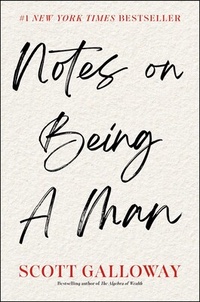 To quote professor Galloway from the CNN interview:
“The scariest piece of data I’ve seen recently, is that 51% of 18-to-24-year-old men have never asked a woman out, in person.”
The CNN interview was titled, “Lost Boys: new podcast addresses why young men are failing.”
Failing to ask women for a date. And failing in so many other ways.
In J.M. Barrie’s play, Peter Pan lives with the Lost Boys, and serves as their captain. To ensure that Peter and the Lost Boys never grow up, Barrie places them on an island called Neverland. Yes, there are also dangerous pirates dwelling on the island, or anchored just offshore, but my concern this morning is with the Lost Boys.
I was about three years old when I was introduced to Peter and the Lost Boys, and to Wendy and John and Michael and Captain Hook and his pirates. This was a couple of years after the Walt Disney studio released their animated version of Barrie’s story, but my most vivid memory of Peter and his fellow fictional characters was not from that film, but rather from an amateur theatrical production — directed by my father — at Mosswood Park in downtown Oakland, California. Dad taught Drama and English at Oakland High School, but during the summer months, he staged plays with youthful actors on behalf of the Oakland Recreation Department.
I very clearly recall a magical moment in that production when Peter told the audience that we could bring Tinkerbell back to life if we would all clap our hands, to show that we believed in fairies. And clap we did. Enthusiastically.
Barrie’s final choice for the title of his 1904 stage play — Peter Pan; or The Boy Who Wouldn’t Grow Up — not only fit the plot and the leading character’s personality; it also suggests a psychological disorder referred to by certain psychologists as ‘The Peter Pan Syndrome’ — a disturbing condition suffered by men (usually men, but also occasionally women) who can’t seem to mature into actual adults.
The term was coined by psychoanalyst Dan Kiley for his 1983 bestselling book, Peter Pan Syndrome: Men Who Have Never Grown Up. Dr. Kiley conceived the idea for the syndrome after noticing that, like the main character in Barrie’s play, many of the troubled teenage boys he treated had problems growing up and accepting responsibilities. This trouble continued into adulthood.
The syndrome has since been discussed in many books and articles. Probably in TED Talks too.
Some characteristics of Peter Pan Syndrome:
Emotional paralysis: Suppressed emotions; feelings expressed in inappropriate ways.
Slowness: Apathy; avoidance of tasks; frequently late.
Social anxiety: Difficulty forming and maintaining relationships; fear of commitment and reluctance to take on responsibilities.
Avoidance of responsibility: Resistance to taking on adult roles and responsibilities such as pursuing a career and managing finances; preference for living in the moment; avoidance of situations that require long-term planning or sacrifice; refusal to take accountability for mistakes; blaming others.
Relationships with women: Difficulty with maternal relationships; tendency to view romantic partners as “mother figures”.
Relationships with men: Trouble with male authority figures.

Apparently, the psychiatrists who managed the updates to the Diagnostic and Statistical Manual of Mental Disorders did not include Peter Pan Syndrome in the fifth edition, DSM-5, as a disorder worthy of diagnosis and thus, of subsequent health insurance coverage. But we should consider the fact that the American Psychiatric Association (APA) has published papers critical of the inter-rater reliability of DSM-5, which might be notable considering that DSM-5 was itself published by the APA.
So we can’t assume the existence, or non-existence, of Peter Pan Syndrome based on what the APA thinks. And we can’t assume that the Syndrome first appeared in 1983, just because a psychologist wrote a book in 1983. People — especially, men — have struggled to achieve maturity for, probably, all of human history. In fact, we have indications that J.M. Barrie may have himself suffered from the inability to fully grow up.
But let’s get back to that quote.
“The scariest piece of data I’ve seen recently, is that 51% of 18-to-24-year-old men have never asked a woman out, in person.”
Bill Hudson began sharing his opinions in the Pagosa Daily Post in 2004 and can't seem to break the habit. He claims that, in Pagosa Springs, opinions are like pickup trucks: everybody has one.