
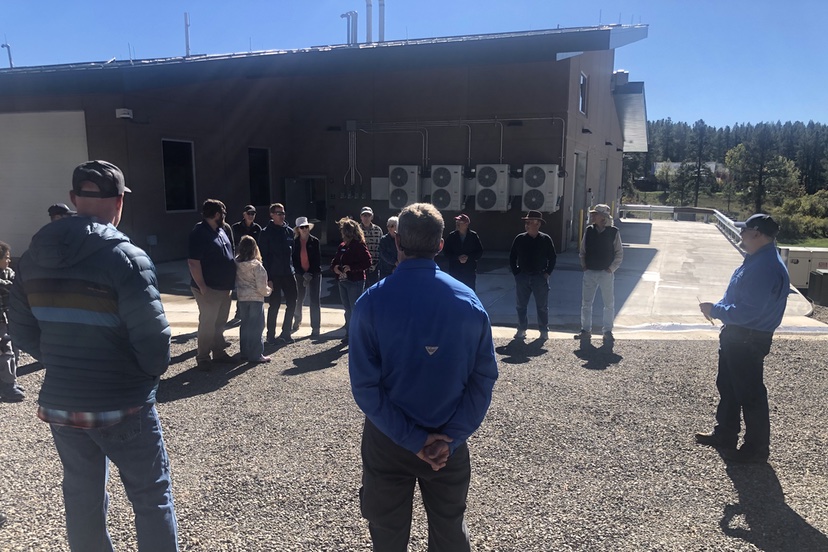
Pagosa Area Water and Sanitation District (PAWSD) District Manager Andy Connor provided the gathered visitors some background about the new $44 million Snowball Water Treatment Plant. Then we took a guided tour.
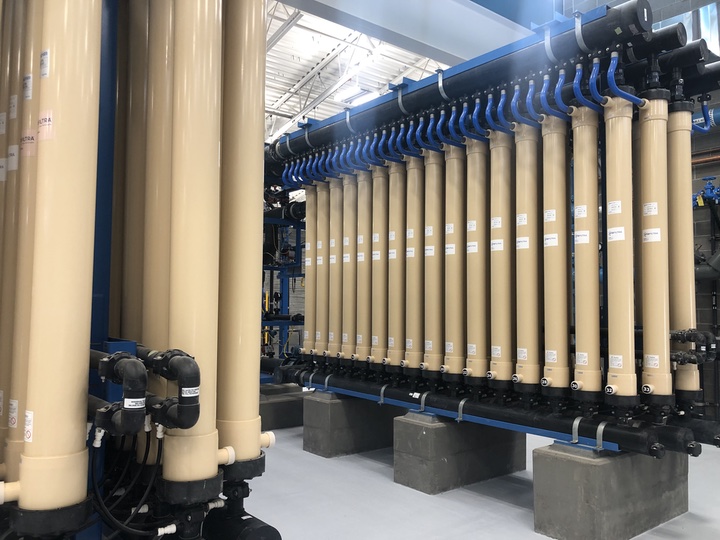
Entering the plant from the north entrance, we came upon two racks of tall beige tubes — the Pall membrane filters — which provide the final filtering process in a complicated treatment system that takes raw water from the West Fork of the San Juan River and purifies it to meet the specifications established by the Colorado Department of Public Health and Environment (CDPHE).
Actually, the treatment process at Snowball normally produces water that exceeds CDPHE requirements, and approaches the purity of distilled water. Our tour guide on Saturday, October 17 — PAWSD Operations Manager Justin Stone — pointed us to an electronic display showing the level of purity.
0.028 NTU.
Nephelometric turbidity units.
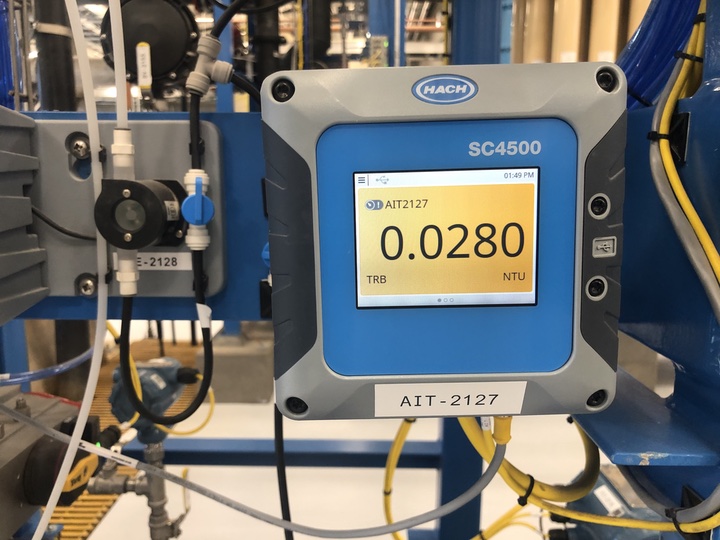
“Nephelometric turbidity unit” — NTU — is the unit used by engineers and scientists to measure the presence of suspended particles in water. According to Mr. Stone, the bottled water we can purchase at City Market typically has an NTU number of around 0.3 NTU. This suggests that the Snowball water, as it leaves the plant, is about ten times more “pure” than bottled water.
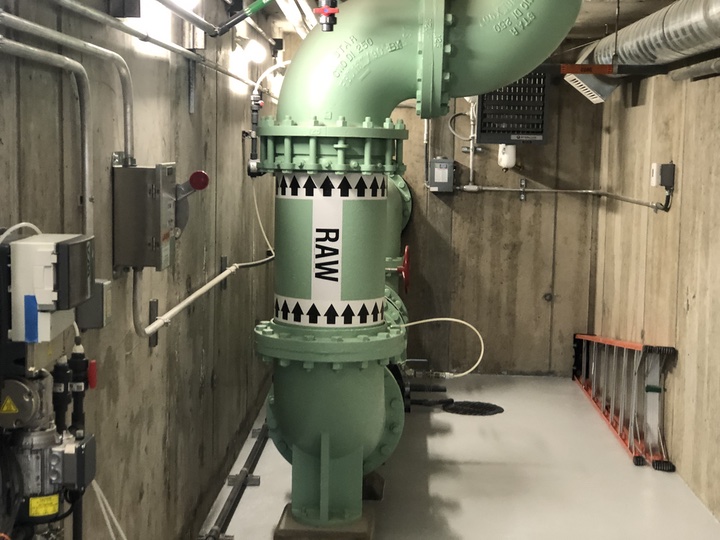
The treatment process begins with raw West Fork water, which might be relatively clean as it arrives, or might be muddy and brown following a heavy rainstorm. The new plant is fully automated with computerized meters at every critical step, and the amount of raw water drawn into the plant is controlled to match the amount of water leaving the plant — amounts which vary widely during a 24-hour period and during different times of year, depending on customer demand.
The raw water is split into two separate and equal “trains” each capable of processing 1.5 million gallon per day.
As mentioned in Part One, the Snowball Plant was designed to be fully redundant. Half of the plant can be fully shut down — for repairs or cleaning — and the other half can continue to function fully from start to finish.
The first step in purifying the water involves ‘flocculation” of the soil and clay particles in a series of tanks. This process causes small particles to clump together and then float to the top of the tanks, where it gets skimmed off and collected, to be eventually trucked off to the landfill. In the second step of this process, billions of tiny air bubbles turn the water milky white and drive the dirt particles to the surface, as shown in the second photo.
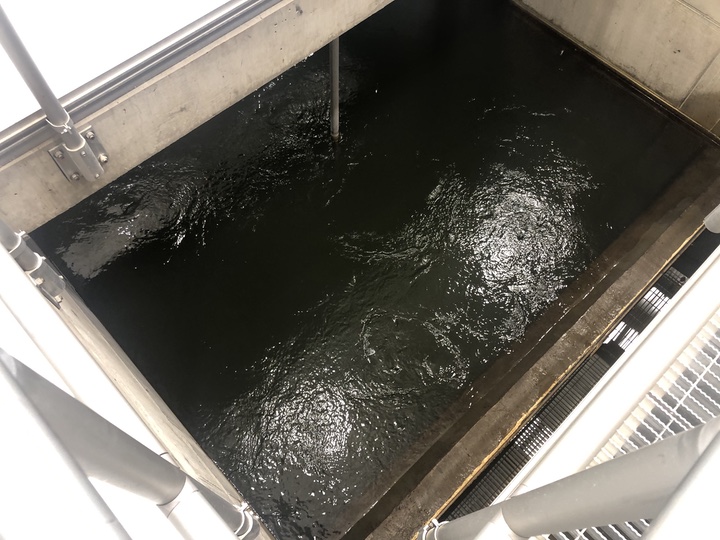
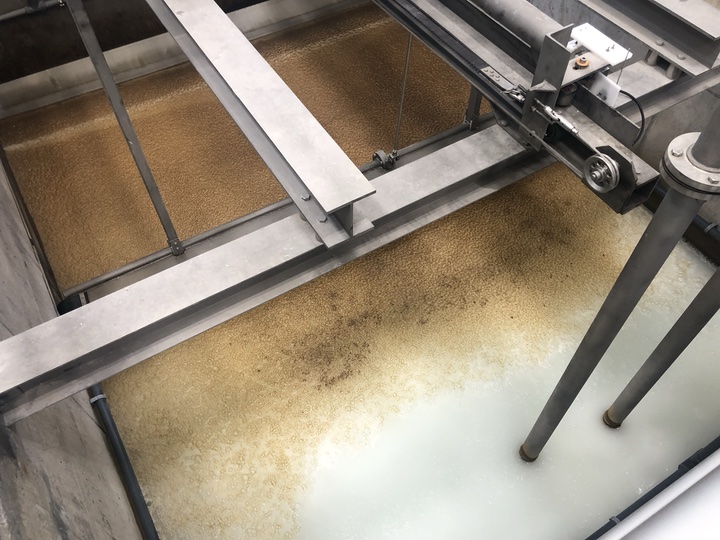
This high-tech treatment system is part of the reason the new Snowball Plant loses only about 6% of its water during treatment, while the old Snowball Plant lost about 40% of its treated water.
Not only is the new plant much larger than the old plant… it also six times more efficient. And it’s automated. And it produces cleaner water.
And it’s also — unfortunately — much more expensive to operate.
According to the audited PAWSD finances from 2025, the old Snowball Plant cost the District’s customers about $157,000 to operate, including energy costs, chemicals and maintenance. (But not including salaries.)
The new Snowball Plant budget for 2027 is $325,000. (Not including salaries.)
However, this is less than it costs PAWSD to operate the similar treatment plant at Lake Hatcher. ($425,000). The most expensive plant — the San Juan Plant on Lyn Avenue — runs only during the summer, and costs about $300,000.
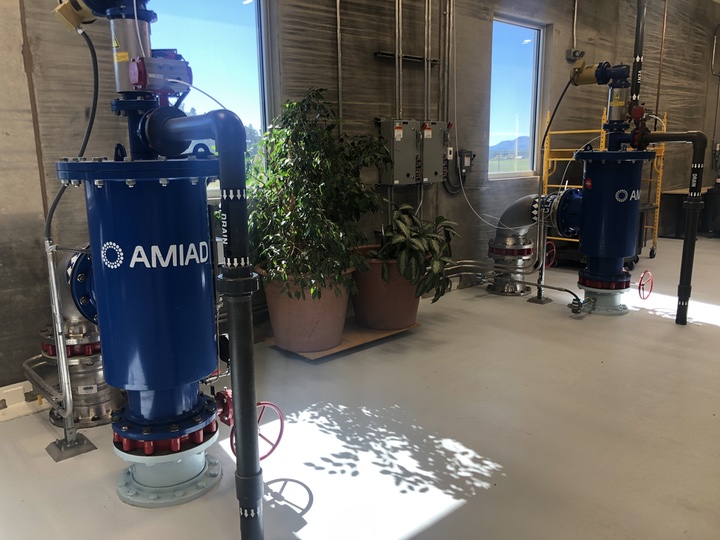
Once the water leave the flocculation treatment process at Snowball, it passes through a secondary filter system — the AMIAD filters — on its way to the Pall membrane filters.
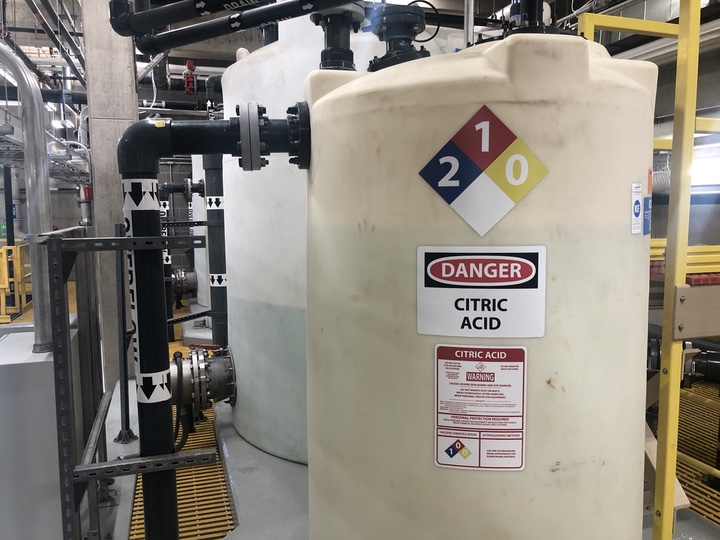
The Pall membrane filtering system consists of millions of tiny tubes that remove remaining contaminants — including most bacteria, fungi and mold spores. Eventually, these filters get clogged, so a significant portion of the plant is dedicated to a complex system that back-washes and cleans the filters. This system uses potent cleaning chemicals — acid and alkaline — which must then be chemically neutralized before the backwash water can be released into nearby irrigation ditches in the Snowball neighborhood.
The filters are then flushed with clean, purified water, and are ready to go back to work.
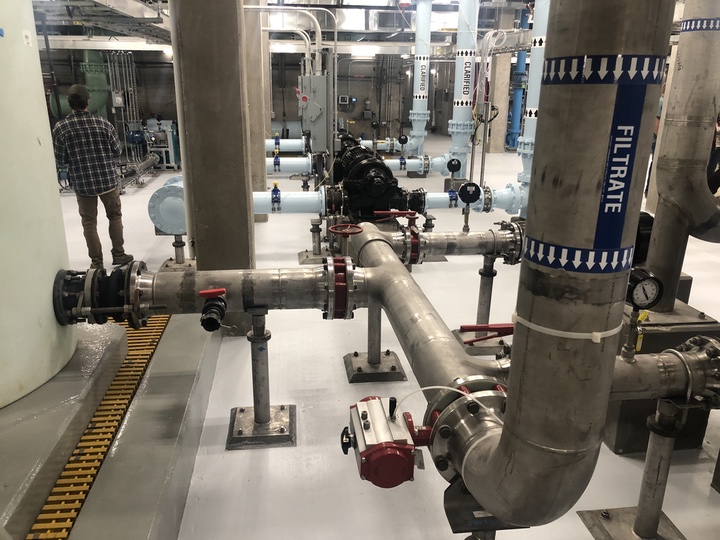
Touring the facility on Saturday, I was left with the impression that the new Snowball Plant is a “state-of-the-art” facility that will be able to meet CDPHE’s ever-changing water purity regulations for decades into the future.
Of course, one of the advantages in this process is a water source that basically delivers nearly-pristine mountain water to the diversion point at West Fork. The water there has passed through only a national forest and a couple of large ranches . The main threat to the purity of that raw water is wildfire within the watershed, and the resulting ash and erosion.
Over the past several years, the PAWSD staff has been addressing problems with the water distribution system — the 300 miles of underground pipes that deliver treated water to commercial and residential customers. The district has committed to spending at least $250,000 per year to finding and fixing the leaks that cause the loss of 30% or more of our drinking water.
The three water treatment plants produce about 2,500 AF of purified drinking water annually. That’s about 815 million gallons.
But that’s only a small portion of the water diverted from our rivers and streams, because about 95% of all the raw water we divert goes to growing grass for cows.
About 15.5 billion gallons, to grow grass.
Read Part Three… tomorrow…
Bill Hudson began sharing his opinions in the Pagosa Daily Post in 2004 and can't seem to break the habit. He claims that, in Pagosa Springs, opinions are like pickup trucks: everybody has one.