
British racecar driver Andy Green, holder of the land speed record and the only person ever to break the sound barrier in a jet-powered vehicle, set another (slightly more modest) world record on August 11, reaching 406 miles per hour at the Bonneville Salt Flats in Utah, in a specialized vehicle powered by hydrogen. The vehicle looked to me like a big yellow pencil.
Back in 1997, Andy Green set the (still-unbroken) land speed record — 763 mph — piloting the also-=somewhat-ridiculous-looking ‘ThrustSSC’.
You have to drive faster than 761 mph to break the sound barrier.
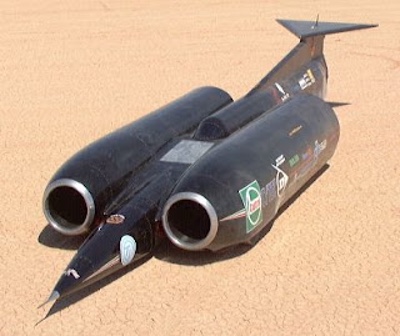
But no one had ever driven a car with an ‘internal combustion engine’ faster than 350 mph in an officially-sanctioned speed trial. (That record was also set by Andy Green, this time in 2006.)
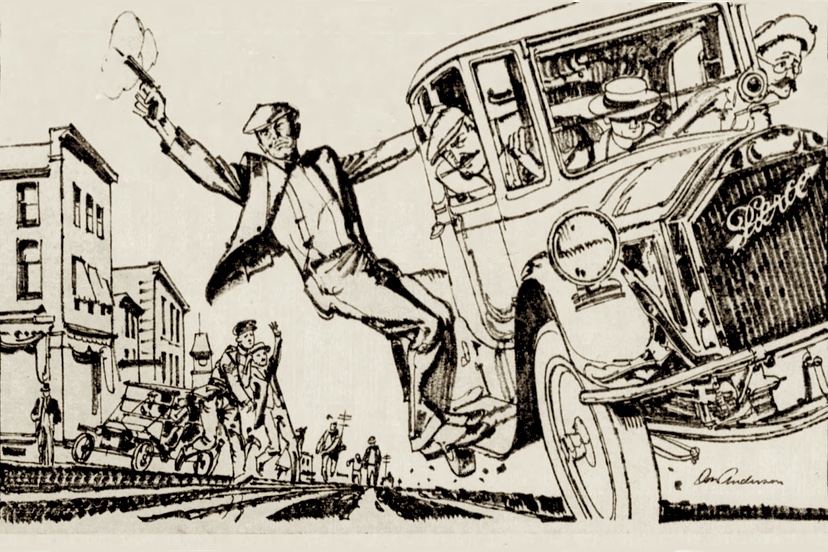
Sure, someone might very well have driven faster than 350 mph while making an escape after robbing a bank, but the speed was not verified by the Fédération Internationale de l’Automobile. If you want a place in the record books, you need to make friends with that particular French organization.
Just to be clear, Mr. Green’s vehicle used two internal combustion engines with a combined 1,600 horsepower. The implication being, if you wanted to drive a horse-drawn wagon this fast, you would need a team of 1,600 horses, all capable of running 406 mph.
The vehicle of choice was the 32-foot JCB Hydromax, the brainchild of British construction equipment manufacturer JCB, with engines adapted from engines used in the company’s construction machinery. The engines mix pressurized hydrogen gas with air and ignite it to create power.
Hydrogen fuel is all the rage these days among high-tech engine designers, because it does not produce greenhouse gases the way gasoline does. But unlike oil which you can simply pump out of the ground, hydrogen gas has to be manufactured. And it takes more energy to manufacture it than it ultimately produces as a fuel.
If I were going to rob a bank and needed a fast getaway vehicle, a hydrogen-powered car built by a British construction equipment manufacturer would be an obvious choice, in terms of necessary speed.
But if someone needs to rob a bank, they probably didn’t start out with enough money for a decent getaway car. They’re probably driving an old piece of junk.
Luckily, there are no banks located on the Bonneville Salt Flats where Andy Green drove the JCB Hydromax. This whole world-record-setting effort by Mr. Green had nothing to do with having money or not having money. It was all about glory.
I found the news about Andy Green’s world record feat on the Associated Press website, in an article by Hannah Schoenbaum.
Someone had posted a ‘comment’ at the conclusion of the article.
Wow, I can’t wait to add this to my ever-growing 21st-century book of useless achievements…
This goes under the chapter of ‘man goes zoom zoom in a vehicle with a super explosive fuel’, which is growing quite thick.
What we do need is for man to go zoom zoom in readily available, non-explosive fuel that puts out low to zero greenhouse gases. That chapter is quite empty at this point.
We’ve known for many years that hydrogen is super explosive.

But hydrogen can also be magical, as well as being super explosive.
According to Andy Green speaking to the Associated Press:
“It’s magic to be able to showcase this technology and to showcase how good the engineering is, on the best racing surface in the world, the Bonneville Salt Flats.”
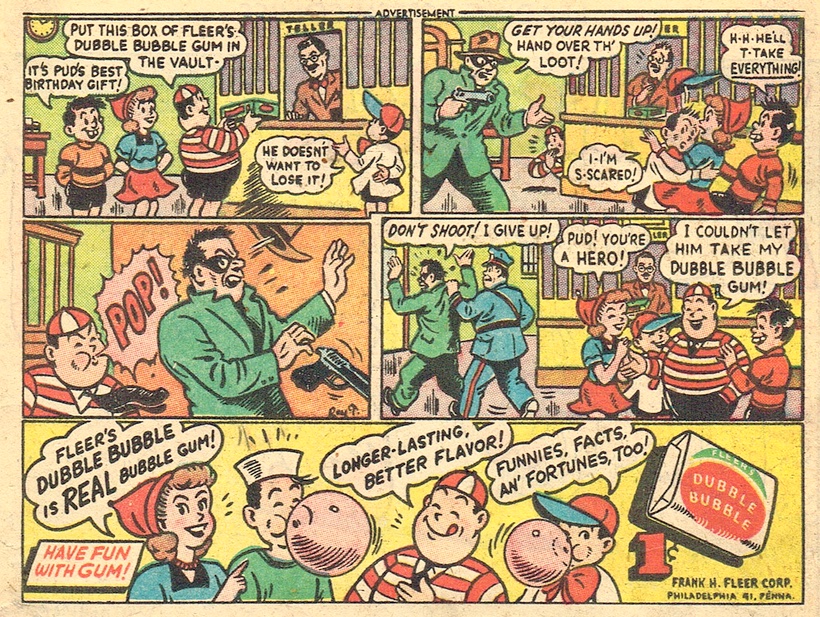
For those of us who don’t have access to top-notch engineering technology, we may end up relying on bubble gum.
Bubble gum can also be somewhat magical.
Underrated writer Louis Cannon grew up in the vast American West, although his ex-wife, given the slightest opportunity, will deny that he ever grew up at all. You can read more stories on his Substack account.