
This story by Nhatt Nichols appeared in The Daily Yonder on August 12, 2026. We are sharing it in two parts.
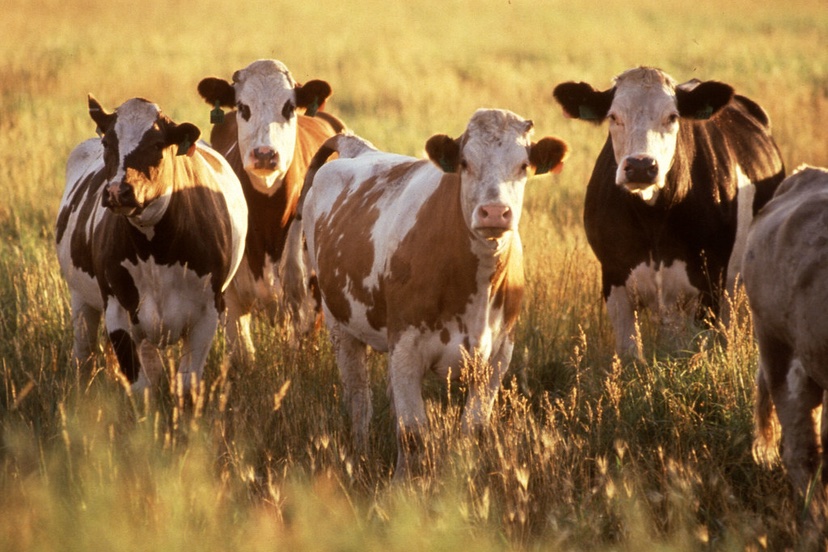
William Burnidge, Tyler Smith’s Fox Ranch predecessor at the Nature Conservancy, was one of the people who set up the Fox Ranch to be both a working ranch and a conservation property. In other parts of the West, The Nature Conservancy works with tribal leadership to re-establish buffalo on the prairie. But on the Fox, Burnidge explained why they chose cattle over the arguably ecologically superior bison.
“No ranch is an island. And so you need to have good community relations. And if you want to do that, finding a way to work with the local community, in a sense, culturally is very important,” Burnidge told me over the phone, explaining how they recognized the power of working with the local community instead of bringing in outsiders.
The land that is now Fox Ranch was historically part of the regional hunting grounds for the Cheyenne, Arapaho and Ute tribes. Since the Sand Creek Massacre in 1864 and the subsequent relocation of those tribes, these lands have been under the stewardship of cattle ranchers, so that’s the community that the Nature Conservancy turned to.
“We recognize that ruminant grazing is important, and practically speaking, going with cattle served a pragmatic need that is very difficult to do with bison,” Burnidge said. He explained that if you are in an area without an established tribal presence, you have to bring someone new into the community who is willing to become a part of the existing community. Since this is ranching country, it made sense to continue with the culture of cattle.
“Everybody is deeply attached, from a cultural standpoint, to their livestock. And everybody cares about the health and well-being of their animals, whether they see them as a commodity product or as a relation,” Burnridge said.
A Call for Prairie Heroes
The Nature Conservancy put out an open call for proposals from ranchers, and that call was met with glossy pamphlets and pitches with charts and graphs. Amongst all of those professional pitches, there was one from a 21-year-old rancher and his dad.
“Nathan and his dad put together one page; one-sided, 10-point font, half-inch margins, single-spaced. It described what they would do economically and ecologically, with actual rationale for why their management would improve ecological outcomes,” Burnidge said.
“Now, there was more to come about what ecological outcomes we really wanted to see and how to fit the management to that, but, but with a single, one side of a piece of paper, they clearly stood out as really understanding what we were asking for and so we selected them.”
Now in his 40s, Nathan Andrews is an interesting mix of frank, open rancher and cautious official Fox Ranch spokesman. He’s a seventh-generation rancher in eastern Colorado, and he is a part of the land in a way that’s hard for someone from elsewhere to fathom.
Andrews sees himself as a steward of the land, and his philosophy is that this land is his livelihood, and so he’s going to make its health a priority. One example of that philosophy in practice is a small, bright-horned variety of native dung beetle. Andrews noticed that there didn’t seem to be enough of them on the ranch, which, according to him, is a concern that universities and grazing managers talk about a lot.
Dung beetles do two important things: they eat fly larvae, which prevents flies from irritating cattle, and they tunnel through the cow pies and then down right underneath it into the soil, turning the manure into fertilizer.
Andrews wasn’t happy with the number of dung beetles he saw on the ranch, and so, after researching, he found that the ivermectin they had been using for fly control and de-worming kills dung beetles and can be active within manure for 150 days after application.
The beetle-friendly medication costs around $3,000 a year more than the ivermectin, according to Andrews, but he felt like it was a worthy investment in the future health of the soil.
“I’ve never done any dung beetle counts, but you go out into the riparian area and a six-hour-old cow pie will literally be moving with all the dung beetles that are in it. We kind of trust the process, that if we provide them a safe environment, their population will go as high as it can,” Andrews said. Observing and trusting the process is the overlapping part of the Venn diagram between conservation and cattle ranching.
“I was raised that you always did the best that you could, and with the thought that you should always improve the land and not just take from it,” Andrews said.
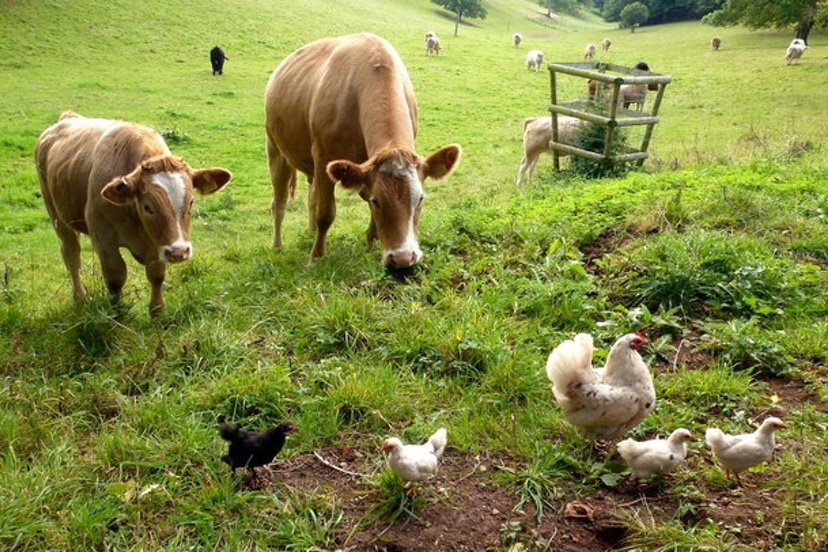
Burnidge puts it more bluntly. “They’re motivated to conserve their ranch, you know, just like I’m motivated to paint my house, right?” He acknowledged that the care for the land only carries conservation measures so far.
“That doesn’t mean they’re thinking first and foremost about how to improve habitat for a given species. I think privately, most ranchers say they think of themselves as conservationists, often, and they try to do the right thing.”
Of course, there’s always a trade-off between ecology and industry. The agreement with the Fox is part of how Andrew’s cattle operation stays affordable.
“Conservationists like to say:’ If it’s good for the bird, meaning the wild bird, it’s good for the herd.’ If we think that more grass is generally better for everything, then that’s true. But I think the conservation person who says that discounts the potential costs of doing something that would be better for the bird and therefore better for the herd,” Burnidge said.
There Are Always More Pieces of the Puzzle
That balance, between economically viable and ecologically sound, can be uncomfortable.
Yuma County is also home to some of the largest feedlots in the country. On my way into town to pick up supplies, I pass hundreds of cattle packed into small areas, what’s known as a Concentrated Animal Feeding Operations, or CAFOs.
Initially I’m thankful that the animals at the Fox don’t have to experience those conditions. Back at the ranch, I walked the trails across the canyons and prairie, daydreaming about the day that beef is a premium product, raised exclusively by preservationists who love beetles and prairie chickens.
It turns out I didn’t understand that feedlots are part of what makes places like the Fox work. Calves are born and raised on grass until they’re six to 12 months old. At that point, they’re loaded up and taken to a feedlot, where they spend six months being fed grain and growing to the size and fat content expected by American beef consumers.
“Feedlots are not a pleasant place to have a picnic, right?” Burnidge said. “I’ve just gotten to a point where I don’t think of them as the worst offender.” Though he points out that there are plenty of CAFOs that pollute the water or don’t prioritize animal safety, they are a tradeoff that helps make their conservation efforts possible.
If we abolished the feedlot system overnight, Burnidge argues, there would be huge consequences for ranchers like Andrews. “Americans, for good or for ill, are now trained to the taste of corn fed beef, and there would be huge human disruptions in the consumer segment if we did that,” Burnidge warned.
He also argues that it would be bad for conservation, because without cattle being economically viable, more grassland would go under the plow and be turned into monoculture commodity farming.
“That is worse for water quality. It’s worse for air quality. It’s worse for greenhouse gases, and it’s certainly worse for wildlife, native plants,” Burnidge said.
When data gets involved, things get even more complicated. According to Burnidge, beef that’s produced through the feedlot system has a lower greenhouse gas footprint per unit of production than grass-fed beef. That’s because the cattle grow faster in a feedlot, reaching marketable size in less time than their grass-fed counterparts.
Dr. Sara Place, an expert in livestock systems sustainability at Colorado State University, agrees with him, though admits that it can be complicated to quantify as results depend on context.
“For most analyses, yes, feedlot or grain-finished beef tends to have a lower greenhouse gas footprint per pound of beef than grass-finished,” Place told Daily Yonder in an email interview.
Part of this is because grain-fed beef are ready for slaughter sooner than those that are grass-finished. But Place noted that feeding grain also lowers the methane amounts that are naturally emitted from ruminants like cattle.
“The faster growth rate and decreased methane emissions combine to typically mean fewer emissions produced per steer, and more beef produced per animal,” according to Place, who pointed me towards a study that looks directly at greenhouse gas impact in the ways cattle are raised.
She noted that things rapidly become too complex to effectively quantify when you start looking at the value of keeping land from going under the plow versus the greenhouse gas and other emissions caused by raising meat cattle.
“That said, there’s reports from WWF and peer-reviewed publications that argue this case – keeping grass in grass and root side down is the most important thing to consider,” Place wrote.
And when I’m standing out in the fields of the Fox, I feel like she’s right; this is the most important thing to consider, both ecologically and, for lack of a better term, spiritually. When I’m looking at a feedlot, it feels more like what happens when you’re trying to quantify something that feels deeply unquantifiable: what existing means to another creature.
Like my time with the Forest Service, I was essentially a traveler through someone else’s life’s work. As a teenager, I left my goshawk job with an understanding that was formed only by the experience and wisdom of ecologists who had no economic skin in the game.
This time, I headed home with a deep sense of gratitude that other people were working towards a future that contains a sustainable prairie ecosystem and an economically viable way of life.
Burnidge put it perfectly. “The cow is how you harvest the grass and turn it into something of value economically, spiritually and nutritionally. There’s an ethical component to this as well, about how we produce protein for people that helps sustain ecological systems in rural communities as well.”
This article first appeared on The Daily Yonder and is republished here under a Creative Commons Attribution-NoDerivatives 4.0 International License.
The Daily Yonder provides news, commentary, and analysis about and for rural America. They welcome photos, tips, observations, and links to stories about rural America. Reach them at news@dailyyonder.com