
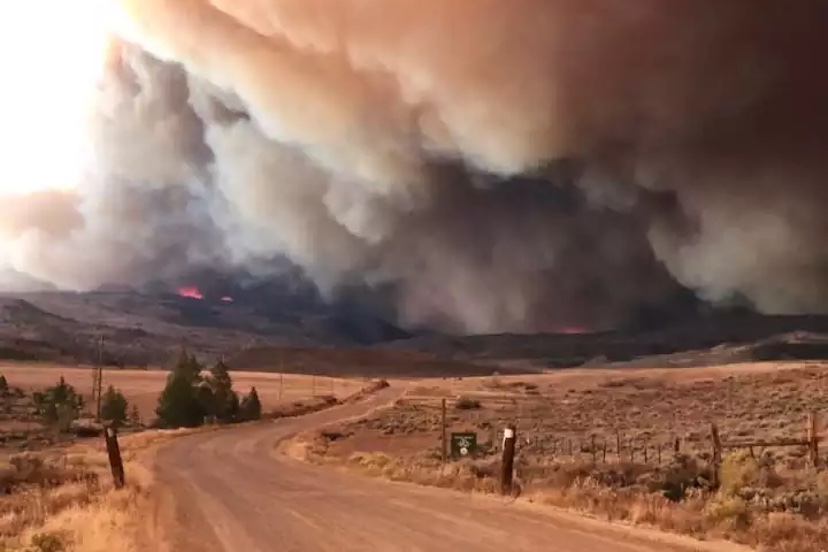
Photo: The 2020 East Troublesome Fire was the second-largest in the history of Colorado. Courtesy Brad White.
This story by Allen Best arrived in a newsletter, linked to a BigPivots.com story from 2021.
Boy oh boy, was 2020 ever a bad year in Colorado. First came COVID-19 and the stay-at-home orders. The great social event of every day was stepping out onto the front porch to yodel with strangers.
Then came wildfires in a way few of us had imagined. Largest was Cameron Peak Fire, which covered 208,000 acres, rocketing above the previous record-holder from 2002, Hayman. Then, in October, a small wildfire began near Kremmling, in an area called the East Fork of the Troublesome.
This fire was more personal for me. I had started my journalism career in Kremmling (and subsequently worked several blue-collar jobs). While there I had first put on a pair of flimsy wooden skis. And my first backpacking trip was in the Troublesome.
In late October — a time during my experience that the mountains around Kremmling would be covered with snow speckled by the orange vests of big-game hunters — that small fire sprinted across the landscape, narrowly sparing Grand Lake before leaping across the Continental Divide. People in Estes Park were packing their bags and some had left when a snowstorm intervened.
The following month, the then-chief of the Vail Fire Department, met with the Vail Town Council (virtually) and emphatically instructed them: Don’t kid yourselves. Fire could and very likely will happen here. Let’s get ready.
That, too, was personal. I had spent 13 years in Vail and proximate areas. It was, in a way, where I bloomed as an individual. I climbed many mountains and skied the backcountry far more than I skied with aid of lifts. This photo from Bald Mountain, looking down on the Gore Creek Valley, where Vail is located, comes from that era.
During that time in the late 20th century, any tinkering with the forests was mostly and often ardently opposed. Then came the bark beetle epidemic. That changed perceptions, shattering illusions about permanency of the forest aesthetic.
The 2020 fires delivered further evidence that even the high mountains would not necessarily be spared from fire. True, records showed long, long intervals of fire in the high-elevation forests of spruce and fir. But no blanket exemptions.
All of this comes to mind on Monday in reading about fires in places like the San Juans (Ouray), the Wet Mountains (forcing the evacuation of Beulah and Rye) and the Sawatch Range (would Leadville have to be evacuated?).
Fire is natural, of course. In our previous climate, the natural sequence was low-intensity fires every few decades in lower-elevation forests and longer spans of time — centuries even — in higher-elevation forests.
I wonder how much the sequencing has changed. And how much will the ecosystems change in the wake of these fires? The thinking 15 years ago was that the same type of forest vegetation created during the 20th and earlier centuries will not return in this warming and mostly drying climate of the 21st century. The forests will be different.
But how?
Allen Best publishes the e-journal Big Pivots, which chronicles the energy transition in Colorado and beyond.