
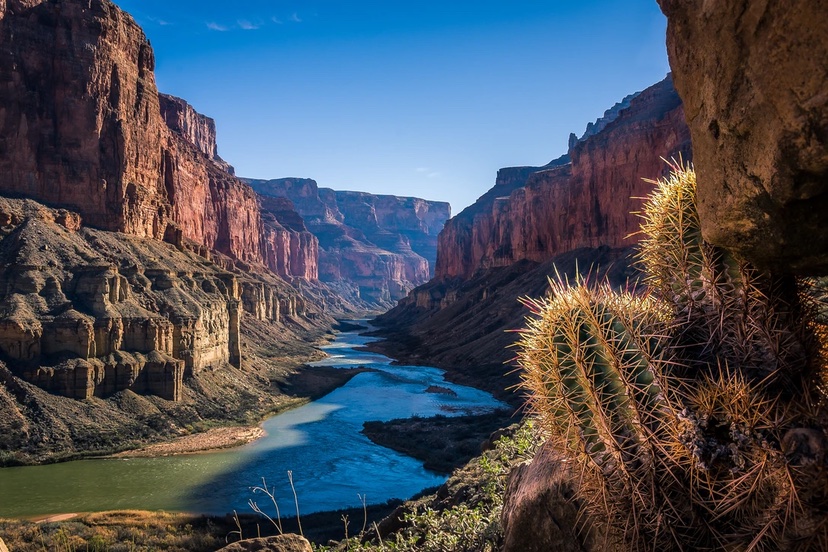
When we view the canyons carved over countless eons by the Colorado River, it’s hard to imagine the amount of water required to bring about such a massive excavation project. Especially, perhaps, it’s hard to imagine it in 2026.
At some prehistorical point in time, the climate in the American West must have been very different.
But shift happens.
When my sister and her husband retired, a few years ago, they considered — briefly — moving from Seattle, Washington (population 801,200) to Green Valley, Arizona (population 22,600). Two very different places.
Seattle has become incredibly expensive over the past 25 years. And then, there’s the rain…
Also, the demographics in Seattle are quite different from Green Valley. The median age in Seattle is about 36 years.
The median age in Green Valley is 74 years. My sister and her husband would have fit right in, demographically.
From the Villages of Green Valley website:
Welcome to The Villages of Green Valley.
We are an age-restricted (55+) master planned retirement community located 20 miles south of Tucson, Arizona. The Villages is part of a much larger community called Green Valley… not a town or city… rather a community where some call home. Green Valley is best described as an active and vibrant community with resident involvement and volunteerism as its hallmarks. With Green Valley’s diverse population and Tucson just a short drive to the north on Interstate 19, virtually any social, cultural, recreational or academic pursuit is at your fingertips.
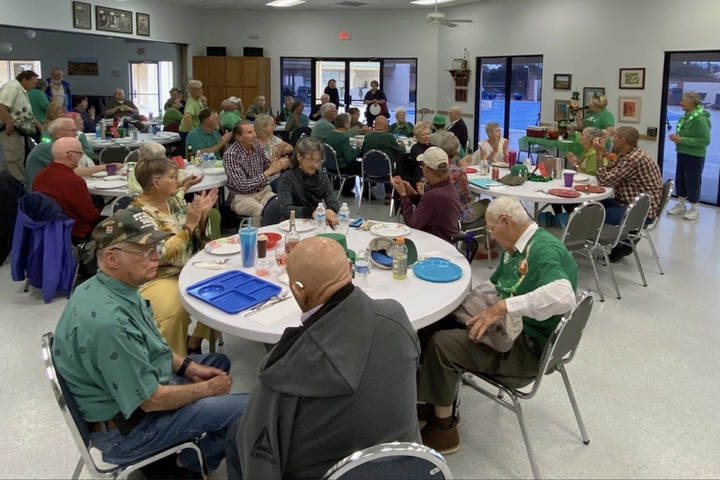
Green Valley, as noted, is not a city or town. Basically, it’s a loose affiliation of Home Owners Associations. And it’s an intentional retirement community. Many of the HOAs are restricted to persons 55 years or older.
Over 90% of the population in Green Valley live in one of about 100 HOAs — in separate neighborhood dwellings, town houses, and condominiums — with the HOAs serving as ‘local governments’.
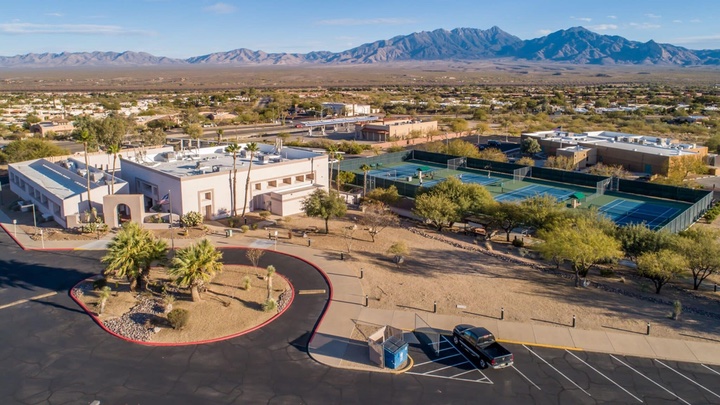
Taking the desert climate into account, very few of the homes or businesses maintain grass lawns. But certain types of trees are able to survive.
Some of the HOAs feature luxury homes, but not all do. When I did a web search to homes for sale in Green Valley, I found 376 homes priced at under $300,000, and 112 condos and townhomes, also priced under $300,000.
For comparison, when I searched Archuleta County real estate for homes priced under $300,000, I found only 5 listings. Also, I found 11 condos and townhomes in that price range.
Reportedly, one of the prime economic attractions in Green Valley is the White Elephant Thrift Store, a establishment widely known as a temporary repository for belongings of the dead and soon-to-be.


This type of community can exist in Green Valley partly because the workers who keep the community functioning — the workers under the age of 55 — can live 20 minutes away in Tucson, or in the smaller surrounding communities that allow residents of all ages.
Green Valley was conceived in the 1950s and 1960s, when the Colorado River had (seemingly) plenty of water, and Lake Powell — destined to be the second-largest water reservoir in America — was under construction. Soon to begin construction: The Central Arizona Project, a 336-mile diversion canal that would deliver Colorado River water to Phoenix and Tucson… and eventually, to Green Valley.
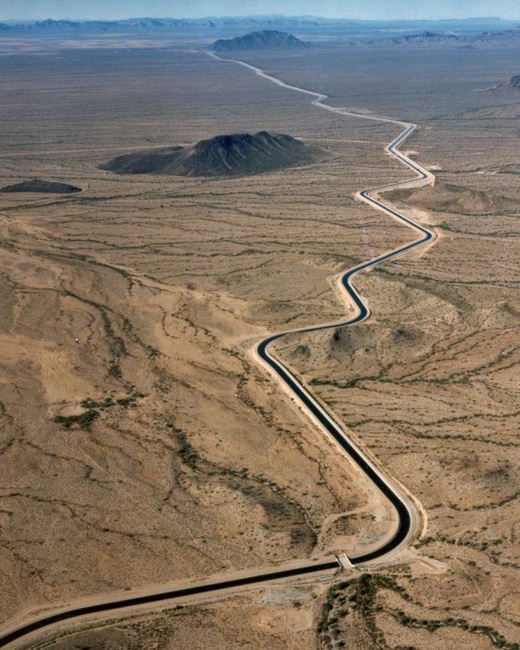
The City of Tucson makes heavy use of CAP water, but some of the subdivisions in Green Valley are served mainly by groundwater. And in some places, the groundwater levels are dropping 7 feet per year, with no end in sight.
In 2025, Arizona cut its CAP diversions by about 30%. I assume Arizona will reduce CAP diversions even more in 2026, but I haven’t been able to confirm that.
Why are we discussing a distant retirement community in the Arizona desert, in an article titled, “Can Archuleta County Save Itself?”
It may be helpful to compare the two communities, and consider the similarities and differences.
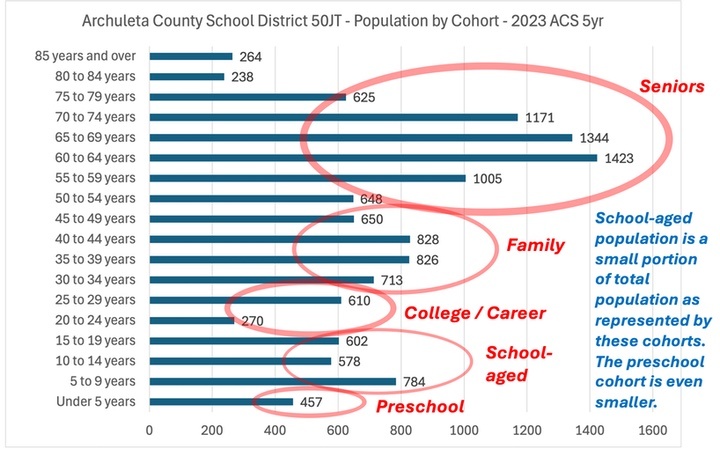
We already noted the median age in Green Valley — 74 years — compared with Seattle at 36 years. The median age in Archuleta County is currently 52 years.
About 80% of the Green Valley population is age 65+, which makes sense in a community where many subdivisions limit residents to 55+. Here in Archuleta County, about 30% of the population is 65+, and about 47% is 55+. Here’s a graph published by the Archuleta School District:
Back in 1959, R. Keith Walden, the founder of Green Valley Pecan Company — and considered virtual father of Green Valley — along with the Maxon brothers, Don and Norm (Chicago architect and developer) had a vision for a true retirement community. They fell in love with an area south of Tucson and named it “Green Valley”. By 1966, the first HOAs had been established to oversee the slowly growing community. Key to the developments were seven golf courses (in the desert?) and a dedicated recreation agency.
Eventually, the Green Valley community occupied 23 square miles.
From Legacy.com:
Don Maxon, who felt equally at ease with cowboys and politicians, died Friday, September 28, 2007 in the presence of his loving family. As a founder of Green Valley, he was an early pioneer of environmentally sensitive and architecturally unified development. Maxon pursued everything in his long productive life with drive and passion. He loved his family, his dog and pot limit poker.
A few years later, in the early 1970s, a different group of investors from Arizona, under the guidance of developer Ralph Eaton, was buying up 21 square miles of ranches, just west of the sleepy rural town of Pagosa Springs, to construct a ‘recreational community’ with a single 27-hole golf course.
I was not able to find an obituary for Ralph Eaton. But I have to assume he also felt equally at ease with cowboys and politicians.
As far as I know, none of the Pagosa Lakes Property Owners Association (PLPOA) subdivisions were — or still are — limited to residents 55+. But as we see from the chart above, that demographic now makes up nearly 50% of Archuleta County’s full-time population.
Headed for 60%? How did this happen?
As mentioned above, Green Valley can function economically as a retirement community because the actual workers can commute from the city of Tucson, 20 miles to the north.
Archuleta County doesn’t have that advantage. There’s no large metropolitan center 20 minutes away, where workers can find affordable housing.