
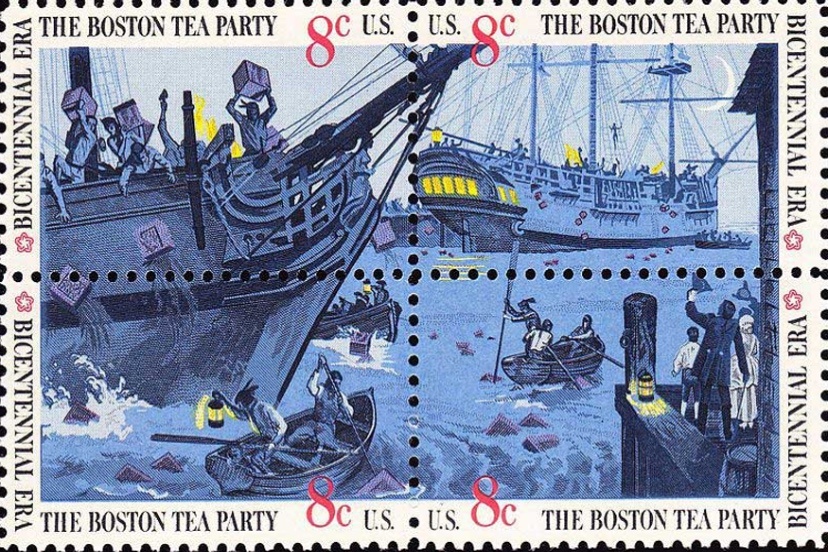
Our Daily Post editor used the ‘postage stamp’ image above, back in August, to illustrate one of his numerous editorials about taxation. His editorial had almost nothing to do with the Boston Tea Party, other than a brief reference to the slogan, “No taxation without representation”.
I was watching a YouTube video yesterday… a conversation between Heather Cox Richardson and Vanessa Williamson… about the relationship between ‘democracy’ and ‘taxation’.
Those are two things we all care about, and worry about, and — in the case of certain editors — write about endlessly.
Speaking for myself, I hardly even notice that I am paying an additional $8 in sales tax to various Colorado governments whenever I buy $100 worth of groceries.
The property taxes are more noticeable, when the bill arrives in January. Uncomfortably noticeable.
And of course, the day for filing my income tax return is quickly approaching — but that’s sometimes a “return” of a few dollars that the government ambitiously extracted from my paychecks. Makes it feel a bit like Christmas when the refund arrives.
It’s entirely possible that the new tariffs are adding to my financial burdens, although that’s not really a “tax”.
But to get back to that YouTube conversation… at the beginning of the video, Dr. Williamson referred to the causes behind the Boston Tea Party. I had always thought that the English colonists, who dressed up as Mohicans and dumped 46 tons of tea into Boston harbor, were protesting the British Parliament levying high taxes on the imported tea. 340 crates of tea belonging to the British East India Company, valued then at about £9,700… roughly equivalent to about $1.7 million in today’s dollars.
The British East India Company had been granted sort of a monopoly on importing tea to England.
Importing tea from Asia was one of the biggest businesses around, back in 1773, but the tariffs charged by the British government had nearly bankrupted the British East India Company, because they were competing with Dutch smugglers who didn’t pay the tariffs. (And were much appreciated by the English colonists in America.)
But according to Dr. Williamson, the colonists were actually protesting a new British law that waived the tariffs paid by the British East India Company, allowing the corporation to sell their tea at a price lower than the Dutch smugglers. (Criminals usually don’t pay taxes, as we are often reminded when our elected leaders fail to pay any.)
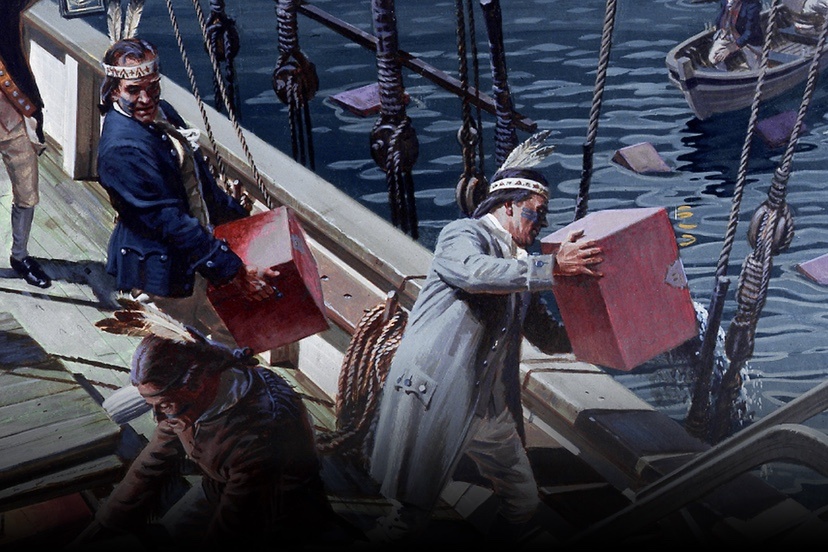
You might think that it’s crazy to protest low-priced tea, but Americans are funny that way. We would rather pay more a higher price for tea than allow corporate monopolies to be subsidized by our government.
Especially if we are involved in smuggling. But of course, we don’t pay tariffs if we’re in the smuggling business.
I will confess, right up front, that I am totally in favor of high taxes.
For billionaires.
But not for journalists. I would prefer low taxes for journalists.
Billionaires, however, are a completely different category of human being. An appropriately despised category. For one thing, they are in favor of corporate monopolies that don’t pay any taxes, while getting government subsidies.
According to Dr. Williamson, American revolutionaries like Thomas Paine had no problem with taxes, so long as they didn’t cause people to become impoverished. You can download his lengthy 1791 essay on taxation, entitled The Rights of Man, here.. And when I say “lengthy” I mean, like, 324 pages.
But getting back to the question of tea.
Which Thomas Paine neglects to mention even once, in his 324-page book about taxes.
We’re still importing tea from Asia, but it’s not such a big deal, because most of us drink coffee instead. Apparently, the English colonists developed a bad taste in their mouth, about tea tariffs and tea monopolies and tea smuggling and the whole mess, and a lot of them simply gave up drinking tea and switched to coffee. This transition was no doubt helped by the fact that a cup of coffee delivers in excess of 100mg of caffeine… compared to not much more than 50mg from a cup of tea.
Life was not easy in the American colonies, and the extra caffeine in coffee was much appreciated, as it turned out.
I’ve noticed the price of both tea and coffee going up lately. Perhaps my readers have noticed the same?
And life is still not easy, here.
So I have to ask. Where are the Dutch smugglers, now that we really need them?
Underrated writer Louis Cannon grew up in the vast American West, although his ex-wife, given the slightest opportunity, will deny that he ever grew up at all. You can read more stories on his Substack account.