
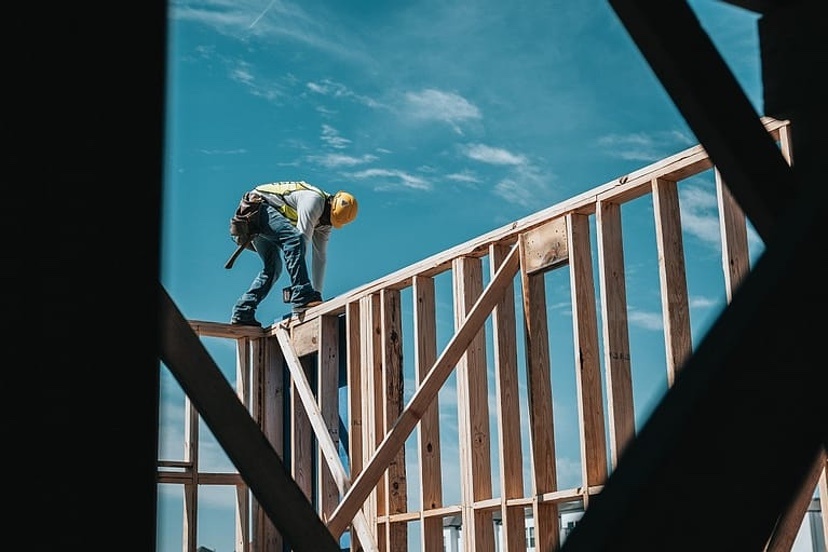
If we are serious about public health in the Borderlands, we have to stop treating housing as a side issue.
This column reflects public-health analysis and opinion grounded in lived experience, historical precedent, and publicly available information. It examines systems and patterns rather than making claims about any specific individual or organization.
Housing is not simply shelter. It is the platform on which many health outcomes rest. Stability shapes whether people can rest, recover, cook, store medication, manage chronic disease, age in place, or remain connected to community. When housing systems fail, downstream health impacts often follow.
In moments of economic, environmental, or political pressure, communities experience this first through housing. Instability is not abstract. It shows up as stress, displacement, and the gradual erosion of daily life.
In Pagosa Springs, this reality is increasingly visible. Along Hermosa Street and the downtown park corridor, recent home and land sales reflect prices largely disconnected from local wages. These transactions occur within a broader housing system. They can contribute to resetting nearby property values, raising tax burdens for long-time residents, and signaling who is expected to belong — and who may struggle to stay.
At the same time, many of the people who form the working spine of the community — service workers, caregivers, tradespeople, educators, and health staff — continue to operate with low wages, limited benefits, and constrained housing options. When policy allows exclusivity to expand while this imbalance persists, displacement becomes a predictable outcome.
Across Archuleta County and the broader Albuquerque–Four Corners region, housing pressure has become a daily public-health concern.
Housing shapes who is able to live here with stability.
What the Data Already Tells Us
In April 2025, Archuleta County released a Regional Housing Needs Assessment documenting what many residents already experience: local housing supply and costs are misaligned with wages, family needs, and long-term stability.
The assessment outlines gaps across rental affordability, workforce housing, senior housing, and ownership opportunities, alongside pressures created by second-home markets and limited housing stock. From a public-health perspective, this represents a significant risk factor.
Housing instability is widely recognized as one of the strongest predictors of poor health outcomes, often outweighing clinical interventions. When housing costs rise faster than wages, stress can become chronic. Families double up. Elders delay care. Workers commute farther, increasing injury risk and reducing time for food preparation, rest, and caregiving. Children change schools. Social ties fray. Emergency rooms see the downstream effects.
Public health must name the upstream drivers.
Housing Pressure Is Governance, Not Just Supply
In January 2026, Pagosa Springs, Archuleta County, and the Pagosa Springs Community Development Corporation convened a Housing Action Plan open house to gather public input.
Listening matters. Process matters. Collaboration matters.
But public health also asks a harder question: what kind of housing system is being built — and for whom?
Housing discussions often narrow to unit counts, density, or financing tools. Those details are necessary, but not sufficient. Housing is governance. Who controls land? Who benefits from appreciation? Who absorbs risk? Who has decision-making authority — and who is limited to advisory input?
In small towns, displacement often operates not through mass eviction, but through cumulative policy choices that favor exclusivity over continuity. Zoning that privileges luxury development, tax structures that shift burden onto fixed-income residents, and strategies that pursue capital without strong resident protections can widen inequality — even when framed as progress.
From a public-health standpoint, neutrality in this process is not possible. When housing policy concentrates stability for some while exporting precarity to others, health outcomes tend to follow predictable patterns: chronic stress, instability, longer commutes, fractured care networks, and the loss of community memory.
Displacement is a Health Shock
Displacement is often framed as an economic inconvenience. In reality, it functions as a health shock.
When people are forced out — by price, disaster, or policy — they lose more than housing. They lose doctors, routines, neighbors, childcare, cultural anchors, and informal care networks. Stress increases. Mental health suffers. Recovery becomes harder.
For Indigenous, Latino, and working-class families in the Borderlands, displacement is cumulative. Each wave compounds the last.
Housing policy that ignores this reality is not neutral. It produces harm.
If housing is health infrastructure, it must be designed the way other essential systems are designed: for durability, equity, and long-term stability, especially under pressure.
That means prioritizing stability before growth, treating displacement prevention as a health intervention, expanding community control of land through tools like land trusts and shared-equity models, and designing housing that supports care — with functional kitchens, storage for food and medication, and layouts that allow recovery, aging, and family support.
In fire-prone regions like ours, housing location and design are also life-and-death public-health decisions. Governance must match that reality. Residents need real decision-making authority — not just advisory input — in systems that shape their lives.
Why This Moment Matters
Earlier this month, I wrote about community health built under pressure — how care systems emerge when people are denied safety. Housing is where that reality becomes unavoidable.
Food systems cannot function without stable kitchens. Medical care cannot work without stable addresses. Culture cannot survive without people who are able to stay.
The Housing Action Plan now underway is an opportunity — not only to add units, but to decide whether housing in the Borderlands will function primarily as extractive real estate or as public-health infrastructure.
That choice will shape who ages here, who works here, who raises children here, and who is able to live without constant precarity.
Housing is the hinge.
Peace is not accidental.
Peace is not silent.
Peace is built — one structure at a time.