
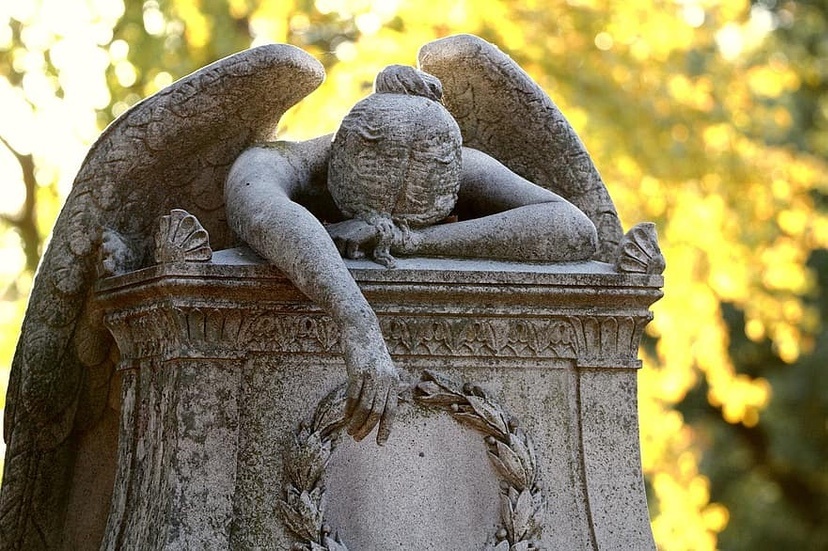
She added, “If you nursed your babies and you recycle the cardboard in the toilet paper roll, this is going to appeal to you…”
— from a KFF Health News article on ‘green’ burials, “When I Go, I’m Going Green” by Paula Span, September 8, 2025.
I didn’t nurse my babies, and I don’t recycle the cardboard in the toilet paper roll, but ‘green burials’ are starting to interest me as I approach the average lifespan of an American male.
I certainly would have nursed my babies, had I been biologically capable of doing so, but I left that job to Darlene, since she had the necessary equipment. That’s one area where women really excel.
But don’t get me started about recycling cardboard toilet paper rolls. Does anyone really do that?
On the other hand, maybe my body can be recycled, after a fashion.
Journalist Paula Span, writing about ‘green burials’ this week in KFF Health News, quoted Lee Webster, former president of the Green Burial Council, who notes that baby boomers (like me) are showing a growing interest in biodegradable burials — being laid to rest without an expensive (and really, unnecessary) casket.
Dust to dust, so to speak.
“That has to do with the baby boomers coming of age and wanting to practice what they’ve preached,” Webster said. “They’re looking for environmental consistency. They’re looking for authenticity and simplicity.”
I’ve been an advocate for simplicity, pretty much all my life. You have to keep things simple if you’re trying to live on a journalist’s salary. And who doesn’t want to be authentic when they are dead? That’s probably the most important time to be authentic.
Reportedly, cemeteries are plugging into this funereal fad, as more and more authentically dead people choose to be buried in a cotton sack or a cute woven wicker coffin… instead of the more traditional steel casket.
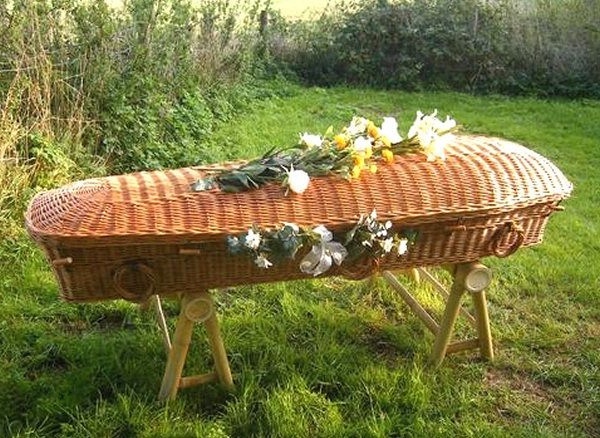
A biodegradable container makes it abundantly clear to your family and friends that you care about the environment. Or rather, that you once cared, while you were still alive.
And since we’re on the subject of ‘recycling’, I’m personally thinking about being buried in a cardboard box, to save a trip to the recycling center.
When did Americans develop this habit of burying people in $2,000 steel caskets? I have a theory about that. When European archaeologists started digging up mummified Egyptian kings back in the 1800s, it sparked the imaginations of certain rich people — who had more money than they could spend in a lifetime, and who enjoyed the thought of their bodies winding up in a museum 3,000 years from now. Of course, the wooden coffins commonly used for burials in those days would never last that long, so some clever funeral director invented steel caskets to service his wealthier clients.
Then, you figure in the American habit of ‘keeping up with the Joneses’ and next thing you know, everyone wanted a steel casket. Even if they couldn’t afford it.
That’s just a theory. But it’s a darn good one.
Times change. Mothers got back to nursing their babies, and at least some baby boomers started recycling certain cardboard items. (Yes, I will admit to recycling my Amazon boxes.)
A growing number of cemeteries in the United States now allow green burials. The first, Ramsey Creek Preserve, began its operations in 1998. By 2016, about 150 cemeteries were accommodating green burials; today there are now close to 500, with most operating as “hybrids” accommodating both conventional and green burials.
But the “green burial” fad has not yet caught up with the preference for being cremated and then having your ashes sprinkled into a body of water or in some scenic forest glade. This “sprinkling” is illegal in some states, but nobody has found a good way to enforce the rules. When the new Yankee Stadium opened in 2009, a lot of people were upset because they had secretly spread ashes of loved ones at the old Yankee Stadium. The team responded by moving a small amount of dirt from the old stadium to the new one, to help ease concerns. But this should serve as a warning to people sprinkling ashes on sports fields.
You might think sprinkling a person’s ashes is also a form of ‘recycling’ them, but in my humble opinion, putting a body into the ground — where it belongs — and letting it decompose naturally, provides authentic sustenance for earthworms and mushrooms, which ashes do not.
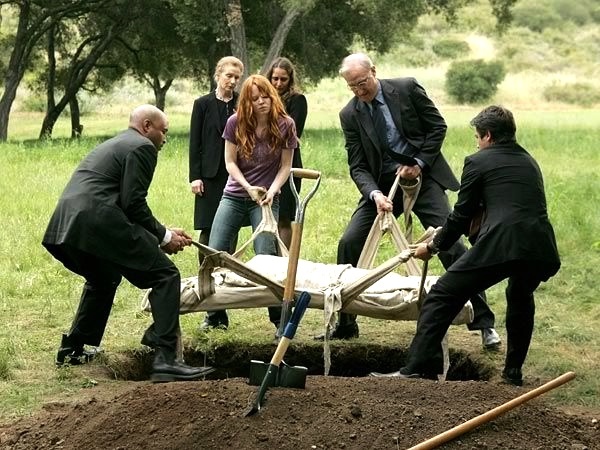
You have to be careful where, exactly, you choose to be buried.
In 2009, James Davis buried his wife in his front yard, with a headstone and everything, explaining that it was her dying wish, to stay home. (How many of us have felt like staying home on occasion?)
The tombstone included Mr. Davis’ name beside his wife’s, and he planned to end up in the yard as well.
But the neighbors complained… and the city took Mr. Davis to court. In spite of the fact that no state or local laws existed prohibiting Mr. Davis from burying his wife in his front yard — which used to be her front yard as well, of course — the Alabama Supreme Court ruled against him, and a work crew used heavy equipment to remove the casket, which was encased in a concrete vault.
His wife’s remains were cremated. The headstone was left in place, so the site looks the same as it did before, but I guess it was important to the neighbors to know that the body was gone.
I’ve not been able to find out if any ‘sprinkling of ashes’ has since occurred.
Thinking more deeply about this issue, there’s one thing we all need to keep in mind. ‘Biodegradable’ is not the same as ‘recyclable’. When I recycle my Amazon boxes, they can be made into new cardboard. If they bury me in a cardboard box, I will certainly biodegrade, but I won’t be coming back.
Hopefully, however, the earthworms will be happy.
Underrated writer Louis Cannon grew up in the vast American West, although his ex-wife, given the slightest opportunity, will deny that he ever grew up at all. You can read more stories on his Substack account.