
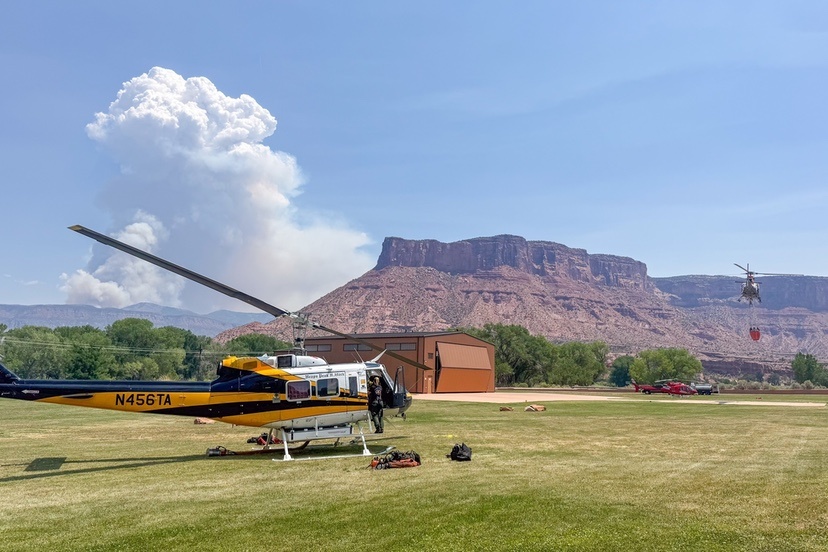
Photo: Firefighting aircraft respond to the Turner Gulch Fire near Gateway on July 15, 2025. (Mesa County Sheriff’s Office)
This story by Newsline staff appeared on Colorado Newsline on August 12, 2025.
Fueled by hot summer weather and persistent drought conditions across the western half of the state, wildfires as of August 8 had burned more than 100,000 acres in Colorado in 2025.
By that time it was already Colorado’s worst fire year since 2020, when multiple historic blazes burned a record-setting 625,357 acres, according to National Interagency Fire Center data.
Drought conditions classified as “severe” or “extreme” extend across the majority of the Western Slope, according to the U.S. Drought Monitor. A critical fire weather advisory for western Colorado and several neighboring states has been issued by the Rocky Mountain Area Coordination Center, a Denver-based branch of the NIFC, and will remain in place through at least mid-August.
“After a dry winter with minimal snowpack fuel moistures are well below normal, and much of the region is under severe to extreme drought,” the agency warns. “Extreme fire behavior marked by rapid spread, torching, and resistance to control is being driven by critically dry … fuels, and drought-stressed brush and trees. As heat intensifies and fuel moistures decline further, fire potential will remain elevated across the area.”
Here is a look at three 2025 Colorado fires:
The Lee Fire, west of the town of Meeker in Rio Blanco County, has burned an estimated 116,860 acres with 6% containment as of August 12. It’s believed to have been caused by lightning on August 2.
The nearby Elk Fire, southeast of Meeker, is also believed to have been caused by lightning on August 2. It has burned an estimated 14,550 as of August 12, and is 30% contained.
The Turner Gulch Fire, east of Gateway near the Colorado-Utah border in Mesa County, is 51% contained and has burned an estimated 28,570 acres since it was started by lightning on July 12.
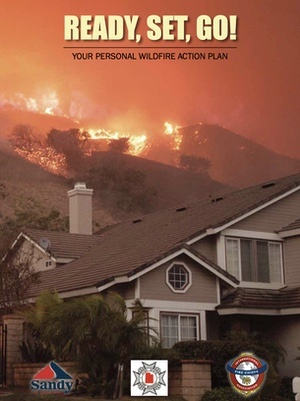
In 2017, the State Forest Service reported that more than 2.9 million Coloradans lived in the “wildland-urban interface” — areas at risk of being impacted by wildfires. Fire safety experts urge residents of such zones to familiarize themselves with the “Ready, Set, Go” system of precautions.
Much of Colorado has grown hotter and drier in recent decades, increasing wildfire risk. The three largest wildfires in Colorado history all occurred in 2020, and the state’s 20 biggest fires on record have all occurred in the past 20 years.
Most wildfires are caused by human activity. To minimize the risk of sparking a fire, authorities urge visitors to national forests and other public lands to follow local fire restrictions, ensure that vehicles are properly maintained and trailer chains are secured, and avoid driving or parking on dry grass.
Colorado Newsline is part of States Newsroom, a nonprofit news network supported by grants and a coalition of donors as a 501c(3) public charity. Colorado Newsline maintains editorial independence. Contact Editor Quentin Young for questions: info@coloradonewsline.com.