
By Lucy McCoy, Undergraduate, LaGrange College, and John A. Tures, Professor of Political Science, LaGrange College
A lot of coverage of “the Big Beautiful Bill,” DOGE,and possibly axing the Education Department has been about wins for one political party and losses for the other. But who will really lose out when the dust settles on education cuts, and potential spending?
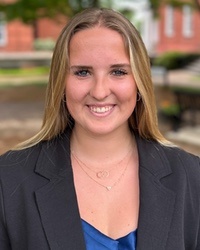
Undergraduate Political Science Major Lucy McCoy from LaGrange College looks at overall Federal spending per state, and LaGrange College Political Science Professor John A. Tures looks at Pell Grant eligibility by state to find the real winners and losers.
As McCoy writes, “Caroline M. Hoxby’s analysis in the National Bureau of Economic Research highlights how American education has struggled with delivering quality outcomes, while ensuring fair access across the nation. While federal funding can be a stabilizing force, questions remain about its long-term effectiveness, unintended consequences, and impact on state autonomy. This review explores the value for federal education spending in the states, at both high school and collegiate levels.
“Proposed in the 2026 budget, the Trump administration seeks to cut about 15% of federal funding overall, leading to a $7 billion decrease for schools K-12. Title I and Special Education programs would be reorganized into separate, single grants, while charter schools would receive a boost of $60 million in funding. Comparing Alabama and Colorado, two states with similar populations, illustrates how federal funding can shape education outcomes. While both states face difficulties with aid, their reactions to funding cuts differ based on various infrastructure and policy discretion.”
McCoy adds, “However, education scores at the high school level are at record lows. Less funding from the Department of Education would, yes, provide less financial support for impoverished students and their families, but would hold school systems accountable for the curriculum they are pushing towards students. Dismantling the Department of Education gives more ‘power’ and leaves more room for decisions in each state and school system.
“Alabama, with a higher proportion of students in low-income districts, relies more heavily on federal support, whereas Colorado, with a stronger tax base, may be better positioned to adapt to funding changes independently.”
Tures writes, “When it comes to Pell Grants, ‘Red State’ students often need the national funding for college just as much as the ‘Blue State’ collegians. Louisiana has the highest percentage of estimated percent of students receiving Pell Grants, at 51%, followed by Georgia, Rhode Island and Delaware, each of whom has more than 40 percent of its students considered ‘Pell Eligible,’ according to data from the American Association of Community Colleges.”

He finds that “states where more than 30 percent of its college student population could use a Pell Grant, include states that voted for Trump, like Oklahoma, Mississippi, Alabama, Florida, South Carolina, North Carolina, Kentucky, Tennessee, West Virginia, and Pennsylvania. That makes 10 of the top 18 states with the most Pell-dependent college students.”
Tures also notes how critical Pell Grants are. “It also seems that the Federal Government has been cutting back on Pell Grants, despite the need for more college students. Research posted by the NAICU finds that 72 percent of jobs in the American economy will require a college degree, up from 68 percent in 2021. Melanie Hanson with the Education Data Initiative found that only 34 percent of students get a Pell Grant as of 2024, down from 40 percent in 2012. Pell Grants crept up from 2018 through 2021, but they’re still down from 2012 funding levels as well, according to Hanson.”
McCoy concludes, “Many people believe that, as a current college student, I should be worried about losing my Pell Grant. The big change for federal aid is in the eligibility requirements to receive Pell. The biggest change is that students who are already receiving a full scholarship or coverage from the state, institution, or privately, will not be eligible for Pell. Someone who really relies on Pell, like me, needs to stay up to date on the news with what is happening on Capitol Hill!
“No matter what you support, staying informed is the best way to form opinions on a high-value issue.”
John A. Tures is a professor of political science at LaGrange College in LaGrange, Georgia. His views are his own. Lucy McCoy is a sophomore at LaGrange College.