
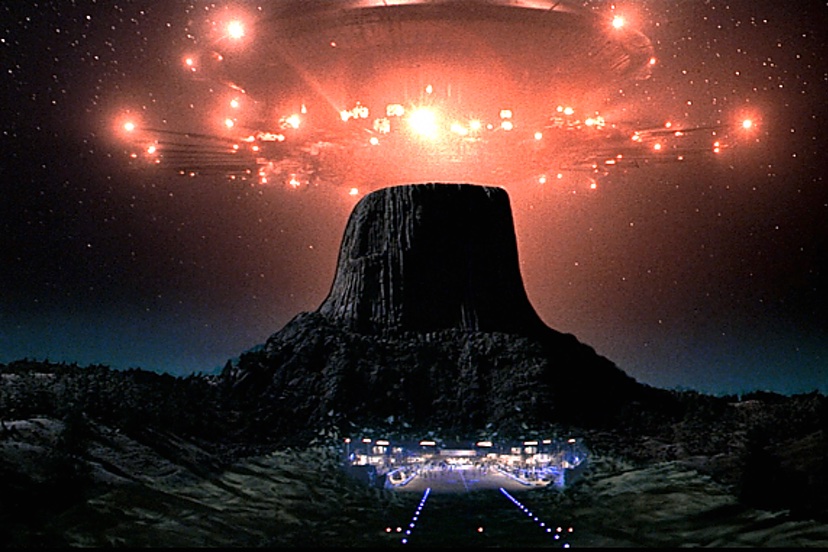
Ever since childhood, I’ve wanted to be abducted by Aliens.
— the first sentence in Neil deGrasse Tyson’s 2026 book, ‘Take Me to Your Leader: Perspectives on Your First Alien Encounter’.
About two-thirds of the way through an entertaining book by noted astrophysicist Neil deGrasse Tyson, the author quotes Leonardo da Vinci.
The greatest deception men suffer is their own opinion.
The quote is especially apt, because the author expresses at least one opinion on every page of the 240-page book.
I doubt, however, that Dr. Tyson thought of his statements as ‘opinions’. Most of us — including most scientists — regularly confuse our opinions with ‘the truth’, which certainly explains how my opinion might be the greatest deception I suffer.
Much of Dr. Tyson’s book deals with the UFO sightings that have taken place all around the world, but maybe never actually happened at all because people mistook clouds and stars and other heavenly objects for flying spaceships.
Dr. Tyson accurately notes that people who spend hours and hours watching the sky — that is, amateur astronomers — rarely if ever mistake the planet Venus for a UFO. In fact, they hardly ever report anything unusual happening in the sky, other than maybe the occasional supernova.
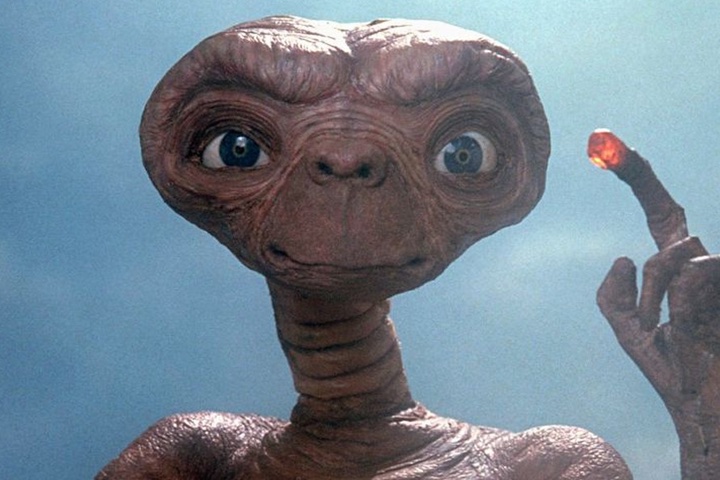
But let’s just say, for argument’s sake, an extraterrestrial species did happen to find Earth worth visiting — Earth, out of all the billions and trillions of possible planets to visit. How would the aliens identify the dominant terrestrial life forms? Might they expect that life form to greatly resemble themselves?.
Because we humans definitely feel that way. We like our aliens to have two arms and two legs, and a head with two eyes and a mouth and a nose (Ears are optional, for some reason. Probably because we’re kind of embarrassed by our ears.)
But if you’re going to base the idea of “dominant life form” on the shear number of beings you come upon, there are about 8 billion human individuals on the planet.
There are approximately 10 quintillion (10,000,000,000,000,000,000) insects in the world. This vast number includes millions of different species, making insects the most diverse group of species on Earth.
Based on those numbers, it seems to me statistically much more likely that any visiting aliens will resemble cockroaches, rather than look like humans. (See the movie, Men in Black, for confirmation of that theory.)
To carry that idea forward, their spaceships will probably be about the size of sardine cans.
We imagine that we know what aliens would look like, but we really have no idea.
Many years ago, I was hiking with friends in the aspen forests that thrive, as best they can, in the foothills of the San Juan Mountains, and in the midst of a magnificent aspen grove we came upon a very unusual object, about four feet tall.
It might have been a plant, but it certainly didn’t look like any plant any of us had ever seen.
We all agreed that it looked far too symmetrical and artificially complex to be a plant. We came to the conclusion that it was obviously either a transmitting device placed in the forest by an alien race… or was itself a member of an alien race, disguising itself as a strange plant.
Did I mention that we had all been smoking marijuana immediately prior to setting out on this hike?
Now years later, thinking back on that experience, it was probably a plant. But what do I know? The universe is full of mysteries. It could very well have been an alien.
Or aliens might in fact be cockroaches, crossing the galaxy in sardine cans.
I have a lot of respect for Dr. Tyson, which is one of the reasons I picked up his book. He’s managed to become something of a celebrity, which doesn’t typically happen to astrophysicists. In fact, one of the asteroids orbiting between Mars and Jupiter has been named after him. Asteroid Tyson 13123. It’s about 7 miles in diameter and orbits the sun about every 3 1/2 years.
Dr. Tyson also has a podcast called ‘StarTalk’ where he chats with various other scientists and experts about stuff that astrophysicists find interesting. In fact, one recent broadcast, with entomologist Jessica Ware, was called, “It’s a Bugs’ World and We’re Just Living in It.”
From the program blurb:
Why have insects been so successful on Earth? They predate dinosaurs by hundreds of millions of years, were the first animals to fly, and have had enough time to fill every ecological niche on the planet…
And enough time to fill my window sill with their little dead bodies.
If any animal could successfully undertake a space flight to Mars and survive on its inhospitable surface, it would be an insect. A cockroach, for example. They outlasted the dinosaurs and they’re sure as hell going to outlast my own species, at the rate things are going.
If aliens want to visit Earth while homo sapiens still exist, they better not dilly dally.
Incidentally, Dr. Tyson has still not been abducted. But hope springs eternal.
Underrated writer Louis Cannon grew up in the vast American West, although his ex-wife, given the slightest opportunity, will deny that he ever grew up at all. You can read more stories on his Substack account.