
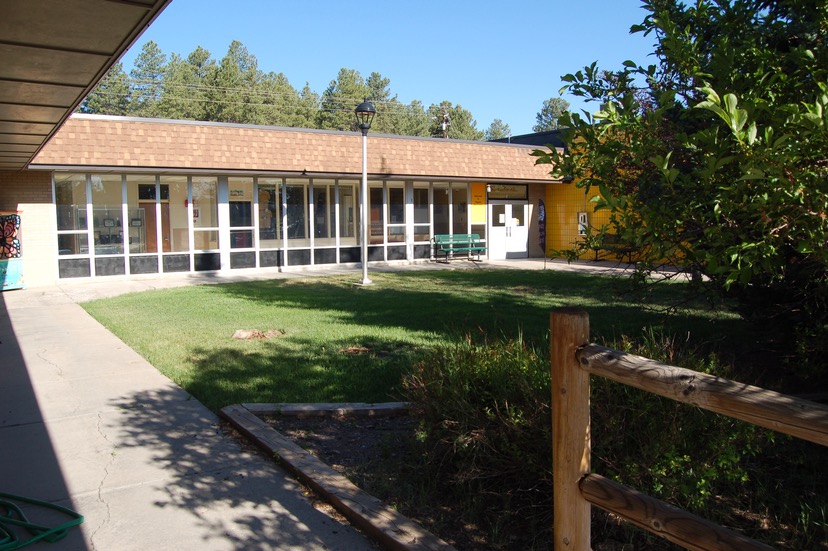
Photo: Entrance to the Pagosa Springs Elementary School.
We’re often ‘shooting in the dark’ — as individuals — when we make decisions. We may have limited access to information, and we have trouble accurately predicting the future. Same goes for businesses, and governments.
So we sometimes ask for help… and advice.
Last summer, the Archuleta School District (ASD) hired the consultants at New Bridge Strategy to survey likely voters, to get an estimate of voter support for a new PreK-8 school facility to replace the existing downtown Elementary and Middle School buildings, infrastructure, and playgrounds.
The report was delivered in July 2025. About 51% of survey respondents said they would likely vote in favor of a bond issue, and 33% said they would definitely vote ‘Yes’. The consultants warned, however, that these result numbers were less than ideal, if a campaign were going to move forward. A more favorable survey would show 55% or 60% voting ‘Yes’.
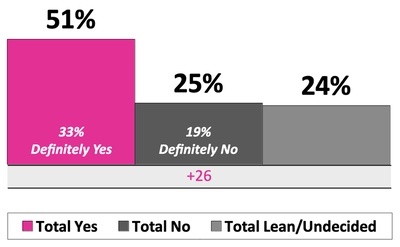
This was last summer. July 2025.
Nevertheless, ASD has continued working towards a bond measure for a new facility, and applied — unsuccessfully — for a Colorado Department of Education BEST grant. School districts often apply repeatedly for help from the BEST program until they eventually get a grant, so ASD’s failure in 2026 does not close off the possibility of a future grant.
The School Board then contracted with New Bridge Strategy to conduct a 2026 voter survey.
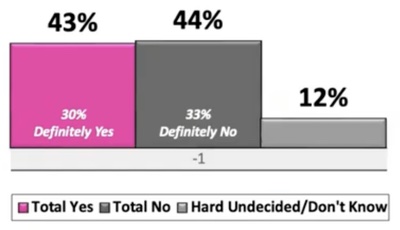
Kathryn Hahne delivered the results of that survey to the School Board on July 22. Voter sentiment seems to have changed significantly during the past year. It would appear that many of the voters who were “Undecided” in 2025 were now showing up in the “No” column.
You can watch the presentation on YouTube.
As mentioned: when we’re shooting in the dark, we may ask for advice from someone who has more experience.
Here are a few comments about election strategy from Ms. Hahne, delivered on July 22. The comments relate to the graph above, showing significantly less voter support for a school bond than was indicated in 2025.
Ms. Hahne noted that the “likely Yes” responses were nearly identical to the “likely No” responses. She then addressed the “Undecided” responses.
“Folks could also tell us that they were undecided, or they leaned one way or the other, or they weren’t sure. We don’t usually count on those voters [to vote ‘Yes’] because more often than not, they tend to vote for the status quo. They tend to vote ‘No’.
“At New Bridge, we’re a little more conservative about those [Undecided] folks, and that’s why they are in their own 12% category there.
“I will say that, right now is a very difficult political environment. Not just in your district, but in fire districts and counties and municipalities and a whole lot of other districts that I do research for.
“When we attempt to pass tax measures for things that are ‘new’ — versus tax measures that would take care of existing buildings or existing infrastructure — we’re not seeing a lot of success across the state, with any type of measure that talks about ‘new construction’ or ‘new roads’ or anything that’s ‘new’.
“If you think about the economic environment right now, you might feel that your wallet is being… pinched? Especially with how gas prices have been. We all know how high gas prices have been this year. And that’s certainly different than what we saw last year.
“As well as the uncertainty related to tariffs and some other economic factors that I think are also at play here. Again, not only in your district, but also in other districts across the state.
“So that’s what I’ll say… about trying to pass a measure that has to do with something ‘new’.”
She also told the School Board that the way a potential future BEST grant is described in the draft ballot language “can be a little confusing”. When voters are confused, they tend to vote ‘No.’
“I think we’ll also lose some votes on that as well.”
Ms. Hahne noted that the negative comments about the possible ballot measure focused mainly on ‘debt’ and ‘property taxes.’
“The concerns about property taxes and debt were overwhelming.”
The presentation was far from upbeat. When School Board President Bob Lynch suggested that the Board now knew more about the campaign challenges and could help focus the ‘Yes’ campaign, Ms. Hahne expressed some healthy skepticism.
“With the information landscape that’s out there right now, it’s very difficult to cut through the noise.” Ms. Hahne noted that the average voter is more likely to get daily (and repeated) information from ‘friends’ on social media platforms than from a school bond-friendly campaign committee.
During a recent conversation with a friend connected to the School District, I agreed with Ms. Hahne that 2026 is not the right time to ask the voters for a $127 million property tax increase, and I repeated (again) my belief that our community would support a smaller Mill Levy Override increase aimed at repairing our existing facilities.
“But if we don’t build the new school now, when will we ever build it?” my friend asked. “It’s only getting more expensive with every passing year.”
I agreed with my friend, that it’s very possible we will never see new school buildings in our lifetimes. Pagosa Springs might still be using our current school buildings in 100 years. The Middle School 5-6 building is already 102 years old… and is still providing an effective learning environment, to judge from recent state test scores.
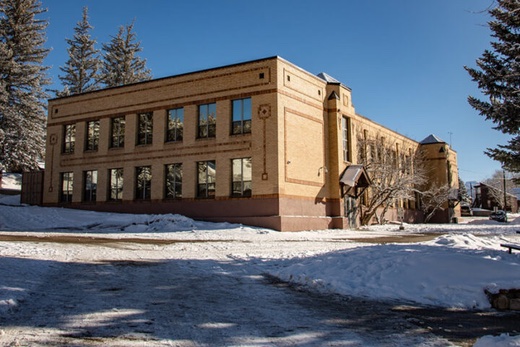
If we’re interested in historical buildings…
…some of the buildings still in use at one of the world’s premier universities — the University of Cambridge in Cambridge, England — date back more than 600 years.
Here, for example, is Emmanuel College, a constituent college of the University of Cambridge. Built in 1584.
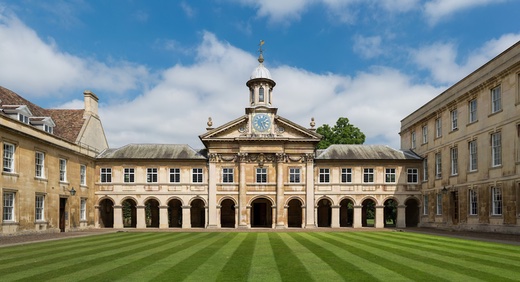
We can presume that this building has seen useful upgrades since 1584? The addition of plumbing, heating, electricity, technology?
American governments sometimes view older buildings as something worthy only of demolition, and total replacement. At taxpayer expense.
But as Ms. Hahne noted, Colorado voters are not buying that story, these days. Colorado voters, across the state, want our governments to repair and upgrade existing facilities.
Apparently, the ASD School Board did not want to listen to her rather clear advice, because they seem to be ignoring it.
You can watch the presentation on YouTube.
The School Board has not yet voted on the language for the November ballot. They could still make a sensible decision. But all indications are that they will push ahead with a proposed $127 million property tax increase measure on the November ballot.
Bill Hudson began sharing his opinions in the Pagosa Daily Post in 2004 and can't seem to break the habit. He claims that, in Pagosa Springs, opinions are like pickup trucks: everybody has one.