
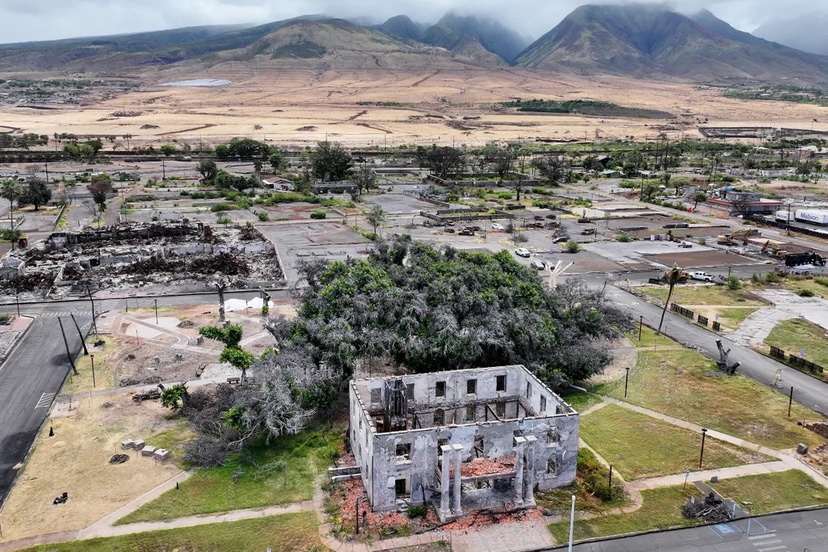
Photo: Downed power lines sparked a wildfire that destroyed much of the town of Lahaina on the island of Maui.
La Plata Electric Association sent out a press release last month, that stated, in part:
As southwest Colorado heads into what forecasters expect to be a high-risk fire season, La Plata Electric Association (LPEA) is implementing a coordinated set of operational, technological and community-focused strategies to reduce wildfire risk while continuing to provide safe and reliable electric service to its member-owners.
“As your co-op, we’re focused on how we can reduce fire risk every single day in our operations,” said LPEA CEO Chris Hansen. “We need each homeowner, business and every member in our co-op to take the risk seriously and work to mitigate their own properties.”
One of those “operational, technological and community-focused strategies” — namely, a somewhat controversial strategy known as Public Safety Power Shutoffs or PSPS — was a subject of conversation at a joint work session of the Pagosa Springs Town Council and the Archuleta Board of County Commissioners on April 27.
The joint session began with a presentation by County Sheriff Mike Le Roux, who stated, “Everything we’re seeing is looking like it will be an exceptionally active fire season.” When asked if his office would consider implementing Stage 3 Fire Restrictions in the near future, he replied, “We don’t want to be too restrictive on that… hopefully, we don’t have to go into Stage 3 at all, where we have to shut the forest down.”
This comment reflects the juggling act faced by mountain resort towns all across the American West. These communities depend heavily on the tourism industry, so on the one hand, they want to encourage visitors, and would prefer not to talk too openly about wildfire danger.
On the other hand, one careless tourist, tossing a lighted cigarette in the wrong place, can cause a catastrophic fire during a hot, dry summer — such as the one we seem to be expecting. The 2023 Plumtaw Fire north of downtown Pagosa Springs, for example, was not the result of a lightning strike (a typical cause of wildfire) or a prescribed burn gone wrong (as sometimes happens). Perhaps a careless visitor? No one knows.
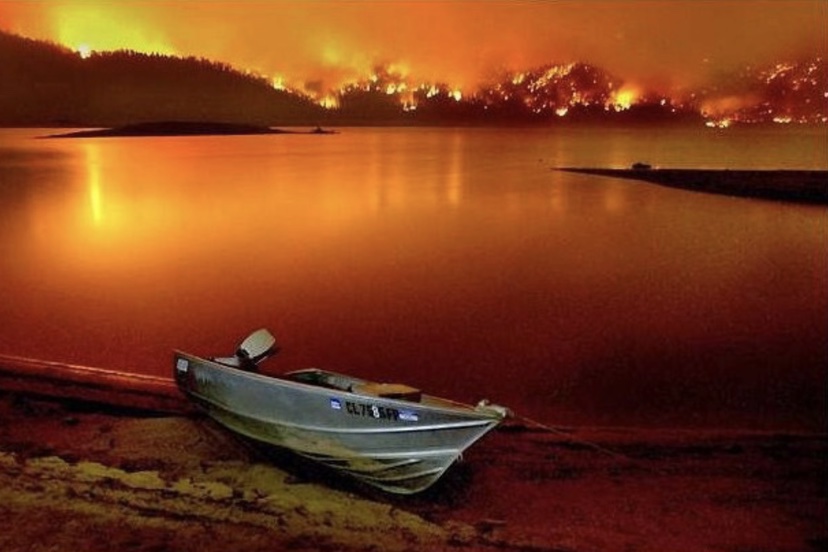
Missionary Ridge lies at the southern edge of the San Juan Mountains overlooking the city of Durango to the southwest. A county road snakes up the ridge from the highway, and on the hot afternoon of June 9, 2002, a spark landed beside one of its switchbacks and lit the Missionary Ridge Fire.
The source of the spark remains unknown.
Fifty firefighters immediately responded to the blaze, but windy conditions caused erratic fire growth and thwarted early attempts to control it. By the end of the first day, the flames had spread to 6,500 acres. Crews focused on evacuating hikers, bikers, and backpackers who were in danger of being trapped by the unpredictable fire.
Following the presentation by Sheriff Le Roux, Jerry Sutherlin, LPEA’s vice president of distribution operations, shared more unsettling news.
The subject was LPEA’s new Public Safety Power Shutoff policy, an operational tactic “that is coming this fire season.” He told the gathered government leaders that “LPEA has the right to de-energize power at any time for public safety reasons….” and one of those reasons is red-flag weather conditions — in particular, the expectation of high winds. High winds not only drive a wildfire faster than it can be controlled, but also supply the fire with a steady supply of fresh oxygen.
Mr. Sutherlin said that when LPEA sees predicted red-flag conditions on the horizon, it will start planning days out for shutting down power in high-risk areas and “plan for getting the power back on as soon as possible.”
“The last thing we want to do is start a fire,” he noted. LPEA manages about 2,000 miles of overhead electric lines across five counties, and a tree falling on one of those power lines during a high wind event may be “the biggest fire risk” facing the community. He claimed that LPEA’s “state-of-the-art” forecasting models can predict high-risk events with “near certainty.”
And occasional catastrophic fires caused by power lines can also be classified as a near certainty.
The Eaton Fire in Los Angeles, in 2025, was allegedly caused by faulty and poorly-maintained power lines. Residents of a home abutting Eaton Canyon, who were among the first people to report the fire to authorities, told Pasadena Now that the fire began in proximity to electrical transmission towers above the canyon. Residents affected by the fire later sued public utility Southern California Edison, alleging that eyewitnesses had observed faulty power lines and that the company failed to de-energize transmission lines despite a red flag warning issued by the National Weather Service.
It has been reported that the power lines suspected to have caused the fire were overdue for repair.
In September 2025, the U.S. Department of Justice sued Southern California Edison for costs of containment and land restoration, claiming that the public utility company was at fault for the fire.
Nearly 1,000 lawsuits against Southern California Edison over the Eaton Fire returned to Los Angeles Superior Court last week as Judge Laura A. Seigle managed pretrial proceedings ahead of a scheduled January 2027 trial. The mill wheel of justice turns slow, but it grinds fine.
Also in California, the 2018 Camp Fire was ignited by a PG&E electric line; 153,000 acres burned, 85 fatalities, 18,800 structures destroyed.
The 2021 Dixie Fire, also in California, caused by a tree falling on PG&E electric lines. One Firefighter fatality, 963,300 acres burned, 1,329 buildings destroyed.
The 2023 Lahaina Fire in Maui. 102 fatalities, 2,170 buildings destroyed. Cause: broken power lines.
That’s just a sampling of major fires cause by electric utility failures and accidents. More examples can be found here.
We were told that LPEA would work diligently to notify customers in advance, to allow folks to prepare for the strategic power shutdowns, which — Mr. Sutherlin suggested — might occur once or twice a year?
Folks with medical equipment that depends on electric power may wish to invest in a portable generator. That advice comes from me, not necessarily from LPEA, but they do have suggestions on their website.
LPEA is encouraging all members to take two simple steps before fire season gets underway:
Sign up for alerts. Members can be notified of outages and conditions affecting their area.
Confirm contact information is up to date. Accurate phone numbers and email addresses allow LPEA to reach members quickly and effectively.