
At the April 13 ‘Interactive Community Forum’ hosted by Archuleta County Commissioner Warren Brown, the discussion topics included a potential increase in the County Lodging Tax which is paid by tourists and travelers staying in motels and vacation rentals located outside the Town limits. Such a proposed increase might be on the November ballot, since tax increases in Colorado require voter approval. No definite decision has yet been made to place this measure on the ballot. Other issues were also discussed, including amendments to the County’s comprehensive plan and the adoption of new building codes.
Commissioner Brown opened the meeting with some dreamy words about government funding:
“We want to ultimately talk about, and get ideas on, is how we serve our locals, and our visitors, better…
“In my opinion, the government should not be about ‘making money’. We don’t generate revenue. What the government has, in the way of money, is what we the taxpayers choose to allow it to have.
“So, what do we do, when we don’t have enough money to accommodate the demands on County government? Or any government, for that matter? We have to increase our revenue somewhere… and how do we go about that? Because we can say one thing or another would be nice, but at the end of the day, it comes back to funding.
“And if we don’t have the funding, then we can’t complete the tasks at hand…”
I refer to the above words as “dreamy” because, in reality, “we the taxpayers” rarely have an opportunity to choose how much money we contribute to government. For example, governments can, and regularly do, increase the fees charged for various government services. 30 years ago, for instance, I was paying $8 a month for sewer service through the Pagosa Springs Sanitation General Improvement District (PSSGID). Although my neighbors and I were never consulted or given a choice, our monthly fee is now $71.
Last November, the Town Council asked its municipal voters to approve a 1% sales tax to address the failing PSSGID sewer system. We were informed that, if we rejected the sales tax, our monthly sewer bill might be increased to $200 or more — without our permission. The sales tax passed by a wide margin, as one might expect. But most of the people paying the tax — the majority of community residents who live outside the town limits, and visitors to Pagosa — never had a chance to vote on the measure.
Regarding the Archuleta County government and the demands placed on it… perhaps those demands have been increasing rather dramatically?
15 years ago, the County government was spending about $28 million a year from property taxes, sales taxes, fees, and various other revenue sources. Last year, the County government spent about $52 million. “We the taxpayers” did not approve this nearly 100% increase in government spending, although we did indeed elect the commissioners, like Warren Brown, who spent the money.
Like I said… “dreamy.”
Does anyone feel like the County government is providing twice the level of service they provided 15 years ago? Because they spent nearly twice as much, last year.
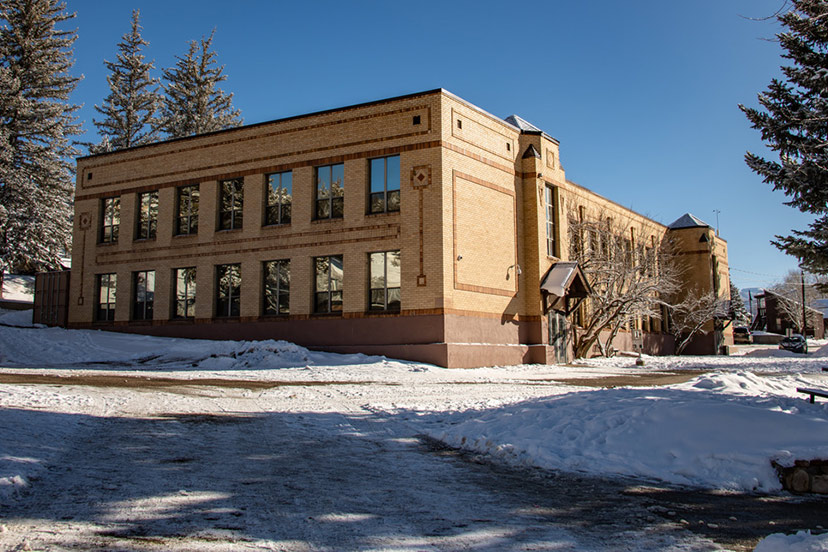
Archuleta School District is currently planning to ask the voters, this coming November, to increase our property taxes to allow the District to abandon two functional school buildings downtown and build a new $125.7 million PreK-8 facility on Vista Boulevard, west of town. The scheme doesn’t currently include definite plans for what happens to the abandoned buildings. Maybe that’s not important?
As discussed earlier in this editorial series, a final decision about how the tax increase ballot measure is structured, depends on the results of decisions in Denver about BEST (“Building Excellent Schools Today”) grant funding. The highly competitive grant awards will be announced in mid-May. If ASD is among the grant finalists, they will need to get voter approval for a $75.4 million bond to match the state award. But the bond measure on the ballot will reportedly also include money for repairs and upgrades to other ASD facilities, including funding for Pagosa Peak Open School, the District’s authorized public charter school located uptown near Walmart.
Because ASD will need to include interest payments on the bonds, the ballot language must state the total repayment cost to be shouldered by local property owners, which might be in the $150 million price range.
Some might wonder if Archuleta County voters are ready to create a new $150 million debt for ourselves for a brand new school facility, when Colorado schools in general are seeing a noticeable decline in enrollment.
If a BEST grant is not awarded to ASD, the total cost to local taxpayers for a new $125.7 million facility would be in the $250 million price range.
Last week, MSN.com shared a story by journalist Rachael Krause, “Boulder Valley Schools weighs consolidation, closures as enrollment declines continue”, reflecting the demographic turmoil in our Colorado public schools:
As fewer students fill Colorado schools, districts around the state are making tough decisions to tighten belts and in some cases, close or consolidate schools. Monday night, parents and educators from the Boulder Valley School District came together for the first of six community meetings to talk about how to make those choices.
People packed inside New Vista High School in Boulder Monday to hear about the state of declining enrollment and what needs to happen to tackle the problem.
“Show of hands if you don’t have an idea on what we should do,” said Boulder Valley Schools Superintendent Dr. Rob Anderson.
Boulder Valley schools say they’ve lost 3,600 students over the past 10 years and are projected to drop another 1,700 in the next five. They’re focusing closure and restructuring plans in Boulder, Louisville-Superior and Broomfield elementary schools because that’s where they’re seeing the biggest declines.
According to the Boulder Valley district website, BVSD had 30,863 students enrolled in May 2019. By May 2025, enrollment had dropped to 27,072.
As mentioned previously, Colorado public schools are funded according to a formula approved by the Colorado General Assembly, based on “per pupil” enrollment. Last year, the Per Pupil Revenue (PPR) was about $12,400 per enrolled student. A loss of 3,600 students in Boulder Valley translates to a $43 million drop in revenue.
Archuleta School District had 1,742 students enrolled in 2019. This year, the district enrollment is 1,583 (according to the Colorado Department of Education). At the current PPR rate, that suggests a drop in ASD funding of about $2 million per year. We don’t yet know what the PPR rate will be for next school year.
In the current climate of declining enrollment and rising prices, is it likely that Archuleta County voters choose to increase their property taxes by $150 million for a new school facility? (That figure includes the interest payments on an $80 million loan funded by bonds sold to investors.)
How about a different plan that the community can actually afford?
One of our Daily Post readers sent a Letter to the Editor yesterday, and we’re sharing it this morning. He asks if the School Board has a “Plan B”, if the community rejects a future bond issue on the November ballot.
I have suggested just such a different plan to several of our School Board members, when I met with them over coffee last year… and when I spoke at School Board meetings and MPAC meetings.
I currently serve on the Pagosa Peak Open School board of directors, and the PPOS building could benefit from a successful tax increase for ASD facility repairs and upgrades. So I have a vested interest in a successful November election.
Instead of abandoning three downtown school buildings — all in need of repairs and upgrades — ASD could go to the polls asking for a modest increase to their annual Mill Levy Override (MLO), and spend the increase on upgrading our existing buildings, all of which are still quite functional and blessed with new roofs and new security infrastructure.
For example, the ask could be to increase the MLO from $1.7 million a year to, say, $3.7 million a year. Then we could fix what we already own. (As PPOS is hoping to do.) And we could save the taxpayers $100 million over the next 25 years. And we would keep the schools downtown — something supported by nearly all of the public testimony at School Board meetings over the past six months.
Also, the community would not be paying millions of dollars to bond investors. The money would be available on a yearly basis for many years into the future, to keep our schools in good shape.
None of the current School Board members gave me any indication that they’d consider this more frugal approach.
But it’s not too late for them to change their minds…