

According to journalist Maggie Penman, if you’re not familiar with the term ‘brain rot’, then you probably don’t have it.
Unfortunately, I know the term quite well. That’s the main job of a journalist; to know things. I even know that ‘brain rot’ was chosen as the Oxford Word of the Year for 2024.
But I assume Ms. Penman didn’t mean to imply, “if you know the term, then you definitely have it.”
There’s just a strong possibility that you have it.
As a noun, “brain rot” can refer to a couple of different but related things. It can refer to an unpleasant and ultimately regrettable mental condition that develops from consuming low-quality online content, and it can also refer to the low-quality content itself, sometimes written as one word, “brainrot”.
All the content I personally create gets shared online, but just to be clear, we’re talking here about “low-quality” online content. Mainly, social media content created by people who also may be suffering from brain rot. Stuff on Tik Tok, YouTube Shorts, Instagram, etc. Essentially, meaningless ‘entertainment’ that produces a feeling of having done something, when we’ve actually done nothing at all.
We are not talking about carefully written online humor articles. Just to be clear.
Typically, brain-rotting activities take place on a person’s phone. (Not on my phone, however. I have a old flip phone. Who can afford these fancy smartphones? Not your typical underpaid journalist.)
When I was a kid, my parents used to throw occasional cocktail parties in our home, and invite maybe a dozen friends. My sisters and I would sneak down and sit in the stairway, listening to the various adult conversations, which became less and less coherent as the cocktails were poured and the evening wore on. So I know for a fact that “brain rot” is not an entirely new phenomenon.
But these days, you don’t need cocktails or a roomful of people. You can rot your brain pretty much any time and any place, most likely when there’s no one else around to see you doing it. Probably, at night, alone in your bedroom. (If you’re married, then maybe, alone at night in the bathroom.)
The term actually dates back to at least 1854, when Henry David Thoreau, writing in his book Walden, compared the human attraction to trivial entertainments and ideas to the then-current European potato blight.
While England endeavors to cure the potato-rot, will not any endeavor to cure the brain-rot, which prevails so much more widely and fatally?
Now, so many years later, scientists and psychologists have expressed concerns about ‘brain rot’, partly because it leads people to ignore the published opinions of scientists and psychologists, in favor of watching people fall face-first in mud puddles.
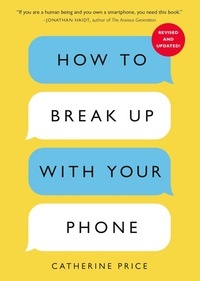 Science writer and researcher Catherine Price wrote a book in 2018 titled, How to Break Up with Your Phone, which I understand includes information about brain rot and how to avoid it.
In the likely event that we’re avoiding books about how our phones are rotting our brains, Ms. Price also made an appearance on the TED stage, giving a 12-minute lecture titled “Why Having Fun Is the Secret to a Healthier Life”. The lecture makes oblique references to unhealthy phone use, but doesn’t make a direct mention of brain rot. It’s about “fun” and “secrets” and “a healthier life”… all rolled into one concise lecture.
If I’m being perfectly honest — something that happens occasionally — Ms. Price’s TED lecture isn’t terribly fun to watch, even though it’s about “having fun”. Maybe she was having fun, delivering it? Or maybe not. You can judge that for yourself.
But it strikes me that “having fun… especially with other people” might be a cure for brain rot. That may have been Ms. Price’s unspoken goal in talking about the secret to a happier life. (No longer a secret, however, after you have watched her TED lecture).
She hoped to influence us to share the experience of “true fun” with real people, for our mental and physical health.
No doubt the lecture would have been more fun if I’d watched it with a group of people, and if we all laughed and made fun of the lecture. But not making fun in a spiteful way. Just in a fun way.
All the friends with whom I could have conceivably watched the YouTube video, however, were scrolling Tik Tok videos.
Of course, “rotting” per se is not a totally negative process. In fact, it’s crucial to life on earth. The breaking down of biological materials into constituent elements — generally handled by bacteria, molds, and fungi — is an essential aspect of the Cycle of Life. If nothing “rotted”, our soils couldn’t produce food. Forests wouldn’t exist. The oceans would be devoid of life.
With that in mind, certain thoughtful people — such as myself — have been led to wonder if ‘brain rot’ might actually be a good thing. But this is not a popular perspective.
Underrated writer Louis Cannon grew up in the vast American West, although his ex-wife, given the slightest opportunity, will deny that he ever grew up at all. You can read more stories on his Substack account.