
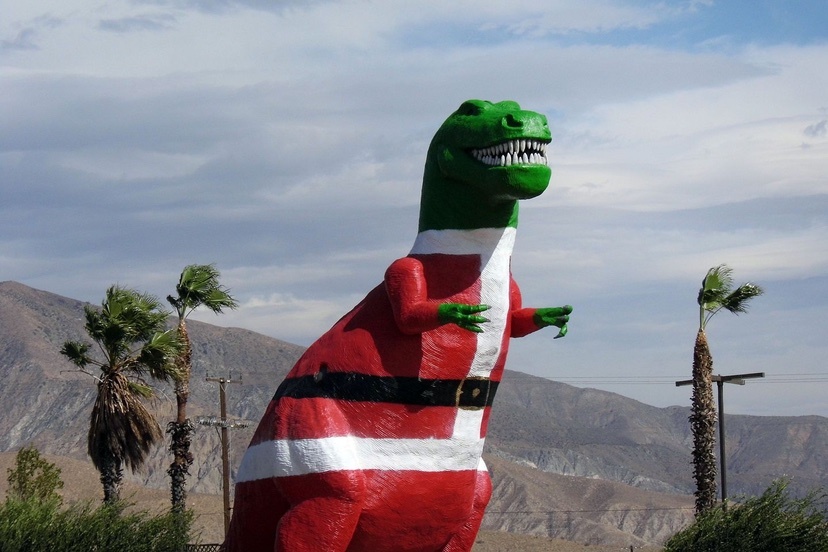
In the farthest Northwest corner of Colorado, sitting quietly beneath the looming Blue Mountain Range, amid golden fields, cattle ranches and sweeping vistas, you will find Dinosaur, Colorado, home to just 339 residents. Here, one can close their eyes and easily imagine the prehistoric titans of long ago roaming the largely unchanged landscape, beneath a uniquely western sky…
— from the Dinosaur, Colorado website
As a five-year-old, I definitely knew more about dinosaurs than I knew about my own blood relatives. My parents had relatively little social contact with most of my aunts and uncles — for political reasons — so I became familiar with only a few of my numerous cousins. All I knew about most of my relatives was that they regularly voted for the wrong candidates.
But I knew quite a lot about dinosaurs. No political disagreements there. Although I did develop sympathetic attachments to the herbivorous species — Brontosaurs, Triceratops, Stegasaurs, etc. — who were constantly threatened and oppressed by the carnivores like Allosaurus and Tyrannosaurus.
During my childhood, paleontologists were debating whether large carnivores like Allosaurus had cooperative social behavior and hunted in packs. But I generally steered clear of those political debates. I’d learned my lesson at Thanksgiving dinners.
My parents supported my non-political interest is dinosaurs with regular trips to the library and occasional gifts of books and miniature toy figurines — typically, gray or green plastic. The toy companies apparently believed that dinosaurs were large lizards and were, therefore, the color of modern-day lizards.
Nowadays, that shared consensus has broken down somewhat. Dinosaurs can now be various colors, and that has made life more interesting, I think.
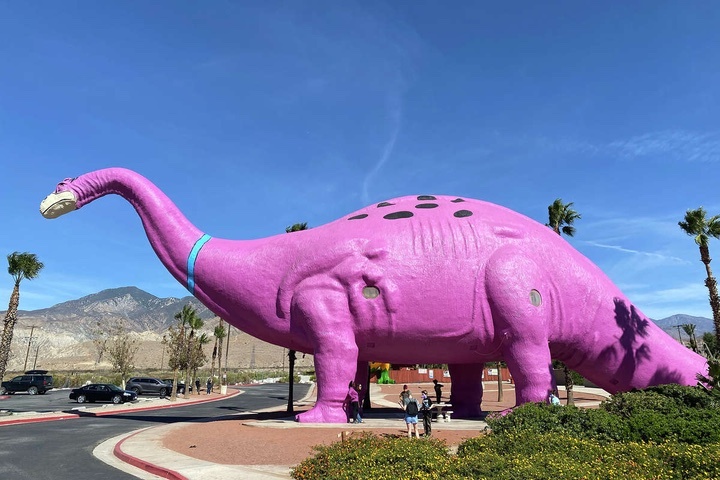
Colorado was home to some of the best known dinosaurs, back before it was called Colorado. More like, 150 million years before it was called Colorado.
Not only have the dinosaurs disappeared, so have the lush tropical prehistoric forests, and nearly all of the water. But large dinosaur statues have appeared all across the Great American West, to celebrate the fact that saurian fossils are relatively easy to find here, compared with, say, in downtown New York City. We don’t know why dinosaurs intentionally avoided living (and dying) on the East Coast, but I have my suspicions.
Two years after I was born (also in the Great American West) the little town of Artesia, Colorado officially changed its name to Dinosaur, Colorado, due in part to its proximity to Dinosaur National Monument.
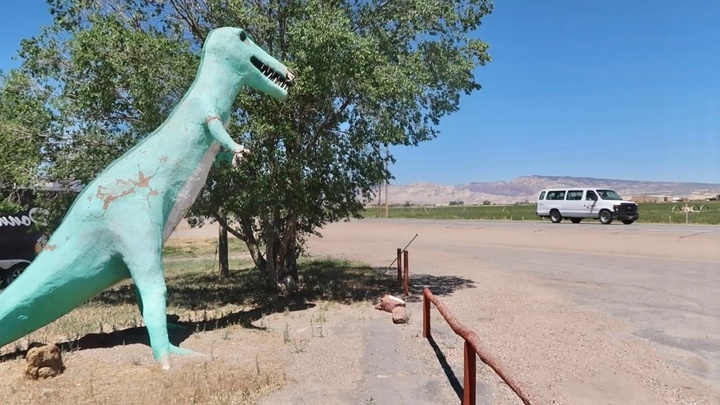
The town had been platted in the 1940s to serve oil companies drilling in the neighborhood, and has been home to about 300 residents ever since. Not necessarily the same residents, but the roughly the same number.
Once I had learned what I could about dinosaurs from library books and Hollywood movies, I started telling my parents that I wanted to grow up to be a paleontologist, and spend my life wearing a safari hat and digging up fossils. Preferably, very large fossils.
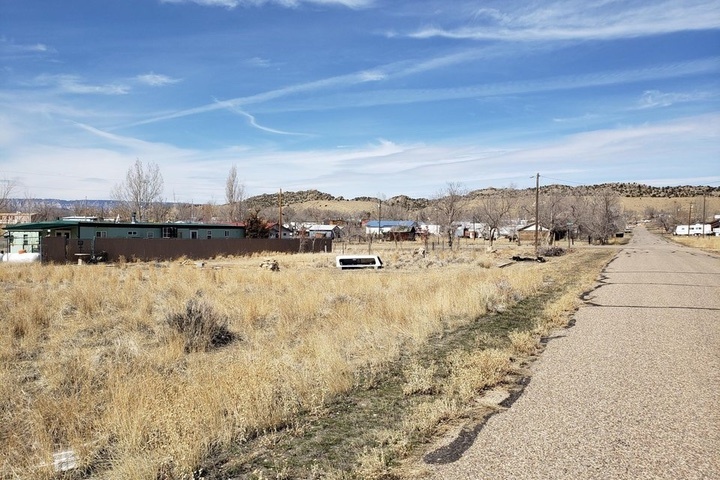
I’d done my research, and understood that I would probably end up living in a place like Dinosaur, Colorado. What I had not yet grasped was the likelihood that I would spend my life as a sunburned bachelor, due to the dearth of romantic possibilities in such a God-forsaken place.
Nor did I fully understand that extracting a single fossil leg bone from solid rock entails weeks of meticulous backbreaking work with a dental pick.
Somewhere along the way — thankfully — I lost interest in becoming a paleontologist, and also, in living in a place like Dinosaur, Colorado. I hardly think my cat, Roscoe, would have liked it there.
But I would still like to visit Dinosaur National Monument someday. I understand the monument covers 210,000 acres and straddles both Utah and Colorado. Most visitors head for the western side of the monument, located near Jensen, Utah, where the “wall of bones” is a prime tourist attraction, mostly for adult men who never really gave up the dream.
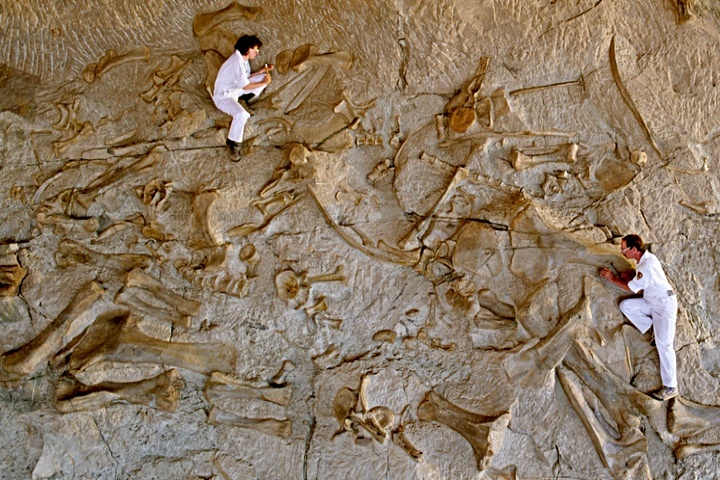
The Town of Dinosaur’s website informs us that, despite the fact that one of the entrances to Dinosaur National Monument is just a couple of miles away, “…make no bones about it… there are NO dinosaur bones located on the Colorado side of the Monument.” All the fossils are found in Utah.
For some reason, the federal government created a massive national monument dedicated to fossils, but two-thirds of the monument has zero fossils.
Nevertheless, the Town of Dinosaur’s website states:
Here, one can close their eyes and easily imagine the prehistoric titans of long ago roaming the largely unchanged landscape, beneath a uniquely western sky…
This is ridiculous, of course. If the landscape, 150 million years ago, looked like it does today — dry, barren and depressing — no self-respecting dinosaur would be found dead there.
And in fact, no dinosaurs are found dead there. All the dead dinosaurs are found in Utah.
Presumably, they were Mormons.
Underrated writer Louis Cannon grew up in the vast American West, although his ex-wife, given the slightest opportunity, will deny that he ever grew up at all. You can read more stories on his Substack account.