
Somewhere, at some point in time, someone coined a clever phrase:
“It’s a nice place to visit, but I wouldn’t want to live there.”
I’ve been unable to discover who, or when, or where this familiar phrase originated. I have a feeling the speaker was originally talking about New York City, but for all I know, it might be a translated quote from an ancient Greek or Roman philosopher. (Back when philosophy was a popular career.)
At any rate, it seems to apply… slightly paraphrased… to Pagosa Springs.
“It’s a nice place to visit, but I couldn’t afford to live there.”
We concluded Part One of this editorial series with a comment by Archuleta County Planning Manager Melissa Ryan during a meeting of the County Planning Commission.
“So, we need to do something about this.”
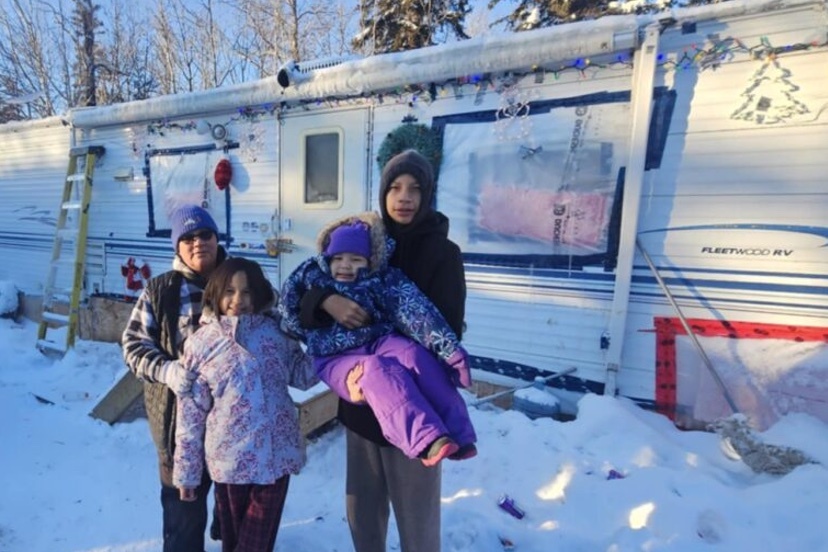
The “this”, about which something needs to be done, is the housing crisis in Archuleta County — and in particular, an expired resolution by the Board of County Commissioners that once allowed residents to live in RVs — recreational vehicles — for an indefinite period of time.
Back in October 2021, our then-Community Development Director Pamela Flowers proposed a change to a particular County land use policy. According to the County’s then-current Land Use Regulations, a person or family could apply for a ‘temporary use permit’ allowing them to live in an RV for up to 120 days, so long as the RV met certain safety and sanitation requirements. After 120 days, the residents were no longer permitted to continue living in the RV, and could not reapply for a permit.
During the discussion at a 2021 work session, Ms. Flowers revealed that there were approximately 300 RVs in the Aspen Springs subdivision, that appear to be year-round residences. So maybe 500 residents, living illegally in that one subdivision? This number did not include people living in RVs — illegally — in other areas of Archuleta County.
A number equal to almost ten percent of our workforce?
Here is Ms. Flowers, explaining the situation in 2021:
“So it’s been proposed, and it’s been on my mind as well, some sort of change related to occupancy of RVs. Every time we post a notice at someone’s place, at an RV, and we say, ‘You need to get a permit, and then you have 120 days, and then I don’t know what you’re going to do…’
“In this current environment, that just feels… wrong.
“So I was glad when you called me and said, let’s talk about this. So [my staff] did a little work… collected some photos, so we could show you what’s going on in the county now. And then make some suggestions about how we can do this, going forward. So obviously, the desired outcome here is… to not make things worse by expelling people from the place they are living. To provide some sort of housing opinions for the workforce, and also to buy some time until all these projects that are being discussed around the county and the town for low-income housing, have had a chance to come to fruition and provide opportunities for folks.”
“All these projects” referred to some planned housing projects in 2021. The 34-unit Rose Mountain Townhomes for low-income families. The conversion of the Pagosa Springs Inn & Suites into a 98-unit apartment building. Other planned housing projects, stretching out into the future.
The implication being that Archuleta County would, someday, have enough affordably-priced housing to allow the 300 families in Aspen Springs to move out of their RVs and into more suitable, “normal” dwelling units.
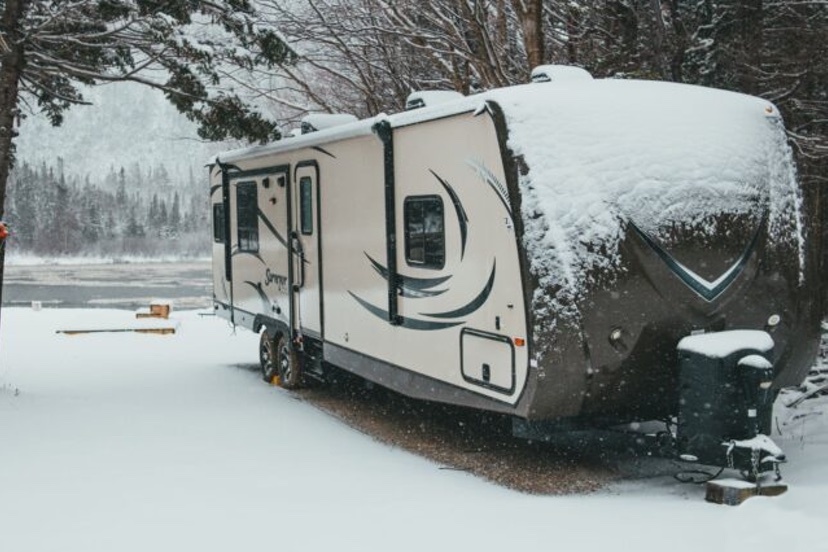
The main concerns, as Ms. Flowers went through her presentation, seemed to be safety, sanitation, and density. In most County zoning districts outside the Pagosa Springs core residential areas, a property smaller than 3 acres is allowed only one dwelling unit, and properties larger than 3 acres are allowed only 2 dwelling units.
Within downtown Pagosa, meanwhile, one of the residential districts allows up to 22 units per acre — which is equivalent to 66 units on a 3-acre parcel. But the County government allows only one dwelling unit per 3 acres.
As scenic as Pagosa Springs might be, the photos shared by Ms. Flowers were not all pretty pictures. Some showed various types of vehicles — converted school buses, truck campers, fifth wheels, travel trailers… sometimes in small groups in a meadow, like small ad hoc RV parks… sometimes tucked away in the woods… some in good condition, some in terrible condition.
Fast forward to 2026.
Today, January 19, has been designated by Congress as a day to celebrate the life of noted Christian leader, Dr. Martin Luther King Jr. Prior to his assassination in 1968, Dr. King had made ‘access to housing’ a key component of the Southern Christian Leadership Conference’s ongoing campaign for civil rights. The Vietnam War had also emerged as a focal point in the fight for fair housing. Black and Latino men made up a disproportionate number of casualties during that war… yet, the families of these slain soldiers could not rent or buy homes in certain American neighborhoods.
A variety of groups, including the NAACP, the National Association of Real Estate Brokers, the GI Forum, and the National Committee Against Discrimination in Housing had worked to get the U.S. Senate to pass the Fair Housing Act, but without success.
Dr. King was assassinated on April 4, 1968, and President Lyndon Johnson immediately urged Congress to pass the Fair Housing Act to honor Dr. King’s legacy. After years of the legislation lying dormant, Congress passed the act and President Lyndon Johnson signed it into law on April 11, 1968.
Johnson’s successor in the White House, Richard Nixon, appointed the officials responsible for overseeing the Fair Housing Act.
Here in Pagosa Springs in 2026, housing discrimination based on race or ethnicity is not viewed by community leaders as a major concern. The larger concern is the cost of housing, which includes home prices, rental rates, insurance costs, rising property taxes, rising utility rates, and lack of supply in certain price ranges.
In last week’s Real Estate column here in the Daily Post, realtor Lee Riley wrote:
So, what are my predictions for 2026? I expect the real estate market to pick up this coming year. Mortgage rates are down about one percent from last year at this time. A 30-year fixed-rate mortgage is currently at 6.01% and a 15-year is at 5.55%. If you are purchasing what I consider a “middle of the road” Pagosa Springs home, the price will be somewhere around $600,000. With a 20% down payment, you are left with a mortgage of $480,000…
I expect real estate prices to stay flat or increase just slightly. Homes priced below $750,000 are in the greatest demand…
According to Zillow.com, in order to afford a $600,000 home — assuming you have $120,000 as a down payment — your annual household income needs to be at least $135,000.
The income for a typical working household in Pagosa Springs amounts to about half that amount.
Our local governments have spent over $10 million in public funds subsidizing the tourism industry over the past decade. This does not include the additional millions spent by the tourism industry and the Pagosa real estate industry, promoting Archuleta County as a wonderful place — a “Refreshingly Authentic” place — to visit, and perhaps to invest in a vacation rental property.
One of the most popular Pagosa websites is “VisitPagosaSprings.com”… (slightly more popular than PagosaDailyPost.com, according to the ranking site Alexa.com)… where, in 2021, I found the following image on the home page:

As we remember, 2021 marked the second year of the COVID crisis.
The VisitPagosaSprings.com website is funded with tax revenues, as part of the tourism marketing budget overseen by the Pagosa Springs Area Tourism Board. I found it amusing — or maybe disturbing — to see a couple of beer glasses being toasted, underlined with the message: “Returning to normal. Events are hitting the calendar.”
Not being a tourist myself, I shuttered at the thought that we are “returning” to the way this community had been operating for the previous decade. Yes, it was certainly “normal” that working families were living in (run-down? unsuitable?) RVs, because they couldn’t find any other affordable housing options in Archuleta County.
Did we really want things to return to “normal”, I asked myself. (My answer to myself was, of course, “No.”)
We’re in a strange situation. The tourists are living in our residential homes, which have been converted into Short-Term Rentals. And our full-time residents are living in RVs.
Does that strike anyone as… like… backwards?
Bill Hudson began sharing his opinions in the Pagosa Daily Post in 2004 and can't seem to break the habit. He claims that, in Pagosa Springs, opinions are like pickup trucks: everybody has one.