
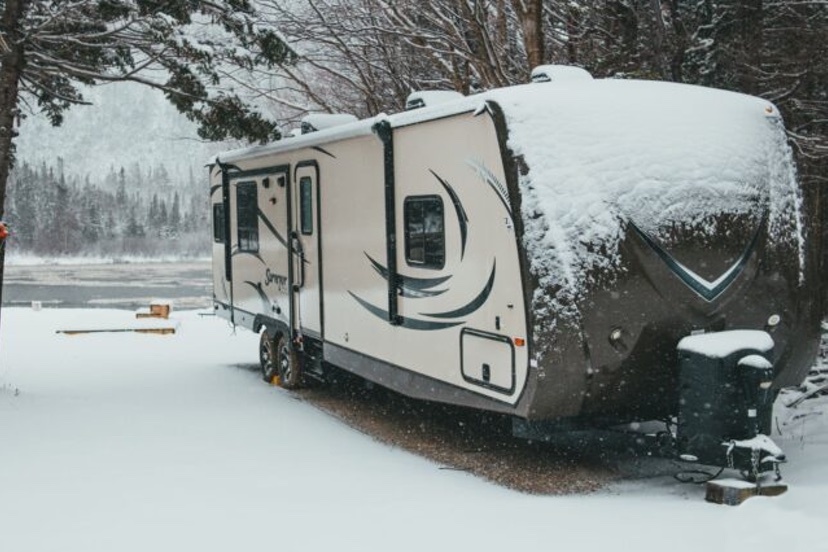
On December 18, 2025, the Archuleta County Planning Commission had a discussion on a future land use regulation (LUR) change proposal. Planning Manager Melissa Ryan explained that “we are going to be bringing something in January for proposed changes to land use regulations…”
— from a news article by Clayton Chaney, in the weekly Pagosa Springs SUN, December 31, 2025.
As my dad used to say, there’s more than one way to skin a cat.
Admittedly, my dad was not fond of cats.
But he had a big heart for people struggling with economic challenges. How can we help the folks who are struggling the most?
One of the primary economic challenges here in Pagosa Springs, over the past 20 years or so, has been ‘shelter’… finding a safe, secure dwelling that doesn’t break the family’s budget.
For many individuals and households, one of the more affordable options has been to live in an RV. A recreational vehicle.
We posted an article this morning about two upcoming community meetings at the Community Center focused on the development of a new ‘Housing Action Plan’ for Archuleta County. You are invited to attend. Click here for more details.
At the December 18 meeting of the Archuleta County Planning Commission, Planning Manager Melissa Ryan told the commissioners that her department plans to bring forward some proposed changes to the County’s Land Use Regulations (LUR) possibly in January.
She said that the Planning Department had received requests regarding temporary use permits for living in recreational vehicles (RVs) within the county.
“Right now, those [permits] are all issued under an expired resolution, where we’re allowing people to live temporarily on a rolling six-month basis in RVs,” she said, adding that the policy was intended to be temporary and was never adopted into the LUR.
Your average recreational vehicle is essentially a big aluminum box, designed for “recreation”, and not intended to be used as a permanent dwelling — especially not through a Colorado winter.
But what options do we have?
Checking out the residential rentals in the Pagosa Springs SUN on December 31, it appeared that the average monthly rent for a house or apartment in town is about $2,350.
A well-accepted guideline — used by the Department of Housing and Urban Development (HUD) and the Colorado Housing and Finance Authority (CHFA) and many other agencies — specifies that a household should pay no more than 30% of its monthly income for housing costs.
Following that guideline, a household paying $2,350 a month for rent and utilities (assuming the utilities are included?) needs an income of about $95,000 a year. But according to a 2024 survey by Region 9 Economic Development District, only about 21% of households in Archuleta County earn at least $95,000 a year.
50% of all two-income families earn less that $75,000, and those are the two-income families. The typical one-person household earns less than $30,000 a year.
A household that pays more than 30% of its monthly income for housing is considered “cost-burdened”. A household paying more than 50% is considered “severely cost-burdened”.
In 2021, non-profit Pagosa Housing Partners surveyed workers in Pagosa Springs to get a sense of how many households were cost-burdened, or severely cost-burdened. The survey was co-sponsored by the Town of Pagosa Springs, the Pagosa Springs Chamber of Commerce, the Pagosa Springs SUN, the Pagosa Daily Post, and local realtor Mike Heraty.
Here below are some of the 2021 survey results, focused specifically on working households. (We ignored “non-working, retired households” when compiling the data.)
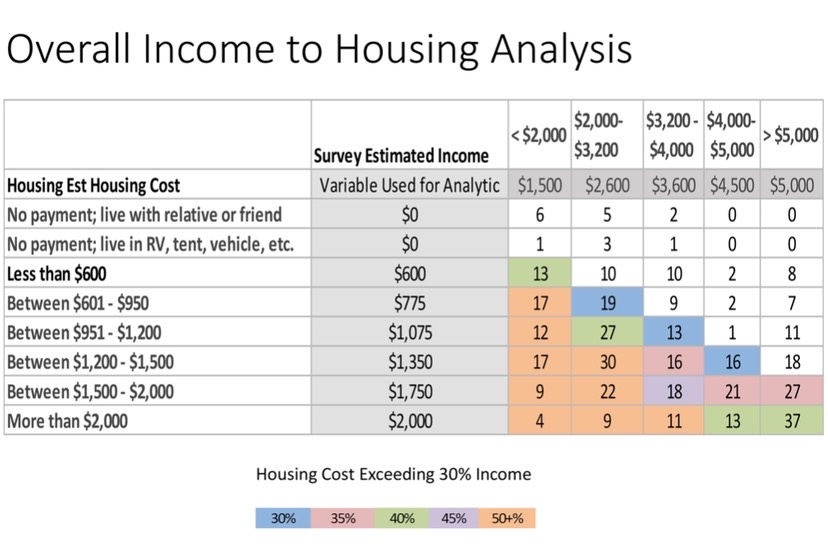
Of the 447 households that participated in the survey, 303 were “cost-burdened”. That’s two-thirds (67%) of our working households.
131 households were “severely cost-burdened”. That’s nearly one-third (29%) of our working households.
These are the families and individuals most seriously affected by the lack of affordable housing in our community. (Retirees, in general, are less affected. But not in all cases.)
We have some more recent data from a 2025 Housing Needs Assessment, funded by Archuleta County and the Town of Pagosa Springs. From that report:
- Sixty percent of businesses said housing shortages make it harder to attract and keep employees.
- Over 80% of businesses identify housing availability as a major or severe issue in the county.
- About 86% of households view housing availability as a major or severe issue in the county.
In January 2023, the Archuleta Board of County Commissioners approved an extension to the County’s ‘Temporary Use Permit’ policy regarding recreational vehicles (RVs). The policy allowed individuals and families to live in an RV for up to 180 days, after paying $50 for a County permit.
They were allowed to renew the permit for an additional 180 days.
Essentially, the BOCC policy allows people to live year-round in a RV, while also acknowledging that, according to Colorado statutes, RVs are intended for “temporary living and sleeping accommodations”.
In presenting the proposed extension in 2023, Community Development Director Pam Flowers explained that, due to the current housing crisis, a fair number of full-time residents — including many local workers — are living year-round in RVs. Without the 180-day permit policy, the County Planning Department would presumably be kicking people out of their ‘homes’ in an economic environment where long-term rentals are difficult to find and even more difficult to afford.
She stated that the housing crisis had contributed to a shortage of County employees. So one solution was to allow people to live year-round in RVs. As noted, the County government hoped this would be just a temporary solution.
At last month’s meeting, Ryan stated that the policy had been “continually updated in a resolution,” but that resolution expired some time ago and was never renewed.
“So, we need to do something about this.”
Something, indeed.
Bill Hudson began sharing his opinions in the Pagosa Daily Post in 2004 and can't seem to break the habit. He claims that, in Pagosa Springs, opinions are like pickup trucks: everybody has one.