
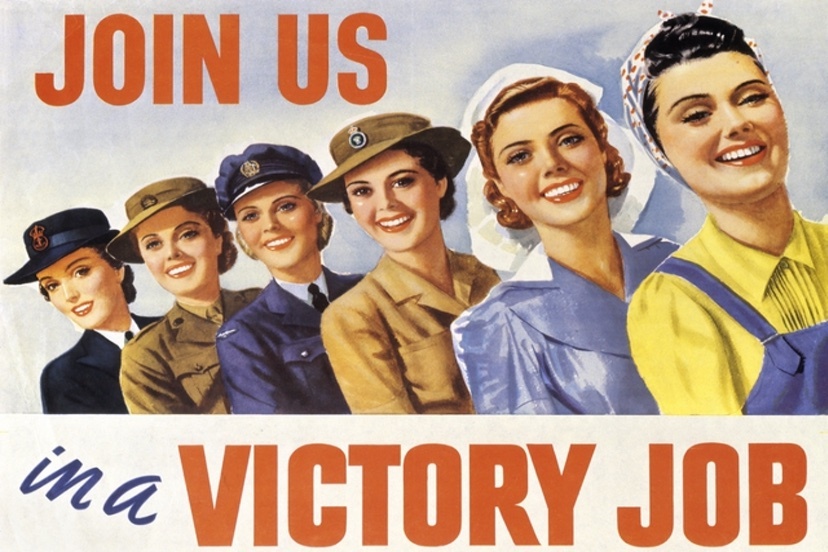
I spent my senior year of high school — 1969-1970 — as an exchange student in Sweden. One particular experience from that year relates to the topic of this editorial series.
While the women’s liberation movement was just beginning to find its feet in the U.S., the gender equality movement in Sweden had already won over many men and women — especially, young men and women — to the idea that the workplace ought to be a level playing field, with equal pay and equal chance for advancement… and that the rearing of children ought to be shared equally by mothers and fathers.
Thus, I was exposed to the Swedish concept of the Househusband, as the counterpart to the Housewife.
These ideas about equality made sense to me, and when I returned to the U.S. and started a family with my partner Clarissa, we settled on what was then a somewhat unusual arrangement for the care of the children and for career development. We called it, “One Year On, One Year Off.”
We felt that, as the parents of our children, we were ultimately responsible for their upbringing and education — and appropriately so. At the same time, we appreciated the sense of purpose brought about by meaningful, remunerative employment. So one of us worked to bring home the bacon, while the other stayed home with the children… and we alternated, one year on, one year off.
My experience as a Househusband — during my year “off” — was not entirely pleasant. I found the isolation… stuck at home with young children for company, with little opportunity for adult interactions… to be…
…what’s the right word? Miserable? Depressing? Dismal?
I could appreciate the arguments made by people like Betty Friedan, who wrote in The Feminine Mystique about the lives of modern middle-class American housewives who, in spite of their material security, were experiencing loneliness and a basic lack of fulfillment.
Yesterday in Part Two, we heard briefly from Richard Reeves, author of the 2022 book Of Boys and Men: Why the Modern Male Is Struggling, Why That Matters, and What to Do about It. In a recent video, he discusses how gender inequality has become, in some ways, a male issue rather than a female issue, and he shared some of the key reasons why, in his opinion, men in particular are struggling with the so-called ‘deaths of despair’ from suicide, overdose, and alcohol.
Suicide itself, three times higher among men than women, and rising very quickly, especially among middle-aged men and younger men.
So we can see these as symptoms, I think, of a broader malaise, which is what’s troubling boys and men. And for men in particular, this sense of purpose is very important. I think it’s a human universal that we need to be needed.
One of the problems we’re facing is what he calls a ‘dad deficit.’ As the traditional patterns around marriage and family dissolve before our eyes, many children — and notably. many boys — are being raised without access to male role models.
So one in four fathers don’t live with their children. If parents split up, they’re much more likely to lose contact with their fathers than with their mothers — and so one in three children, if their parents split up, don’t see their father at all after a few years post the separation…
And when 4 in 10 children are born outside marriage — and most children to less educated parents are born outside marriage — then we have to reinvent what it means to be a father…
As women have grown in economic power and economic independence, they’re going to choose whether to be with a man rather than being forced to by legal constraints and social expectations. As Mr. Reeves notes, this is probably the greatest liberation in human history, that women can now choose whether to be with a man or not.
More than 2 out of 5 households in the U.S. now, a woman is the main breadwinner. 40% of American women earn more than the average man. These are huge economic changes, and all for the good, but it does pose some really sharp questions about what fathers are for.
You can hear more of his ideas, about how gender inequality has flipped, on BigThink.com.
But let’s get back to the quote shared in Part One, from NYU professor Scott Galloway, weighing in earlier this month on the popular theme of manhood in the 21st century.
The scariest piece of data I’ve seen recently, is that 51% of 18-to-24-year-old men have never asked a woman out, in person.
We’re facing a number of issues here in the U.S. Some relate to unfulfilled expectations. One issue I’ve covered regularly in Daily Post editorials, is the expectation that every person who wants to live and work in Archuleta County would have access to shelter — warm, protective, well-built housing that they can afford.
This is an expectation… but it’s not a reality. As the Pagosa Springs economy has grown, the housing situation has become more and more challenging, especially for young workers.
This editorial is not about housing, although changes in family structure in America play into the problem. Over the past 50 years, women have achieved greater independence and wage parity, and the types of jobs seeing the most growth as we enter the second quarter of the 21st century — jobs in healthcare, education, administration, social services, and services in general — align less and less with the classic male attributes of physical strength, ambition, competitiveness, assertiveness, stoicism.
Seemingly, the modern world has less need for the traditional alpha male.
So why would professor Galloway point out the reluctance of young American men to ask a woman out for a date — as “the scariest data” he’d seen?