
Dear Louis,
With rising prices and environmental concerns making headlines, sustainable fashion advocate Lexy Silverstein is leading the charge for Thriftmas — a shift toward more eco-friendly, budget-conscious holiday gifting…
Just about a year ago, a PR person named Kathy Fowler sent me an email, proposing to set up an interview with a “sustainable fashion advocate” named Lexy Silverstein. It seems Ms. Silverstein was one of the influencers promoting ‘No Buy January’ — “a growing global campaign that encourages individuals to pause on purchases for one month, rethink their consumption habits, and embrace mindful living.”
Like I said, this was a year ago — December 2024 — when we were getting ready to enjoy a wonderfully vibrant American economy, thanks to a totally new approach to the nation’s financial management. I didn’t mind in the least the thought of “rethinking our consumption habits”, because I expected to have more money and lower prices, soon after the nation’s revised economic policies kicked in.
Good-bye, old consumption habits! Hello, new consumption habits!
Alas, the new habits weren’t exactly the ones I was expecting. For one thing, my landlord increased my rent by about 30%. Ouch. My car insurance saw an increase, even though my car is even older than before. And has anyone noticed the cost of cat food going up?
So I wasn’t surprised when I got another PR email last week offering me another chance to interview Lexy on a slightly different topic, closely related to ‘No Buy January’.
Thriftmas.
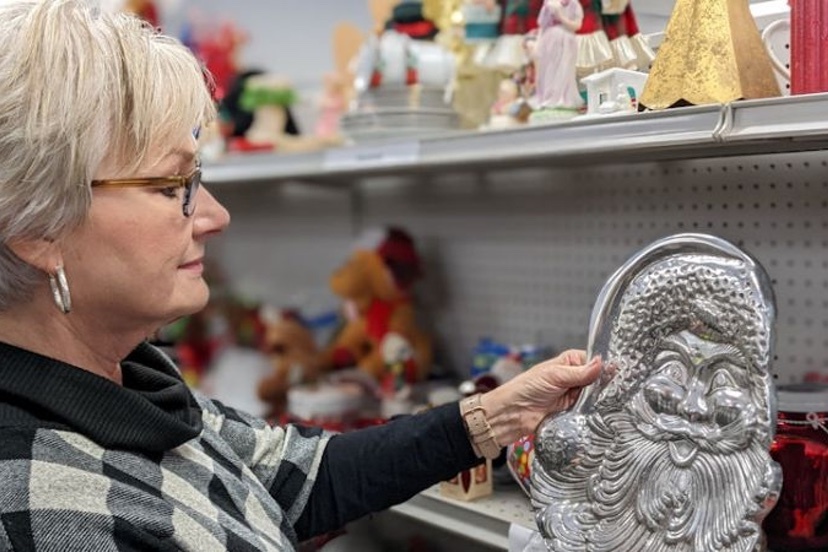
Maybe we should be listening to people like Lexy Silverstein, who seems to get along just fine buying most of her clothes from thrift shops. She looks simply stunning in second-hand clothes, in my humble opinion.

Anyway, I think I will get on board with this new seasonal celebration.
Thriftmas.
I realize this name will likely infuriate the folks who want us to “put Christ back into Christmas”.
My counter argument would be: Look at the economy. We need to “put Thrift back into Christmas.”
In a certain sense, the new consumption habits we’re considering here are actually “old consumption habits” if we look at history. Back in the early 1800s, Protestants — and there were plenty of them here in America in those days — didn’t celebrate Christmas as a time of peak consumption. In fact, many Protestants considered Christmas to be a slightly distasteful “Catholic” celebration.
Then Clement Clarke Moore came along and ruined everything with his popular poem, A Visit from St Nicholas, better known these days as ‘Twas the Night Before Christmas, which first appeared, anonymously, in the Troy, New York Sentinel on December 23, 1823.
By way of Moore’s poem, America was introduced to several previously-unrecognized aspects of Christmas, such as a sleigh packed with toys and pulled by flying reindeer… a elfish Santa Claus entering the home via the chimney and the filling the children’s stockings… and the fact that this mysterious visit took place during the night before Christmas.
These were not widely-accepted traditions in America in 1823. But such is the power of poetry, to begin the transformation of a previously harmless holiday.
We can assume the publication was anonymous because Moore had a premonition his poem would eventually convert Christmas into a consumerist nightmare. With the help of the merchant class, of course. Thanks to Moore’s poem, retailers began to understand Christmas as a prime opportunity to sell goods, and depictions of Santa were appearing in advertisements by the 1840s.
The first in-store Santa appeared at Macy’s in 1862. At first, the retail push was largely around toys for children — toys they didn’t need, even back in 1862 — and then, later, gifts for everyone in the family, culminating with the requirement to accommodate everyone who has sent you a link to their online Christmas list.
But ‘Thrift’ is becoming our new habit.
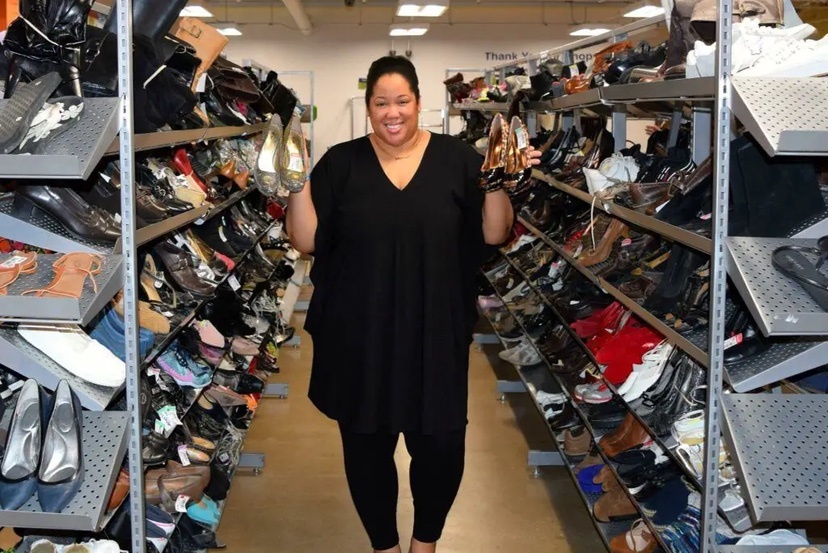
The recent study conducted by GlobalData, surveying 2,000 consumers, revealed that holiday spending remains resilient, but with a major shift to “circular shopping”. In 2025, consumers (that’s us) plan to dedicate nearly 40% of their total holiday budgets to secondhand gifts.
“While the macroeconomic picture remains unclear, consumers aren’t stopping their holiday traditions — they’re just getting more strategic… They’re seeking the most value, and that path is increasingly through resale,” said James Reinhart, CEO and co-founder of recycled clothing retailer ThredUp.
Normally, my kids get me socks for Christmas. I would be perfectly fine with recycled thrift store socks, if it will save them money.
Or else — what the heck — a second-hand Toyota Prius would be nice.
Underrated writer Louis Cannon grew up in the vast American West, although his ex-wife, given the slightest opportunity, will deny that he ever grew up at all. You can read more stories on his Substack account.