
Our findings, summarized in my book ‘The Construction of Public Opinion in a Digital Age’, suggest that many people feel journalism today represents the interests of the powerful and does not speak for them…
— from an article by Catherine Happer on TheConversation.com, November 14, 2025. “What research reveals about why people don’t trust media in the digital age”.
I never wanted to be a policeman or a fireman when I was a little kid. I wanted to be Superman. Or, as a second choice, Batman.
My mother wanted me to become a doctor. Or, as a second choice, President.
My dad hoped I’d wind up playing Major League baseball for the Boston Red Sox. (He grew up in Boston.)
But for whatever reason, I decided to become a journalist. Not exactly the bottom of the barrel. At least I didn’t become a lawyer.
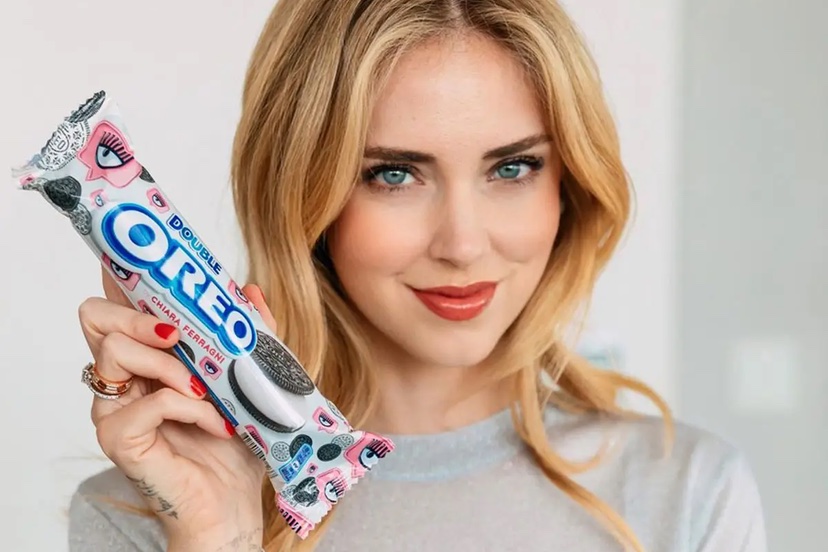
Right now, I sorta wish I was an influencer. I could get paid to promote the latest flavor of Oreos.
According to a Morning Consult survey of 1,000 Gen Zers, more than half of young people want to be ‘influencers’.
57%, to be exact.
The Gen Z respondents are not alone. 41% of adults overall would choose that career as well, according to a similar (but different) Morning Consult survey of 2,204 U.S. adults. And surveys indicate that trust in influencers is growing. The shares of Gen Zers and millennials who said they trust social media influencers grew from 51% in 2019 to 61% in 2023.
We could compare that to the trust in traditional news outlets. But we won’t.
The trusted research firm Pew Research published a chart earlier this month. Young adults don’t actually want to know about political events. It happens accidentally to them.
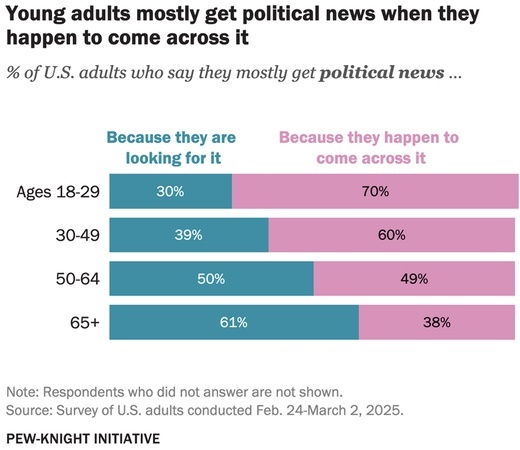
The Pew-Knight survey claims that 50% of “young adults” trust social media influencers to deliver accurate information. I assume that’s a higher percentage than those who trust journalists like myself, even though I don’t try to deliver actual information. This is a humor column.
I’m not Gen Z — not even close. I distrust almost everyone. I distrust influencers. I distrust Morning Consult. I distrust Pew Research.
I distrust Jonathan M. Tisch College of Civic Life at Tufts University in Medford, Massachusetts.
Tisch College published their take on how many Gen Zers trust social media and tech companies. According to their survey, the main groups young adults don’t trust — “No trust at all” — were Republicans and Social media and tech companies.
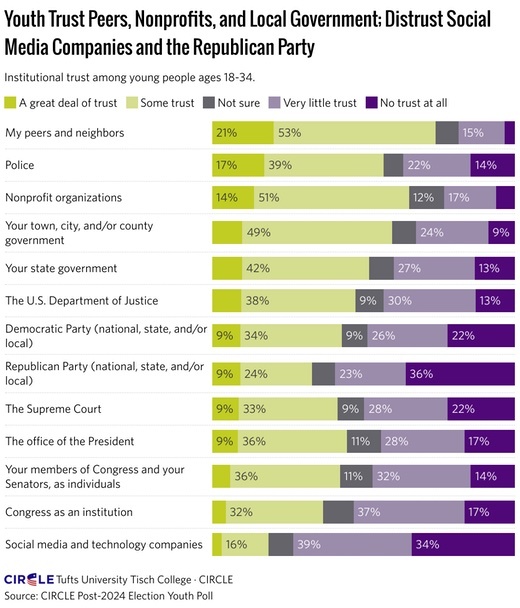
Makes me glad I’m not connected to a tech company. (In case I didn’t make that clear earlier, I’m not connected to a tech company.) I may not be as rich as the tech bros, but money can’t buy me love.
Thoughtfully enough, Tisch College didn’t ask respondents about trusting journalists. Or about colleges that do surveys.
But they also didn’t ask about influencers. “Why not?” I ask. Not really expecting an answer.
According to Pew, social media influencers are the main source of trusted news among young adults.
But according to Tisch College, “social media” is the least trusted source of information among young adults. Worse than Republicans.
Who can we trust? Obviously, not both Pew and Tisch. (Nor Republicans.)
Like I said before, I sorta wish I was an influencer. But only sorta. Because I came across an article on CNBC (no longer related to NBC News, if that makes any difference) about the life of influencers. Written by journalist Gili Malinsky.
The article included this graph, based on NeoReach data, which suggests that half of all “content creators” (AKA influencers) earn less than $15,000 a year.
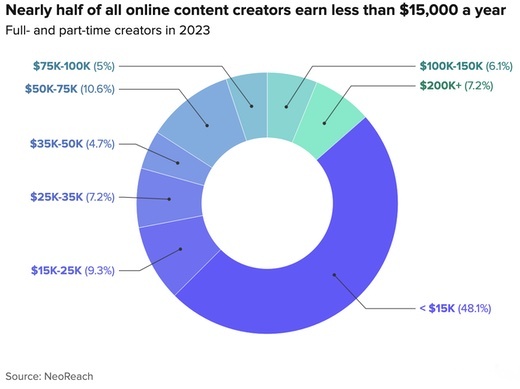
(As you can tell, I like graphs, even though I don’t trust them.)
From the CNBC article:
[Hannah] Williams usually starts working around 8 a.m., including emails, video editing and planning content. Between noon and 3 p.m., she’s usually on calls with clients. She takes a break around 4 p.m. and gets back to her desk around 6 p.m., at which point she’s working “full on until midnight,” she says. She and her husband also travel a lot for the job, and they post at least once a day.
“It’s just constant, Monday through Sunday,” she says. “From the time you wake up to the time you go to bed, the internet’s on, so you’re on as well…”
Williams and her husband, for example, are an interracial couple, “so you can imagine the racism that my partner and I experience on a near daily basis,” she says. She’s been called various derogatory terms and says she’s gotten comments like “you guys will be divorced and she’ll be pregnant in a year.”
This doesn’t sound like a job I’d want to do for less than $15,000 a year. I’d much rather spend three hours writing a humor column and then take a nap.
I kicked off this column (which actually took four hours to write) with a quote from an article by Catherine Happer posted on TheConversation.com, November 14, 2025.
Our findings, summarized in my book ‘The Construction of Public Opinion in a Digital Age’, suggest that many people feel journalism today represents the interests of the powerful and does not speak for them…
I personally guarantee that I do not represent the interests of the powerful, and I do not speak for them.
Trust me.
Underrated writer Louis Cannon grew up in the vast American West, although his ex-wife, given the slightest opportunity, will deny that he ever grew up at all. You can read more stories on his Substack account.