
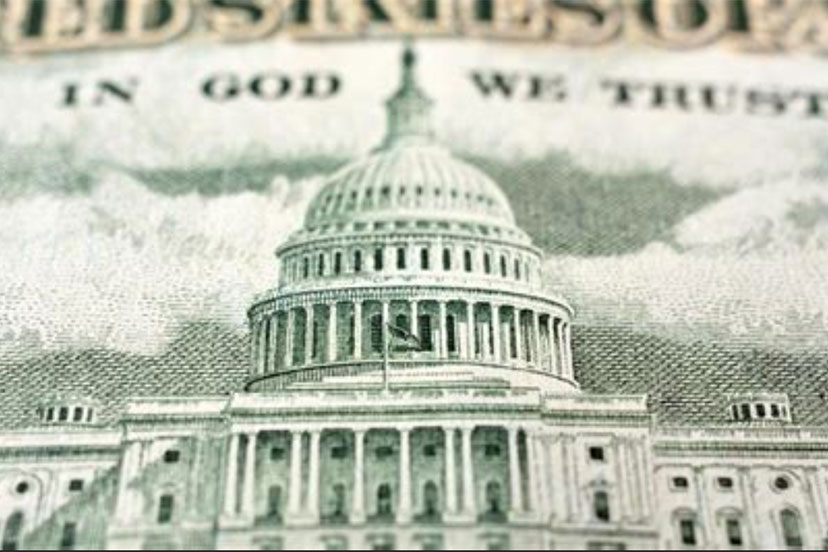
The cash registers at our local grocery stores have stopped dispensing pennies, when providing change.
I don’t blame them, but I can’t say I’m happy about it.
The United States Mint officially ended the production of the the penny on November 12, 2025. This marked the end of a 232-year history of the penny in American currency.
The cost to produce a penny has increased significantly, from 1.4 cents a decade ago to 3.7 cents per penny, resulting in substantial “financial losses” for the U.S. Treasury. $85.3 million in 2024 alone, they tell me.
Nevertheless, the penny remains legal tender, and can still be used for buying stuff. If you’re lucky. There are approximately 300 billion pennies already in circulation, a few of which can typically be found in my washing machine after I wash a load of jeans.
300 billion seems like a fairly large number. That’s like, 1,000 pennies for every man, woman and child in America. $10 worth. So I don’t really understand the fuss.
But this may just be the tip of the iceberg, so to speak, because while a penny costs 3.7 cents to mint, a nickel costs almost 14 cents.
Meanwhile, it costs about the same amount — 15 cents — to make a quarter. And a dime costs only 6 cents to make. Why the Treasury is even making nickels is beyond my comprehension.
To make matters worse, it costs only about 6 cents to print a $1 bill. And about 15 cents to print a $100 bill. (Reportedly, the added ‘security’ features are expensive.)
So the Treasury spends twice as much to mint a lowly nickel as it costs them to print a $1 bill… and approximately the same amount as to print a $100 bill. Let’s face it, the nickel — as substantial as it may feel in your hand — makes no financial sense.
But things get more complicated when you actually do the math. Five pennies (5 x 3.7 = 18.5 cents) cost more than one nickel (14 cents). And two nickels (2 x 14 = 28 cents) cost more than one dime (6 cents).
Can anyone see where I’m going with this?
If the world were a reasonable place, everything would cost one penny, because that’s the cheapest form of money the Treasury can produce.
But if that’s not feasible, then everything should cost either one dime or $1.
I’m just concerned about how many millions of dollars the Treasury is spending, so that we can find spare change in the washing machine. Let’s make their life less difficult.
Of course, there’s another important aspect to this discussion.
Yesterday, I walked into a local store and saw a posted notice that, if I wanted to pay cash, I would need to have exact change. I didn’t blame them. Obviously, the way money is manufactured makes no financial sense. Especially, it makes no sense now that they’ve stopped minting pennies.
Nickels will be next. My prediction.
Luckily, I had my credit card in my wallet, and without giving it a second thought, I stuck my card in the card reader and paid for my items. Then I put the credit card back in my wallet, to be reused again and again.
If we are trying to build a world where we recycle and reuse, a credit card may be the finest example of that. Plastic credit cards can be manufactured in bulk for less than 50 cents each, and they last practically forever. (As does your credit card bill.) To put that in perspective, the 50 cents to manufacture a credit card is considerably less than the cost of manufacturing 50 pennies. (50 x 3.7 = $1,85)
Of course, there was another solution to this problem that no one is talking about. They could have used less metal by simply making the pennies smaller. I’m thinking, about the size of an apple seed.
Better yet, we could use apple seeds as pennies. They aren’t good for much else, and a lot of them just get tossed in the garbage.
I’m full of good ideas.
Underrated writer Louis Cannon grew up in the vast American West, although his ex-wife, given the slightest opportunity, will deny that he ever grew up at all. You can read more stories on his Substack account.